Project for a Trip to Sardinia

A Sequel*
*Worse than the original, as everyone knows
Disclaimer: This is even less of a travel guide to Sardinia.
Previously On — The Recap Sequence
In August 2023, I went for the first time to Sardinia. I visited the museums of Cagliari (the island’s capital and largest city), had bottarga, quoted Anthony Bourdain, listened to Lucio Dalla while strolling the streets, spoke broken Italian and took a kayak tour, which was too early and strenuous and a painful reminder of how bad I am at any sports, but involved seeing breathtaking landscapes and swimming in pristine waters. I also ended up visiting a photographic exhibition dedicated to Inge Morath, the first woman to join the Magnum Photos agency. Initially lured in by the photo of the llama in Times Square, I left the museum in such state of enthusiastic fascination, I decided to write a bio piece on her. I didn’t deliver. Yet. But, as I write this, an illustrated biography of Inge Morath is waiting for me in the other room. Read the full story.

A Sardinian and a Romanian Enter an American Bar
Because I am a creature of habit (i.e. I needed a trip, and I had zero headspace to search and organise), this summer, I decided to go back. The plan this time around was to guilt-free bask in the glorious Italian sun and nap on a sunbed. The woman of her word that I am, I’ve mostly stuck to the plan.
So, one year, a job change and four kilograms later, I was landing at Cagliari’s Elmas Airport. The first thing greeting me was already challenging my resolution of being the ultimate beach bum: an exhibition poster featuring an iconic D-Day picture next to bold black letters reading: Robert Capa. Another Magnum icon at Palazzo di Città. Capa was Morath’s colleague, friend, romantic interest for a while and, apparently, the one who triggered the unleash of her photographic genius. In an outburst of narcissistic magical thinking, I decided then and there that the coincidence was mindblowing, and this was my yearly welcome from the city of Cagliari, so I would have to visit the exhibition.
After checking into the same hotel as last year and being greeted by the same friendly people, I went out for dinner with my friend (briefly introduced to you last year), who was already there. We had pizza (well, I had fried fish, but at a pizzeria) and local beer (yes, Food Police, with the fried fish). After dinner, we went for a drink, asking ourselves and each other why there were so many American bars on this island. We had cocktails at Caffé Libarium Nostrum in Castello — a historic district of the town. Castello is on the top of a hill, so the view from the terrace is quite impressive. We later tried to get the American bar experience but the terrace was all booked, and the interior was sweltering.

Robert Capa
By the time I was buying the museum ticket, I was starting to wrap my head around the fact that these exhibitions do not happen just because I am the Universe’s favourite daughter, so I tried to uncover the story behind them. Instead, I got a lost-in-translation moment where the lady did not really get what I wanted but mumbled something, and I was nodding and pretending I was satisfied with the explanation. For a more visual, movie-scene-like explanation, imagine this: Italian music fades in. One woman nods and smiles awkwardly — grazie mille signora. The other woman smiles just as awkwardly — my pleasure. More smiles from both sides; no one knows what is happening. Italian music fades out. Both women wear fringes.
Now, let’s ignore that short digression into the amateur filmmaker part of my brain.
Get Vladiana Petarlecean’s stories in your inbox
Join Medium for free to get updates from this writer.
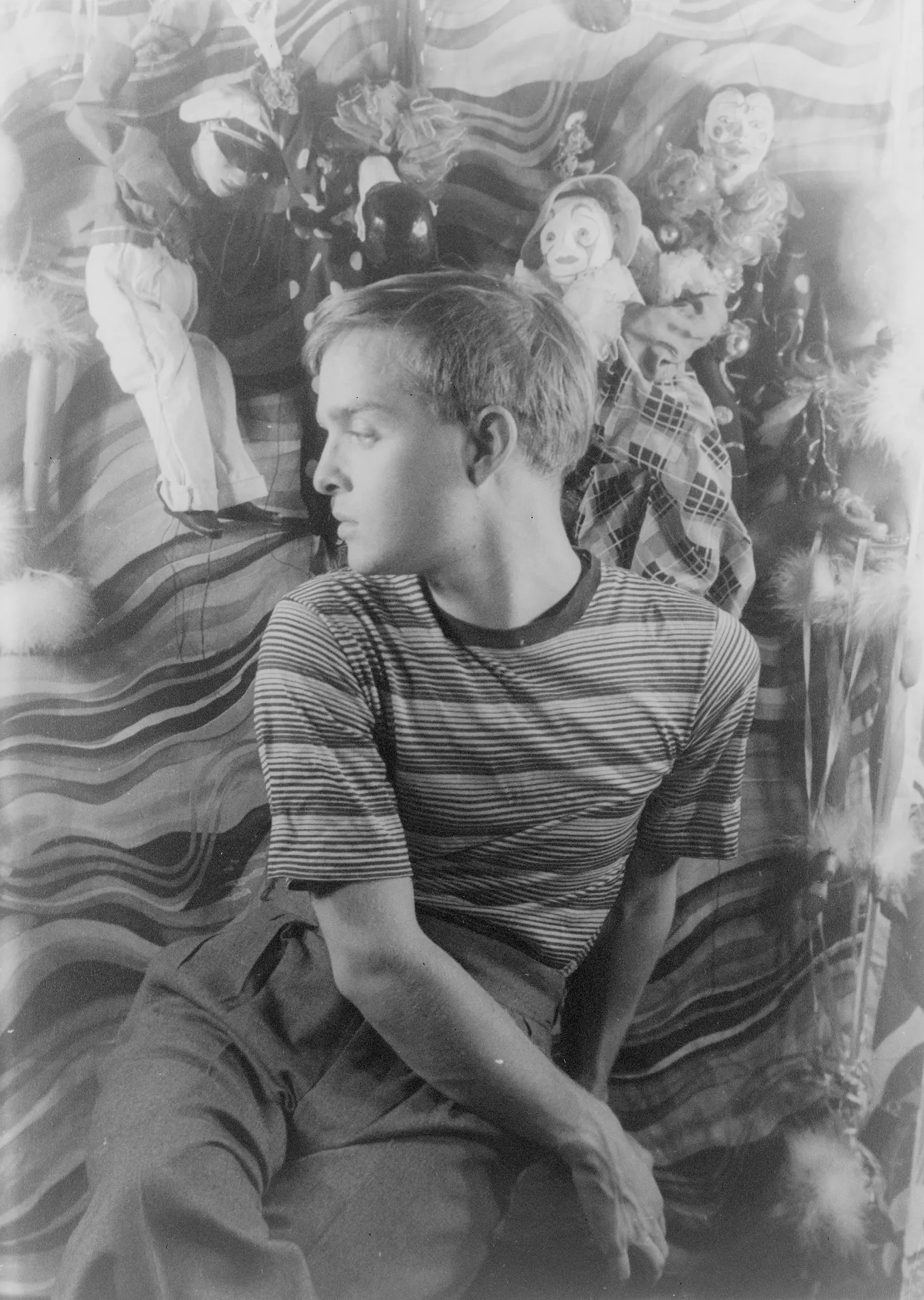
Titled Robert Capa Le fotografie 1932–1954, the exhibition coincides with the 80th anniversary of D-Day, kicked off on the 31st of May, and will be open until the 6th of October 2024. It is a well-curated and complete retrospective of Capa’s work, showing over 100 photographs. The expo follows chronologically his career and life. It goes from his early interest in politics and photojournalism (he photographed Leon Trotsky on the 27th of September 1932 at a gathering in Copenhagen, Denmark) to the relationship with Gerda Taro, the Paris riots of 1936, his first major break photographing the Spanish Civil War, the Normandy landings, the birth of the state of Israel and his last combat assignment, in 1954, in Vietnam, when he was commissioned by Life magazine to cover the First Indochina War. The exposition, like Capa’s work, captures not only the political and combat dimensions of the 20th century but also the cultural landscape, including portraits of Ernest Hemingway, Truman Capote, William Faulkner, Pablo Picasso, Henry Matisse and Ingrid Bergman, with whom Capa was romantically involved (the romance inspire Hitchcock’s Rear Window). One of his rules for photographing people was “Like people and let them know it.”

Born Endre Ernö Friedmann on the 22nd of October, 1913, in a Jewish family in Budapest, Capa famously said, “It’s not enough to have talent; you also have to be Hungarian.” In 1931, he moved to Berlin, but in 1933, he fled to Paris due to the political climate in Germany. In Paris, he met André Kertész, David Seymour “Chim”, Henri Cartier-Bresson and Gerda Taro. He soon began a personal and professional partnership with Taro, with whom he created the persona “Robert Capa”. Taro was killed on the 26th of July 1937 while covering the Spanish Civil War, becoming the first female photojournalist to be killed on the frontline.

The exhibition shows powerful images of the Second Sino-Japanese War and icons of twentieth-century photojournalism, like the Death of a loyalist militiaman, showing the moment a bullet hits a Spanish Republican. There is also what’s probably the most emblematic picture of the invasion of Sicily in 1943, showing a Sicilian peasant telling an American officer which way the Germans had gone.

In a curator-talk video, Marco Minuz talks about how Capa once explained why all his photographs of D-Day are out of focus: he was afraid to die, and his hands were shaking. That did not stop him from living (and dying, on the 25th of May 25 1954, in Thái Bình, Vietnam) by his motto: “If your pictures aren’t good enough, you’re not close enough.”
One of the images at the exhibition is a “mirror selfie” of Capa and John Steinbeck, taken in 1947, during their trip to document life in Stalin’s USSR during the early years of the Cold War. The results of that trip were a series of powerful images, A Russian Journal, and an enduring friendship. A Russian Journal is a genuine account of the journey and the people of soviet Russia, Ukraine and Georgia, written in Steinbeck’s recognisable style in a blend of deadpan humour, self-irony and empathetic social commentary.
This Is Not a Film About a Man and a Fish
A Goran Bregović concert was another event that collided with my plan of actually growing into a sunbed — I have a very visual microscopic image of symbiotic osmosis in mind when I write this, although it is rather parasitising, as the sunbed did not get any out of it. Bregović and his Wedding and Funeral Orchestra played at Arena Fenicia of Sant’Antioco, an ancient Phoenician amphitheatre surrounded by beautiful green scenery. He played In the Death Car, and I made a mental note to rewatch Arizona Dream later in September when I will get deeper into my autumn-obsessed-millennial mindset (there will be no pumpkin spice latte stories, I promise).
Final Thoughts and Culinary Recommendations or This Might Be a Story About a Woman and A Fish
For the rest of the time, I have mainly stuck to my plan: getting unhealthy amounts of sun while swimming and staring into turquoise waters and reading Oriana Fallaci’s A Man (because war correspondence seems to be the recurring theme of the trip). I did get some other family-cooked lunches and dinners, and one of them ended with watching Nuovo Cinema Paradiso on TV, which was described as the “full and ultimate Italian experience.” Spending most of the time at the beach, I had a steady diet of bottarga and celery salad on pane carasau (a traditional Sardinian flatbread) and loads of fish. On my last dinner on the island, I had a traditional dessert called sebadas, a deep-fried round pastry of wheat dough filled with slightly savoury cheese (young Pecorino Sardo cheese) and warm honey on top. A delicious unexpected combination but, if you want to try it, you should know it is rather a meal in itself. You’ve been warned.
In a nutshell, do go to Sardinia, and if you go this year, visit the Robert Capa exhibition. If you go any other year, you might not be lucky enough to get the full at-home-experience, but do try their glorious fish row and craft beers, and let me know if you want me to manifest some photographic exhibitions for you (I think I found a new career path). Oh, and check out this website if you are seriously looking for actual travel recommendations.
Happy 1st of September!