Review-Breaking the Mould

The book came out last year and I finally got hands on it in India. I completed in quite a short time and is an easy read, what Raghu is dealing with is known to all, as he has been speaking about it for quite a while. If you’ve watched all his interviews (as I’ve) than you don’t need to get it.
We will keep the review short and divided into two parts. First, we will discuss what I liked, and then we will focus on what I didn’t like and why, which is important to discuss, imo.
The book begins by discussing why we should concentrate on an alternative envisioned path for India, which, according to him, is centered on services, an area where we can make our mark, as opposed to manufacturing. However, he clearly states that he is not against manufacturing. One of the reasons, I think, Raghu emphasizes services is the significant difficulty of implementing reforms in India. Given the presence of rent-seekers and cronies and numerous interest groups like labor unions etc, achieving reform in India is exceedingly difficult.
Get Rahula’s stories in your inbox
Join Medium for free to get updates from this writer.
He notes that countries like US, UK, South Korea etc who underwent industrialisation were all undemocratic unlike India where democracy makes it difficult to touch labour and land reforms and one can’t suppress the union to keep the wages down. But the situation could have moved to either side and become worse, like countries in Africa and Arabs.
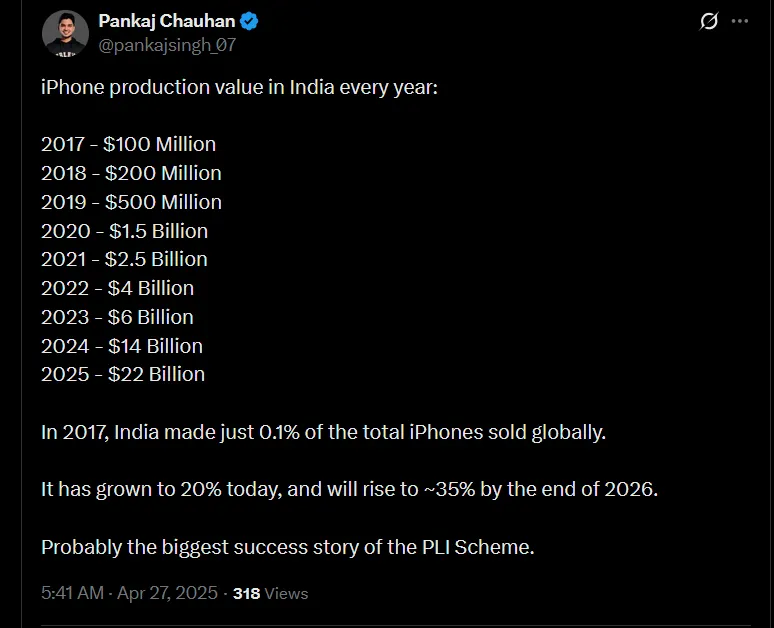
His arguments on PLIs are quite credible and well known, and ask to direct that capital towards critical infrastructure like Health, Education and State capacity. His description of how low state capacity and less decentralisation makes the job difficult. India shares to local government is just 3% compared to US at 27% and China at 51%. Some other notions with which I resonated were climate and foreign policy where he takes a quote from Deng Xiaoping’s dictum to “hide (its) capabilities and bide (its) time”. A friendly foreign policy to attract FDI and keep our head down until we become a middle income country at around 10k pci and not showing tiger warrior strategy. The advice is to “grow your nails before you scratch”.
Now, coming to what I didn’t, was basically on inclusive government like Acemoglu talks in “Why nations fails”. He turns here political and goes on describing the benefits of social dictum like RTE, Reservations, public educations, and health capabilities. He discussed how the recently passed female reservation of 33% is a step forward, and suggest it be 50% while for the suggestion for private sector is to go for diversity. He presents an example of a midday meal in Tamil Nadu that led to an increase in attendance. This whole rant me of a quote by Arun Shourie, “Jo hyperbole, So nihaal.”
It may be the most disappointing book from Raghu if we leave the 2019 book where he was one of the co-author. There’s quite a bit to take from this book, but I’d recommend not buying it and save that 400 bucks, as the book still revolves around the state and central planning.