Member-only story
AI Training Trial and Error: Sharing 14 Diagnosis Cases
As I’ve recently been training an image-to-geometry AI, I’ve encountered a wide range of trial-and-error scenarios. Before I finalize this research, I want to share the characteristics of training graphs I’ve organized from my own experiences and the criteria I use to judge whether to continue a training run. I hope this can be helpful to others who are also attempting to train AI.
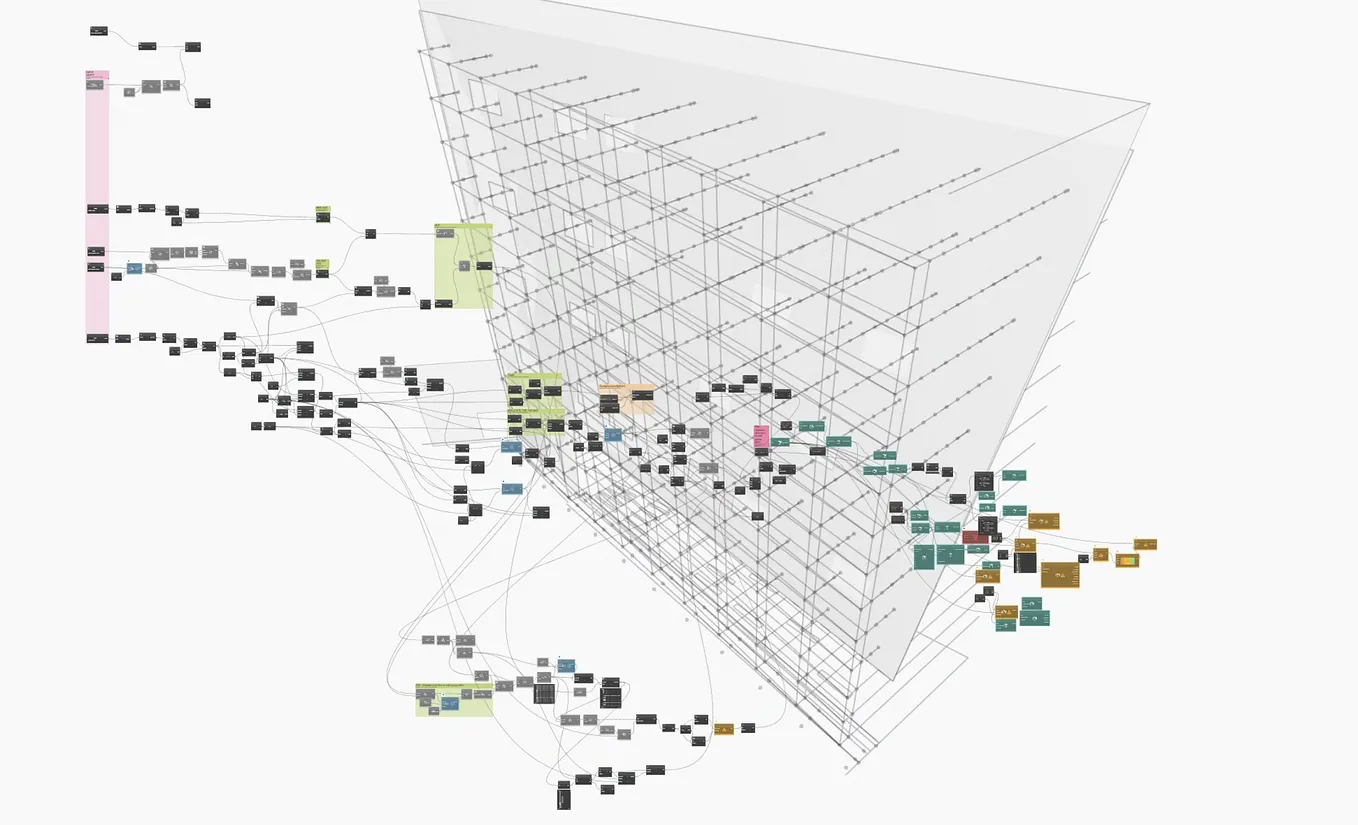
As several of this year’s major projects conclude, I am focusing on my objective of researching AI. I’ll introduce a few of the steps below. As someone who primarily uses Dynamo and Generative Design — tools I know like the back of my hand — the challenge of connecting automation processes with AI has felt like a personal mission.
The primary objective is: “To train an AI by leveraging the powerful alternative-generation capabilities of Generative Design.” GD provides PNG images and vast amounts of input and output data from its specific automation processes. I determined that if this information could be utilized as learning data and educational material for an AI, it would be possible to train a model with information of a similar, or perhaps even superior, quality to simulation-based learning in other fields.
I will share the full, detailed content after submitting my research paper.
Below are a few of the characteristics I’ve identified.