When Physics Class Finally Explained My Ham Radio
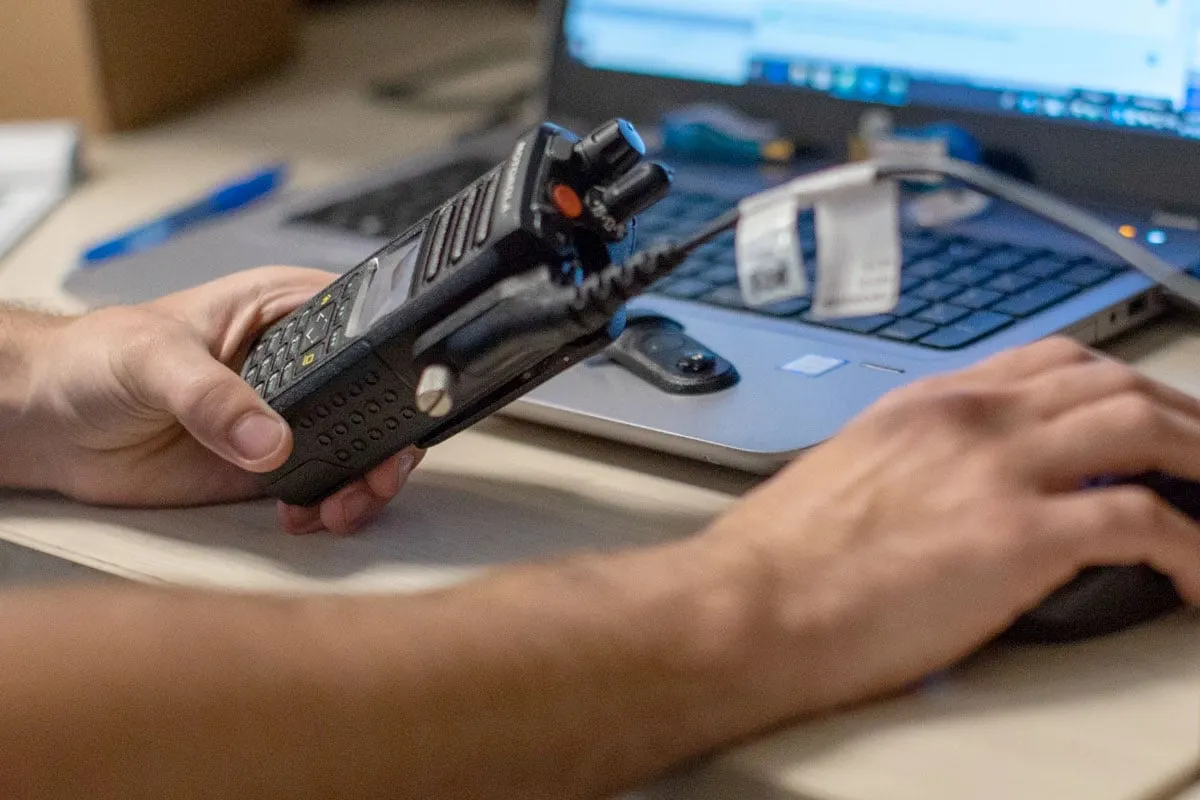
Getting my amateur radio licence meant learning a lot of new ideas at once. How radio waves travel, what oscillators and rectifiers do, how a radio is tuned to one station, and the different ways a signal can carry sound, like AM, FM and SSB. Some of it made sense to me while I was reading it. Some of it I understood well enough to use, but not well enough to explain. I passed the exam and started using my radio, with a few of these ideas still only half clear to me.
I did not think much about that at the time. The radio worked, I could talk to people, and the parts I did not fully follow did not get in the way.
When the Theory Caught Up
This year, in AS and A level Physics, we started studying waves, then superposition, then resonance. During one of those lessons, one of the ideas I had only half understood suddenly made sense.
The way I picture it now is this. The air around my antenna is not carrying one signal. It is carrying hundreds of them at the same time, all mixed together. Tuning a radio is the act of picking one of those signals out of the mix. And the reason a circuit can respond to one frequency and mostly ignore the others is resonance, the same effect that lets a swing go higher when you push it in time with its natural rhythm.
Get Yashvardhan Sanghi’s stories in your inbox
Join Medium for free to get updates from this writer.
I had used tuning for months without being able to say why it worked. Now the physics explained it. That was a good feeling, and a slightly surprising one, because the lesson was not teaching me something brand new. It was explaining something I had already been doing.
One Way of Learning, Among Others
What this showed me is that learning does not always have to go in the usual order. Most of the time we are taught the theory first and then shown where it applies. But it can also work the other way. You can use something first, get familiar with it, and let the explanation arrive later and fill in what you were missing.
I am not saying this is the best way to learn, or the right way for everything. For plenty of subjects, starting with the theory makes far more sense. But for the things I am most interested in, this order has worked well. The theory means more to me when it is answering a question I already have, rather than one I have been handed.
The Next Thing I Expect to Understand
There is one part of this I still cannot explain, and I am looking forward to reaching it.
I now understand what tuning does. I still cannot explain how the small circuit inside actually does it. That answer is further into electromagnetism, in capacitance and inductance and the way they pass energy back and forth, and it is where my course and my exam preparation are heading next. This time I can already tell the explanation is coming, and I am waiting for it rather than waiting to be surprised by it.
Where I Want to Go
Amateur radio has a lot of room for this kind of learning. There is software that links radios to each other over the internet, satellites you can listen to and even speak through as they pass overhead, and digital modes that send voice and data as signals I only partly understand today. Each of these is something I can start using before I fully understand it, and then work back into the theory as I go.
That is the part I enjoy most. Not only reading about how these systems work, but using them, being a little confused for a while, and letting the reason behind them catch up. It is one way of learning, and for the things I care about, it is one that keeps me interested.