Photography, Modern Digital Photography, Automation
This is Why I Always Use Autofocus
My Respectful Reply to Gareth Willey, who never does.

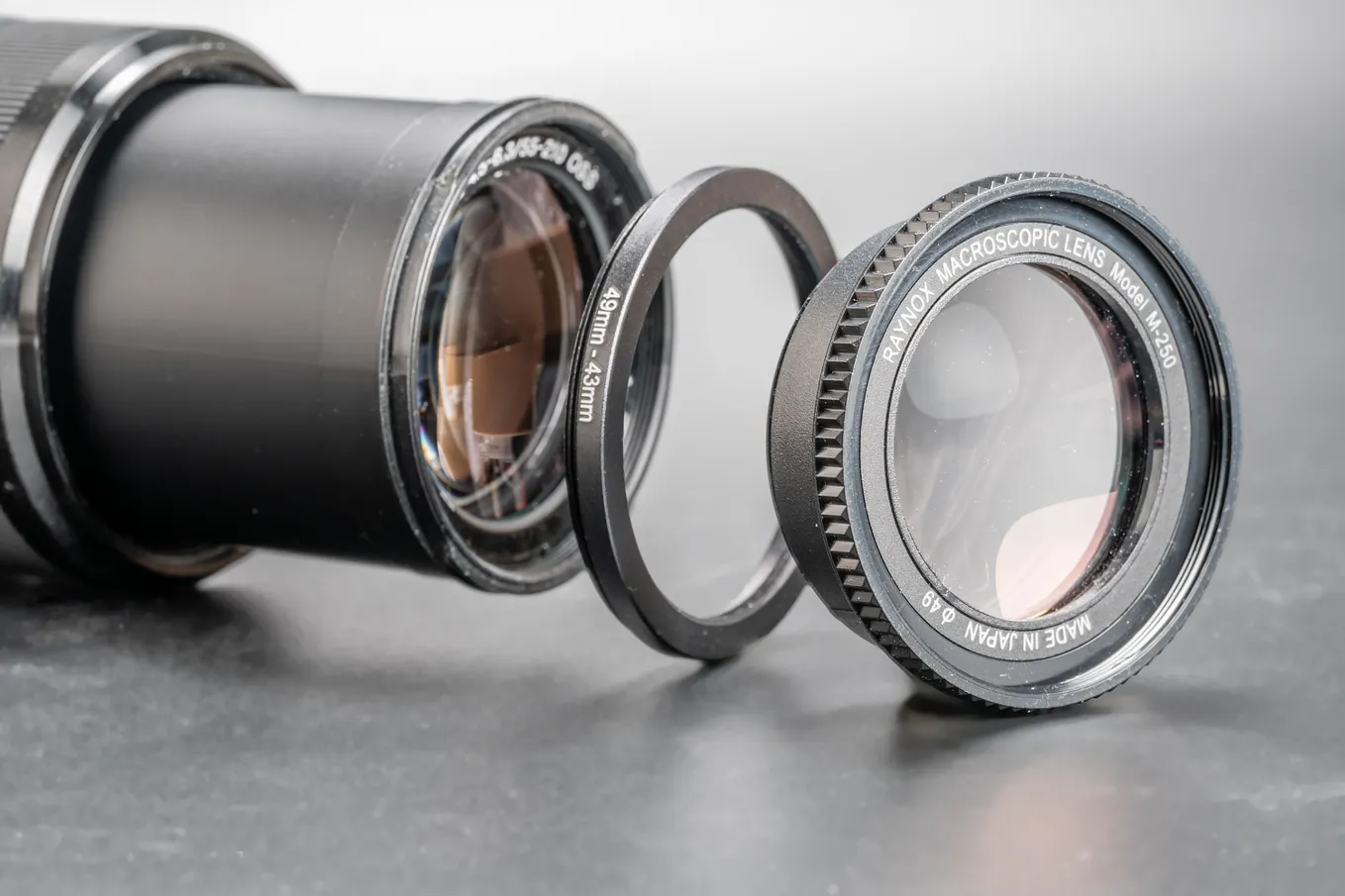
This lens is absolutely, positively not autofocus:


My friend Gareth Willey published an interesting story while I, apparently, was asleep at the switch ‘cuz I missed it. He says he never uses autofocus.
I was distracted: I was on assignment, five back-to-back events involving casts of t̶h̶o̶u̶s̶a̶n̶d̶s̶ of mostly Ukrainian youngsters having a whale of a time at a summer evening camp organized by Ukrainian staffers at Lincoln Literacy (the kids are refugees and mostly ESL). The below batch was taken during an evening session in a local park. It was auto-focus all the way, bay-beee.


All these were autofocused using full-time eye autofocus in my Sony A6400 compacts with one of two zoom lenses (I don’t use primes, either; Gareth is a prime guy).
(My brother Esau is an Hairy Man, but I am An Smooth Man.) (Never mind)
I was trained as a general commercial photographer. We were steeped in algebra, optics (really!), chemistry, and physics. Art? What art? Our department chair actually said, “Learn the palette; the art will follow.” We, therefore, had no required art courses. Oops. No wonder I ain’t no artiste (but I digress as usual).
I learned my craft using ten-pound 4x5-inch Speed Graphic press cameras, just a massive armored box with a lens on one end and a film holder on the other. In those thrilling days of yesteryear when we didn’t have no automated nuthin’, a serviceable workaround for not having time to accurately focus was zone focusing. It still works.

The legendary mid-20th century newsman Weegee used his wire “sport” frame a lot since he worked so much in the dark. He’d preset his camera about f/11 or f/16 about fifteen feet on the bed scale, take his fighting photographer crouch, aim, and fire. He used his monster flashbulbs day and night for guaranteed exposure consistency. He’d walk up to the scene (the wreck, the body, the whatever), fifteen feet away (we all got really good at guesstimating distances), and blast the thing. He never missed. His livelihood depended on it.
Get Chuck Haacker’s stories in your inbox
Join Medium for free to get updates from this writer.
He was prefocusing a zone of acceptable depth of field and either walking up to it or waiting for his subject to walk into it. I did that constantly shooting weddings, on the processionals, prefocusing at fifteen feet at f/5.6 with my 80mm normal lens, and shooting when the bride and her dad came into range.
When we had the time, our big press cameras had accurate rangefinders for more critical focus. Given enough time, we could focus critically on the ground glass at the back of the camera. In our advanced semesters, they’d even allow us to use our “miniature” (smaller than 4x5-inch) cameras down to 35mm SLRs, but focusing was still entirely manual.
Gareth Asserts that he Never Uses Auto-Focus because it is Unreliable, Unartistic, and Unenjoyable.
Autofocus isn't working for you; I get it.
But it works for me. It’s essential. I can no longer do anything fast, including focusing a camera on a breaking story-type situation. I work like a photojournalist, “run and gun,” except I can’t run anymore. Autofocus is one absolutely critical wrench in the toolbox for me.
Gareth writes: “Auto-focus has come a long way. It’s faster and smarter than ever before. It’s hard to imagine it ever getting better.” Well, it already has; eye autofocus.
Most higher-end digital cameras have had face recognition autofocus for years. Some can even automatically trip the shutter when a smile is detected! The latest and greatest (for me) is eye autofocus. The system doesn’t just see a face; it goes straight to the nearer of two eyes, the way we were taught to focus for formal portraits, except it does it on the fly! Unerringly!
I benched my two perfectly good A6300 bodies for A6400 models because the A6400s have full-time eye autofocus (no holding down a button to use it). That is huge for the work I do. From happy experience, I can rely on it to nail the eyes. I never turn it off. My bodies are in tracking zone eye autofocus, and (lord forgive me) I have even started using the touchscreens to instantly shift a focus point.
Yeah! Me! Touchscreens! I know, right?!
To do the professional job I and my clients expect, I gratefully use every scrap of automation offered. I set my cameras up to be “self-driving.” I want to literally focus on the photo, not the paraphernalia.

Here are a few examples showing how accurate it is:
First: I got myself smushed into a corner and couldn’t escape. The all-important speaker was yards away. I had on my Sony E 55–210mm f/4.5–6.3. I raised the camera as high as I could reach over the heads in front of me, relying on eye autofocus to ignore everything in the frame except her near eye. Since I was craning my neck up, I could only just see the screen overhead well enough to frame, not focus. Eye autofocus ignored the bright hair in the foreground that would have fooled another system.


Second: I was at the far end of a conference table with my trusty 55–210, shooting long as a mentor chatted with her learner. Ordinarily, the autofocus would sharply render the hair of the student while reducing the marvelous expression of her teacher to mush, but full-time eye autofocus unerringly finds my subject’s nearer eye and stays there; if I suddenly whip around to shoot another scene, the refocus is looking for eyes. Failing to find any, it reverts to face focus; not finding a face, it goes to plain zone focus that I choose (up, down, left, right) either with the control wheel or the touchscreen. I am a self-confessed, fanatical sharp freak; I never worry about it.


Third: This was made just Saturday at our annual Asian Harvest Festival. I sneakily held my camera sideways on my knee, and with the screen awkwardly placed, all I could use it for was framing. I made four quick shots. The eye autofocus ignored the closer woman. If autofocus was the greatest thing since sliced bread, what does that make eye autofocus?
Autofocus has its place, as does manual focus and even full manual photography, which is analogous to a so-called “standard” transmission in a car. Photographers of a certain age grew up able to drive a “stick” because we learned on them. By the 1960s, the shift (pun fully intended) was on, and these fresh kids today, faced with a “standard” or stick shift, can’t drive the car (what’s this extra pedal do?). It is no longer essential for new photographers to know very much about how their cameras work, but when the automation can’t handle the situation, and there’s no Plan B (what’s this extra setting do?), then you don’t get the picture.
And the most important thing is, was, and ever shall be getting the picture. Ya do wot works. Don’t throw the baby out with the bathwater.
📸As always, gratitude for looking in. I sincerely appreciate it! Questions in the comments will be answered promptly.😊👍