What is Digital Empathy and how can we evoke it

How can Digital Products connect with the Human Being behind the Data?
There are plenty of digital products around us, and yet, rarely these products succeed when it comes to connect to our emotional drive.
Previous purchases, location or brand affinities, might tell something about the User and yet: Do these signals tell anything about our Human Intentionality?
I can hardly consider that Analyst Research Publications about Personalisation make any mark on the subject of how digital products can connect to the Human Being behind the Data.
Nevertheless, I believe in the concept of Digital Empathy; in providing elements beyond the Data that can evoke a sense of connection from the tool to the User.
Through the following Principles, I will try to argument that Digital Empathy can indeed be evoked:
Digital Empathy through Expressive Design: Joy
Our Brain treats and reacts differently to objects than faces. When we confront a face we engage in communication while objects (i.e. an interface) don’t trigger this intrinsic Human need.
There are, however, some objects that can trigger our facial processing unit; The Greebles.

It has been demonstrated that The Greebles (an invented category of novel objects by Robert Abelson) can be used as stimuli to trigger the processing of these objects as faces.
Get Angel Maldonado’s stories in your inbox
Join Medium for free to get updates from this writer.
If some objects can cause such effect, could some elements of User Interfacing also trigger similar effects?

What if these elements contain re-shaping, expansions, contractions, flip overs or motions?


These design elements can also be made to react (visually be distorted to reflect User’s actions) and therefore extending this concept from mere motion to responsive expressions.
Digital Empathy through Anticipation: Understanding
Here some examples of the level of anticipation that can also evoke Digital Empathy:
- Automatic creation of Synonyms: Through learning from other user interactions within the language and domain, synonyms can be automatically created, kept or eliminated.


- Bespoke auto-completes: Whose functioning is dictated by the specific Search Patterns of the Store (i.e. whether Brands, Categories or SKUs) behave in certain ways. Anticipating that the User is aiming for a SKU type of query does deliver another element of Digital Empathy as the sample below demonstrates:

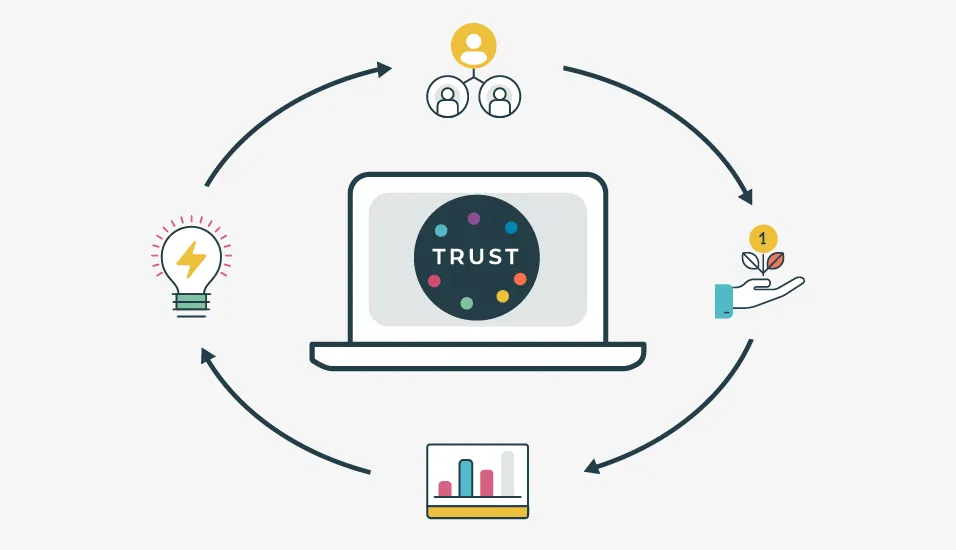
Digital Empathy through Transparency by Design: Trust
The principle of Transparency by Design provides also another powerful tool to evoke Digital Empathy.
As more complex profiling processes intervene to calculate what the User sees, showing information about the involved logic, rightly feeds the perception of fairness and honesty.
Showing to the User what you know about them, not only complies with GDPR within the reality of eCommerce, but also empowers the user with a sense of control and trust which in turn triggers loyalty.

Conclusion
We hold the ability to express our emotions through a set of universally-understood gestures and expressions. From these abilities communication and empathy are sourced.
The flat-land of an online store can easily frustrate us and yet, it can be broken by introducing Expressive Design, Anticipation and Transparency.
Adding Digital Empathy means humanising User Interfaces and Software tools in ways that user’s emotional nature can be empathized upon.