Google Cloud Platform Technology Nuggets — October 1–15, 2026

Welcome to the October 1–15, 2026 edition of Google Cloud Platform Technology Nuggets. The nuggets are also available on YouTube.

AI and Machine Learning
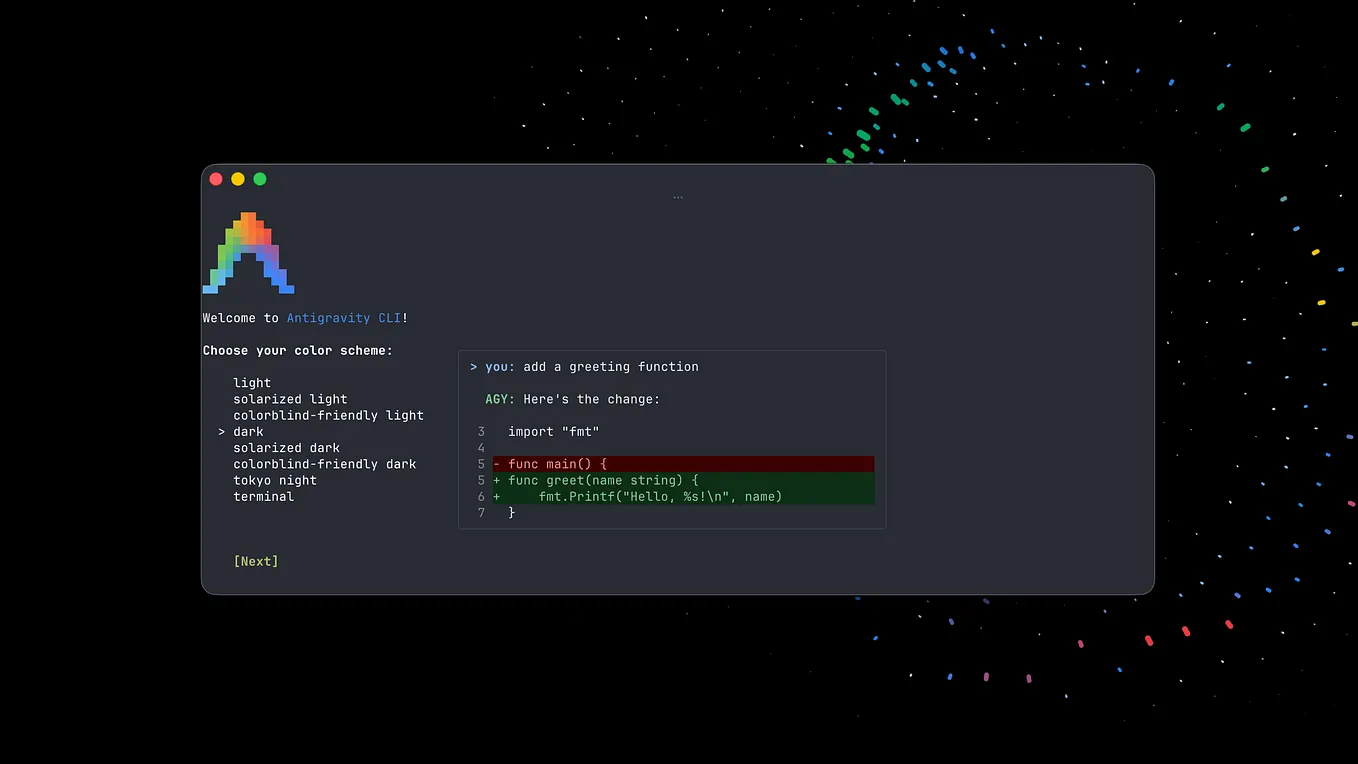
Gemini 4 Argon is now available. It is a frontier AI model built by Google to handle complex, long-running, multi-step enterprise workflows. Available on Google Cloud through Gemini platform, Google AI Studio, and Google Antigravity, it is designed for depth, precision, and heavy-duty business execution. In addition to its support for autonomous multi-step execution and complex data synthesis, an area of key improvement is its advanced code and development capabilities. This includes the ability to handle architectural refactors across massive codebases (like Chromium), improved agentic code generation in Google Antigravity, and optimizing performance (such as cutting framework session prep time in Google’s open-source Agent Development Kit). Check out the blog post.

The Google Cloud CLI remote MCP server, now available in the list of managed MCP Servers on Google Cloud, allows AI agents to securely and seamlessly manage Google Cloud infrastructure and advanced BigQuery workflows using familiar gcloud and bq commands without needing local binaries, complex runtimes, or insecure ambient credentials. Two key use cases include streamlining incident diagnostics through automated observability commands and automating resource management or scheduled queries using the bq CLI. Check out the blog post.
Data Analytics
Looking to read a round-up of updates from the Google Cloud Data Analytics, BI, and Database teams? Bookmark the link “Whats new with Google Data Cloud”.
Get Romin Irani’s stories in your inbox
Join Medium for free to get updates from this writer.
Data Agent Kit provides a set of Model Context Protocol servers and agent skills designed to support data workflows directly within integrated development environments like VS Code extensions and coding agent plugins. The toolkit enables developers to ingest raw logs from Cloud Storage into BigQuery using Spark Serverless, clean and transform data with dbt projects, train Random Forest classifiers, run batch inference to populate Cloud Spanner review queues, and automate daily execution using the Managed Service for Apache Airflow. For more details, check out the blog post.

Token-based cost management for generative AI functions in now available in BigQuery. This functionality provides daily quotas at the project and per-user levels to control input and output token consumption. These global quotas cover specific LLM-backed functions such as AI.GENERATE, AI.CLASSIFY, and AI.SCORE, while excluding embedding functions. As an Administrator, you can manage these limits through the Google Cloud console, the Cloud Quotas API, the gcloud CLI, or Terraform. For more details, check out the blog post.

Databases
A native hybrid search function in AlloyDB has been introduced that combines vector search and full-text search within a single SQL call using Reciprocal Rank Fusion, eliminating the need for complex application-layer score normalization. The key technical points include supporting the RUM extension to store positional data in indexes for improved relevance ranking and phrase matching, providing a natively supported BM25 index for keyword relevance, and enabling queries against external clusters like Elasticsearch, OpenSearch, and Solr using foreign data wrappers. For more details, check out the blog post.

Spanner Omni is now generally available, bringing its distributed, multi-model database outside of Google Cloud for deployment on-premises or on other clouds. The database combines SQL, graph, key-value, full-text search, vector search with KNN and ANN, and analytical processing through a columnar engine. It is also available in Developer Edition with a 90-day license or perpetual license for single servers with 4 vCPUs or less, alongside a paid Commercial Edition using a vCPU-based subscription model. For more details, check out the blog post.

Containers and Kubernetes
CPU startup boost, now in preview for Google Kubernetes Engine (GKE), gives containers temporary vCPU increases during initialization and scale them back to baseline levels after readiness probes pass. This prevents startup CPU throttling without requiring container restarts. Built on Kubernetes In-place Pod Resize (IPPR) and integrated into the Vertical Pod Autoscaler (VPA), this feature allows teams to accelerate application boot times while right-sizing steady-state resources. For more details, check out the blog post.

The primary challenge organizations face is that enterprise data naturally disperses across multiple clouds and operational systems as teams adopt specialized platforms. When analytical and AI workloads require organization-wide context, teams traditionally face a difficult trade-off between building complex extraction pipelines to copy data into a central repository or accepting fragmented reporting. Google Cloud’s solution here is a borderless Lakehouse architecture powered by the open Apache Iceberg REST catalog specification that lets teams query data in place across Databricks, Snowflake, AWS Glue, and BigQuery without migrating data. By separating metadata synchronization from direct storage access via Workload Identity Federation, the solution brings Google Cloud compute and conversational analytics directly to distributed enterprise data. Check out the blog post.

Infrastructure Modernization
Google Cloud has introduced Google Cloud Modernize, a portfolio that combines Migration Center, VMware Engine, Mainframe Modernization, and the new EKS-to-GKE Migration Agent to support agentic infrastructure assessments, platform updates, and application transformations. The portfolio has:
- Modernization Hub console to analyze source code and map dependencies for Java, .NET, and mainframe applications, alongside the App Modernization CLI (CodMod) for legacy code analysis.
- Compute options like the X5 Series for SAP S/4HANA, the M4N Series for core-licensed databases, and Z4D/Z4M instances with NVMe SSDs and 400 Gbps networking.
- Tools like Dual Run and the Mainframe Assessment Tool to assist core application and mainframe migrations.
For more details, check out the blog post.

Infrastructure
Google Cloud has introduced a new Ultra Low Latency (ULL) Solution and U4 machine family designed for financial markets and high-frequency trading. By combining hardware-level networking, precise UTC timestamping, and dedicated bare metal instances like the U4P and U4C, it gives traders the speed and reliability of physical servers together with the flexibility of the cloud. Check out the blog post.

Developers & Practitioners
The Google Cloud Data Agent Kit is now generally available. It is an open-source collection of Model Context Protocol (MCP) tools and Google-authored skills that connects popular coding agents (Claude Code, Cursor, and VS Code extensions) directly to Google Cloud services including BigQuery, Spanner, and Bigtable. It eliminates the tedious copy-pasting of schemas and error logs by giving AI coding agents live, secure access to inspect database schemas, run queries, and build data pipelines under your own IAM permissions. This allows you to rapidly generate data architectures right inside your IDE without context-switching. Check out the blog post for more details.

If you are using the Agent Development Kit (ADK), you are not limited to just the Python programming language. ADK has removed that trade-off with coverage for Python, Go, TypeScript, Java, and Kotlin. Each language version uses native type systems and runtime patterns, such as Pydantic for Python, generic struct tags for Go, Zod schemas for TypeScript, Spring annotations for Java, and compile-time KSP code generation for Kotlin. Interoperability between agents and tools is provided through the Model Context Protocol (MCP) and Agent2Agent (A2A) protocols. Projects can be scaffolded using the agents-cli tool for deployments on targets like Cloud Run and Google Kubernetes Engine (GKE), while supporting evaluation commands, graph workflows, and local execution options. For more details, check out the blog post.

Networking for AI inference model serving refers to the system of endpoints, load balancers, gateways, and private routing configurations used to securely deliver client requests to AI models and return responses. Google Cloud has introduced reference architectures for networking AI inference model serving across two deployment patterns: one dedicated to Google Kubernetes Engine (GKE) and another supporting mixed backends like Cloud Run and on-premises environments. Both architectures use a Private Service Connect inference endpoint for internal network access, optional Apigee API Management for identity and quota checks, and Model Armor for security screening. For more details, check out the blog post.

MCP Toolbox Java SDK v1.0 is now available, which provides a type-safe, enterprise-grade solution for agentic data access and orchestration. You can use it with frameworks like Spring Boot and LangChain4j, to easily connect AI agents to databases like AlloyDB using a universal Model Context Protocol interface. Check out the blog post.
DevOps and SRE
Google Cloud has announced a completely rewritten second edition of its bestselling Site Reliability Engineering book to mark its 10th anniversary. The new edition updates foundational SRE practices , such as SLOs, observability, automation, and incident management.

Security and Identity
The first Cloud CISO Perspectives for October 2026 is out. The key story is the launch of Prepare for Post-Quantum Cryptography, a new public Gemini Notebook designed to help CISOs, executives, and policymakers navigate the urgent security transition to post-quantum cryptography (PQC). To learn more about Google Cloud’s approach to PQC, check out the dedicated Google Cloud PQC Resource Hub.
Write for Google Cloud Medium publication
If you would like to share your Google Cloud expertise with your fellow practitioners, consider becoming an author for Google Cloud Medium publication. Reach out to me via comments and/or fill out this form and I’ll be happy to add you as a writer.
Stay in Touch
Have questions, comments, or other feedback on this newsletter? Please send Feedback.
If any of your peers are interested in receiving this newsletter, send them the Subscribe link.