Low Level Design document on the fly

Documentation is a critical part of any project or technical environment. If we don’t jot down some important information along the way, we end up repeatedly asking the same basic questions over and over again, completely draining our team members. We’ve heard from many team members that have admitted that the most annoying part of their day is answering those same repetitive questions day after day.
Manual updates are history
When it comes to documenting computer networks (or other similar systems) we tend to use programs like draw.io or Visio, which are fantastic for outline ideas during the creative process of designing a new network. Tools like these help us visualize our concepts, present them to others, then easily update those ideas as they evolve into a more cohesive plan.
For these tasks, these tools are great, but when the environment goes live… we quickly discover that we need something more.
Content updates to documentation can be a pain to maintain, especially for some of the more extensive networks — and the larger the network, the more changes an organization seems to want to make per day.
Get Milan Zapletal’s stories in your inbox
Join Medium for free to get updates from this writer.
One solution to this issue is to appoint a dedicated team member (or, depending on the size of the network, an entire team) with the task of maintaining documentation. Whether they’re frequently updating the documentation themselves, or pushing the engineers to update the documentation after each update, this becomes quite the labor-intensive task.
Automation Simplifies
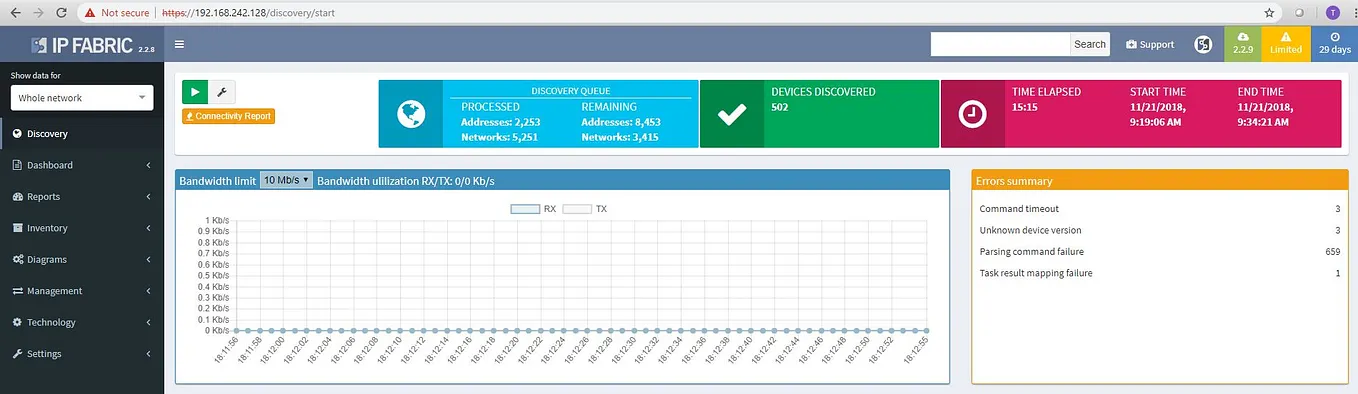
Before we built the IP Fabric platform, we knew that there had to be some way to save time during time-consuming network operations processes. After simplifying that process through automation, we then took that same logic and turned our sights on the documentation process, which led us to add a feature to the platform that gathers more than 1000 parameters from a single network device.
Now, on top of generating breathtaking interactive network diagrams, the platform can generate low-level documents. After every discovery snapshot, the platform creates a report that includes all the information needed for an audit, including device inventory details, physical layer, data-link layer details, routing and switching details.

These documents full of fancy diagrams can be generated whenever needed, and can easily be modified or compared to previous versions. This feature is an excellent timesaver for any Network Engineer or Network Engineering Manager, which helps them become a much more productive team member. Instead of wasting time working on mundane tasks, they can focus on tasks that create value, like examining overall network architecture, increasing stability, or having some spare time to enjoy their cup of coffee.


If you have found this article resourceful, please follow our company’s LinkedIn or Blog, where there will be more content emerging. Furthermore, if you would like to test our platform to observe how it can assist you in more efficiently managing your network, please write us through our web page www.ipfabric.io.