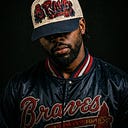
Returning to the Roots…Vol, 1.


More than just a festival set, Jay-Z’s return at The Roots Picnic was the prologue to a much larger story.
(Part 1 of a 3-part series examining Jay-Z’s 2026 performance run from Philadelphia to the Bronx.)
The Stage Was Set
Ironically, the last time I saw Jaÿ-Z perform live was also in Philadelphia. He closed out the Made in America festival with a set that mixed his classic anthems with fresh material from 4:44. Outside of the obvious hits, the performance created a quiet, intimate atmosphere that felt like a far cry from the chest-thumping Hov we grew up on.
Don’t get me wrong: when the hits dropped (like “Jigga What, Jigga Who” or “Encore,” where he paid homage to the late Chester Bennington of Linkin Park), we threw the Roc up like always. But the emotional weight felt different. Unfamiliar, even, for a Jay-Z show.
When I look back, I marvel at how many of my experiences seeing Jay live have involved some sort of adventure. In 2013, I flew to New York during one of the hottest summers on record to watch him and Justin Timberlake at Yankee Stadium. In 2015, I rode a Korean company-based bus all the way from Georgia to New York just to catch his B-Sides show. And in 2021, I flew to Cleveland to watch him get inducted into the Rock and Roll Hall of Fame. (He didn’t perform, but he gave a remarkably thoughtful acceptance speech).
I’m not sure if that track record says more about me as a fan (and my spending habits) or the magnitude of his gravitational pull as an artist. For my own sake, I’m going to say it’s the latter. That’s why my veteran instincts kicked in the second he was announced as the Roots Picnic headliner.
One thing about following an artist over several years — or miles — is that you get a front-row seat to their evolution. Some change drastically in look, sound, or name. Others shift in subtle ways. Jaÿ-Z is more of the latter.
If you’ve followed his discography, you’re familiar with the shifting pockets, the evolving cadences, and the long list of collaborators he’s brought along to unlock new sounds. But for as subtly variable as those things can be, one constant remains at the center of it all: the mythos.
Jaÿ-Z is a hustler. He can “sell water to a whale” and “fire in Hell”. He started his own record label in 1996, paving a way through an industry that refused to see his potential early on. Eventually, that hustler turned into arguably the best rapper alive, and then, a business, man.
These things are known…if you know. If you don’t, it’s easy to peruse his music and hear more of the same: he sold drugs, bought expensive cars, stacked jewelry, and collected fine art.
The problem isn’t that he built a life that granted him access to those luxuries. The problem is that elevation creates a dangerous middle ground. When an artist reaches these heights, they run the risk of alienating the very culture that raised them, while remaining perpetually misunderstood by an outsider crowd that only sees the flex. For casual listeners, the cars and Basquiats obscure the real story: the masterclass in survival and strategy sitting right underneath the luxury.
Back in the day, if you wanted to criticize Jay-Z, the debate stayed strictly within hip-hop lore. The common refrains were always the same: Nas bodied him on “Ether,” Eminem out-rapped him on his own song, and he was never really “The Guy” without a dominant era. It was purely bar-for-bar, sports-bar rap debate.
Recently, the conversation has shifted entirely. It’s almost impossible to talk about Jay-Z without navigating the thicket of modern controversies that have shadowed his last few years. The rap debates have been replaced by heavier headlines: civil lawsuit allegations, pushback over his social justice partnership with the NFL, and cultural side-eye for partnering with Target on exclusive vinyl releases.
Suddenly, the criticisms aren’t about whether he can write a better 16 than his peers. They’re about corporate morality, institutional co-optation, and personal ethics.
It’s easy to argue over grand theories on Twitter or critique a legacy behind a keyboard. But live music doesn’t happen on a timeline. It happens on the grass. Standing in Fairmount Park, I wasn’t just watching a rap icon; I was watching a high-stakes cultural contradiction play out in real time. And I was about to realize that what people criticize Jay-Z for in the boardrooms might be the exact thing our culture is dying for on the ground.
The Roots
For weeks leading up to Philly, I played predictor. I hauled his GQ issue in my backpack, reading it on the subway while the internet lost its mind assuming an album rollout was imminent. I stayed skeptical. Jay told Kevin Hart he only records when he actually has something to say. And he told Frazier Therpe that the music he had recorded later was “bad”. And don’t get me wrong, if a new album came out, I’d jump at the opportunity to listen to it. But, if I had to choose between getting a new Jay-Z, because he felt obligated or pressured to release one, and letting the beauty that is his discography ride out, then I’d probably go with the latter. I care way too much about his legacy to beg for half-baked content just to feed a 24-hour news cycle.
Earlier this year, I wrote about how Jay’s limited 2026 run was a calculated scarcity play, a refusal to participate in modern music’s oversaturated, endless-touring machine. But sitting on a theory behind a screen is one thing. Seeing how it translates to the grass in the Plateau (where everybody go…sorry, I had to) Fairmount Park is another.
While I could predict some of the songs, on the set list, and some of the “surprise” guests, what I couldn’t have predicted was what the ground-level experience would actually feel like. This was my first time at the Roots Picnic, so despite how well I knew the performers, I had zero frame of reference for the venue. And if I had to choose a single word to sum up my experience, I’d say: conflicting.
In many ways, Fairmount Park felt like home: a rare, beautiful space where you don’t have to explain yourself or shrink to fit in. Catching Brandy on that same stage hours earlier, surrounded by different generations soaking in the culture, was magic.
But actually navigating the grounds was a mess. On day one, organizers shut down a main entrance gate, forcing us to walk a block down the street, to get to the other entrance. I tried to take it in stride, but if the long walk wasn’t enough, the entry-way was so backed up, that we ended up being stuck, with no way in, and virtually no safe way out. And not only that induce fear, panic, and concern, it also meant missing the entire History of Go-Go set happening inside.
Once you finally made it through, the problems kept stacking. Concessions ran dry early, bathroom lines, for the limited amount of porta-potties barely moved, and medical or harm-reduction stations (or any safety supply stations, for things like Naloxone) were nearly impossible to find. By evening, the crowd density forced tough choices. I had to skip Jermaine Dupri completely just to hold my spot on the lawn for Hov.
That wasn’t just bad planning. It was what happens when a beloved, grassroots institution grows bigger than its container. Dropping a global icon of Jay-Z’s scale into that setup stretched the park past its breaking point.
And yet, as late afternoon turned to dusk and the heat baked through the crowd, the physical friction gave way to an undeniable, communal warmth. Standing shoulder-to-shoulder, or in some instances what felt like soul-to-soul, with people who had traveled just as far as I had, the logistical mess began to fade. We weren’t sure if this set was built to celebrate his past or launch his future, but we knew what Shawn Carter brings to a stage.
By the time night fell, all 80,000 of us were locked in.
As a die-hard fan of his 2001 MTV Unplugged set with The Roots, I kept wondering how he’d honor that history. Would we get those smooth live transitions that made Unplugged iconic? I knew his standard setlist by heart, but I was hunting for deep callbacks.
Before Jay even took the stage, Questlove and the band started stretching out the sample from “It’s Hot (Some Like It Hot)” off Vol. 3… Life and Times of S. Carter. They took a grimy, late-90s Timbaland beat and turned it into something lush, ancient, and hypnotic. It wasn’t just a song intro. It felt like a time machine. The original record sampled Elsie Mae’s “A Whole Lot of Lovin’,” but live, the band leaned into its whimsical, far-off elements.
“Marrakesh,” my mom remarked, standing right next to me.
I was so locked into the band that the guy beside me saw him first.
“Look at his hair!”
I looked up. Shawn Carter stepped into the spotlight rocking a full Afro, a direct homage to his late father, a die-hard Dr. J fan.
Get Kalan Reese’s stories in your inbox
Join Medium for free to get updates from this writer.
(Quick confession: My braids were long overdue to come down. The second I saw Jay’s fro, panic set in. The minute I take these down, everyone’s gonna say I’m biting Jay-Z. I unraveled them two days later anyway. If people accuse you of biting someone, there are worse targets.)
As the applause swelled, the music cut back, leaving only a grainy, archived audio clip reverberating over the park speakers:
“If you listen to the music, it’s always been anti-industry… I was never trying to fit into their box. We built this from the trunk because they wouldn’t open the door.”
Hearing those words echo across the Park skipped past a nostalgic nod and leapt straight to the weird, in-between space Jay occupies today. He stands right on the fault line where hip-hop culture meets global corporate power. Mainstream media treats a Black billionaire with constant suspicion, ready to spin every deal into a cynical headline. But that same wealth creates a real rift back home. The higher he climbs into boardrooms, the louder the whispers get on the block: Is he still one of us, or did he insulate himself behind money and forget where he came from?
Jay didn’t address those whispers with a speech. As the audio clip faded, Questlove gave a four-count on the rim, and the band dropped heavy into “Hovi Baby” off The Blueprint 2, an aggressive, defiant opener reminding everyone the throne is still occupied.
Then Questlove locked into a deep pocket, and Jay unleashed an unreleased freestyle that laid out his entire offensive strategy.
Playing Offense
“Hattie’s turnin’ a hundred / If she would’ve transitioned ’fore I cleared my name, I would’ve hunted them / Every one of them playin’ these silly games / That 1–800-ambulance-chaser would’ve wished one came / But 911 a joke, Public Enemy #1 I’ve been ranked…”
In a single unreleased freestyle, Jay cleared out his entire ledger. Over Questlove’s pocket, he replied to a litany of foes: several rap peers, a predatory civil lawyer, his political opps, and even the bizarre spiritual accusations floating around the internet.
It was a masterclass in efficiency. Instead of granting his critics individual news cycles, he lumped them all together, dismantled them in 32 bars. But, it was ironic, because in that GQ issue sitting in my backpack, Jay sounded like a retired fighter who had outgrown rap beef, wondering why grown men spend time slinging mud on the internet just for blogs to turn it into drama. On paper, he seemed above the noise. But standing on stage with a live mic, that peaceful elder-statesman routine vanished.
It looked like a contradiction at first: preach peace in glossy magazines, then step right into the mud on stage? But listening to the bars, you realized Jay wasn’t being fake; he was drawing a line. To Hov, fighting in Instagram comments or subliminal podcast clips is cheap internet noise. Writing 32 bars of raw, technical poetry over a live band, however, is how an MC defends his turf.
Hearing him declare that he was on “all offense” this year made me pause. What does “offense” actually mean for a Black billionaire in his fifties?
Jay-Z could easily make another high-level corporate play, close another joint venture, or add another zero to his net worth. But none of those moves carry the kinetic impact of him standing on a stage, holding a microphone, and commanding 10,000 human beings in real time. Boardroom deals buy leverage, but performance commands devotion. On that grass, we weren’t looking at press releases or corporate valuations; we were witnessing the live manifestation of his actual influence.
That distinction matters now more than ever. Over the last few years, as heavy allegations floated around the internet and side-eye grew over his partnerships with the NFL and Target, a quiet shift occurred. His distance created a vacuum. Because his public moves existed in high-altitude corporate spaces, they lacked an obvious bridge back to the block. To the casual observer, it looked like another cold corporate transaction, another move that increased his bank account while decreasing his visible ties to the culture that birthed him.
That space between the billionaire executive and the street-level culture invited judgment. People shot past questioning his business moves and went straight to questioning his character. They assumed the money had made him soft, insulated, or disconnected.
The Philadelphia show was his way of collapsing that distance — not through a PR statement or an explanatory interview, but through pure, athletic performance.
State Properties
Beyond the surprise bars and shots across the bow, watching Shawn Carter command a stage after nearly a decade away was a lesson in preservation. It felt simultaneously familiar and fresh. The Afro catching the stage lights gave him the aura of a seasoned elder, yet the polish, the showmanship, and that legendary breath control hadn’t aged a bit. He wasn’t gasping for air or letting the backing track do the heavy lifting; he was leaning into the mic with the same relaxed precision he had twenty years ago.
The setlist hit that same balance between heritage and evolution. Heavyweight classics like “Public Service Announcement” and “U Don’t Know” shared space with the introspective, late-career poetry of 4:44 tracks like “Marcy Me” and “The Story of O.J.” Hearing him perform those newer, self-reflective records live on the grass bridged the gap between the young hustler from Marcy and the billionaire mogul standing in Fairmount Park.
Then came the guest appearances — a move that, in professional wrestling, they’d call taking a “cheap pop” by throwing local favorites on the big screen. But in Jay’s hands, bringing out Philadelphia royalty wasn’t a cheap trick; it was a masterclass in cultural alignment.
When Bilal stepped out to lend his otherworldly vocals, followed by Jazmine Sullivan’s soul-stirring power and Meek Mill’s explosive home-city energy, the crowd lost its mind. Featuring artists native to the city you’re playing in is always a smart crowd-pleaser, but here, it carried deeper weight. It served as living proof that despite his corporate altitude, Jay remains deeply attached to the living, breathing organism of Hip-Hop.
Yes, he was headling a festival , but he was also sharing his light with the vocal titans and street icons who keep Philly’s musical pulse beating. He was curating a lineage. And right as the crowd was absorbing that multi-generational showcase, the band shifted gears, and the park truly exploded…
As if the show wasn’t already reaching legendary status, the energy hit another level when he brought out more of guests. What started out with his original right-hand-man, Memphis Bleek, evolved into even more of living display of the dynasty that he’d built during his original reign, from the mid-90s to the 2000s, as Philly’s own Peedi Crack, Beanie Sigel, Freeway, and the Young Gunz, all members of the group State Property hit the stage, truly making this show feel like a homecoming.
State Property was the raw, real heart of Roc-A-Fella’s golden era. Watching Beans and Freeway command their home city next to Jay erased years of internet gossip, business fallouts, and distance. For those few songs, the billionaire status melted away. The brotherhood that built the empire took over. It was a loud reminder that before boardrooms and art auctions, this whole thing started with rap.
The Warmth and the Wire
The portal that the opening interpolation of A Whole Lotta Lovin had guided us through had closed. The show was over. When State Property walked off and Jay sent us home with the song Encore, the adrenaline cooled, reality set back in. My voice was raw from screaming every word to “What We Do.” The show was over. I tried to break away to grab water, only to hit a wall of people stuck in total gridlock. Standing there in the crowd, shoulder-to-shoulder under the trees, the central contradiction of the night played out right under my feet.
Fairmount Park gave us something rare: a space where you don’t have to shrink or explain yourself. But as thousands of us tried to squeeze toward the dark exits, stepping over empty cups and straining past choked bottlenecks, an uncomfortable truth settled in.
The Roots Picnic is a beloved community festival built on local energy. But dropping a global icon like Jay-Z into that footprint stretched the space past its breaking point.
That’s where his two worlds collide. The culture constantly checks Jay-Z for moving in corporate spheres, accusing him of selling out or leaving the block behind. But standing in a darkened park, waiting two hours for a uber, with failing infrastructure and gridlocked crowds, you realize something hard. We can’t run our largest cultural gatherings on good vibes and community love alone.
If Hip-Hop is going to remain the dominant force on the planet, our flagship events need the funding, safety, and operational backing to match. The corporate scale people criticize Jay-Z for chasing is the exact thing required to keep Black cultural spaces safe, organized, and running right.
The Roots Picnic proved Jay-Z’s voice, timing, and hunger haven’t aged a bit. Standing on the grass with his Afro catching the night breeze, he closed the gap between his billionaire world and the streets that raised him. He proved that true authority doesn’t need to argue on the internet. It just shows up.
He also left us with a real question: as our biggest artists grow into global icons, how do we make sure the physical spaces they leave behind stay safe and well-supported?
Yankee Stadium was next, and I was about to watch him step into the museum.
(To be continued in Volume 2: The Blueprint & The Bronx)
What do you think? Does hip-hop lose its soul when it scales up to corporate arenas, or is institutional capital the only way to build safe, lasting cultural spaces? Share your thoughts in the replies below.