Adinda mirza devani·4d agoHide and Seek di Dalam KernelRootkit punya cara yang cukup unik untuk menyembunyikan proses. Salah satunya bernama DKOM, singkatan dari Direct Kernel Object…
InCyber Security Write-upsbyShailendra Singh Sachan·Oct 3eBPF Rootkits: Analysis & DetectionThe syscall table stays clean. The process disappears anyway. A hands-on teardown of an eBPF rootkit, and how to detect it.
Alexius McMullin·Aug 13The Fix for CVE-2026–68820 Is Out. The Fix for the Problem Isn’t.Microsoft’s August 2026 Patch Tuesday shipped fixes for somewhere between 398 and 421 CVEs. The exact count depends on which configurations…
ahmetemreparmaksiz·Aug 13Kernel Rootkitlerine Karşı Olası Yeni Bir Gözlem Yüzeyi: Chkrootkit Deneyleri ve Canary Logs.
InOSINT TeambyPop Alexandru·Jul 29eBPF-Based Kernel Rootkits: Unmasking Stealth Persistence & Detection PrimitivesHow modern Linux malware leverages the BPF virtual machine for socket manipulation and telemetry evasion, and how EDRs detect it.
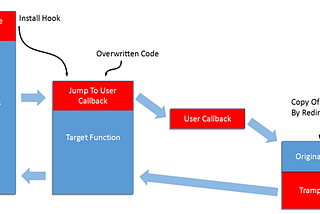
Ilyes AZIZ·Apr 14Inline Hooking: How do rootkits hide their activity on an infected machine?Introduction
Ilyes AZIZ·Apr 14Inline Hooking : Comment les rootkits masquent leur activité sur une machine infectée ?IntroductionA response icon1A response icon1
Ananthan R·Apr 9Argus: Building a Linux Kernel Rootkit Detection ModuleArgus is a Linux kernel rootkit detector using cross-view analysis to uncover hidden system activity.
Stefan Cicos·Mar 25MalOps Singularity WalkthroughI recently came across the Malops platform and it immediately caught my attention, so I decided to start with the Singularity challenge…