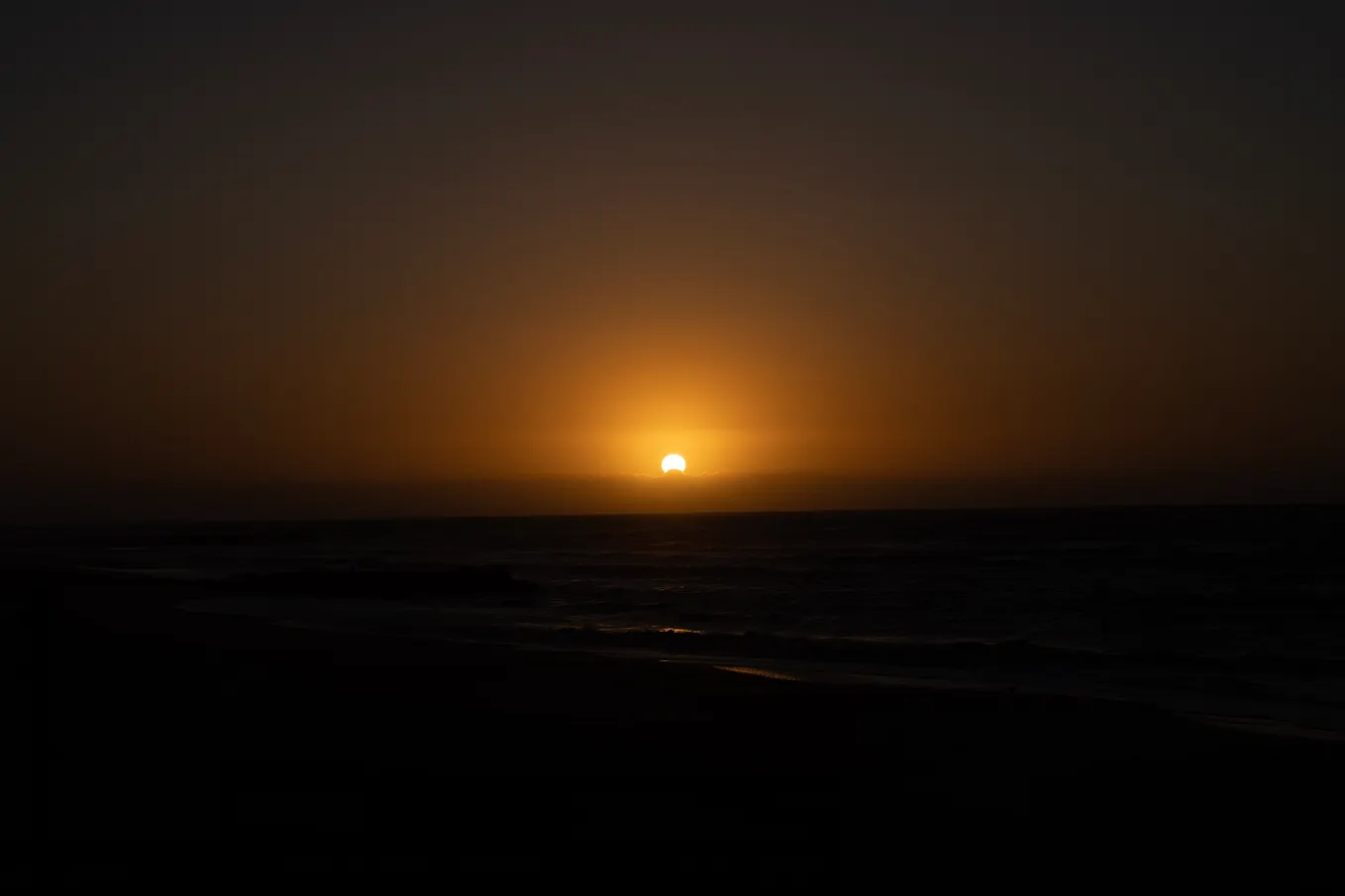
Mother . Ocean .


The ocean, much like a mother, nurtures, protects, and sustains life on Earth. Yet, as the very foundation of life on our planet, it continues to be overwhelmed and exploited. Despite its vital role, we treat the ocean with indifference, unaware that its capacity to nurture us is not infinite. In this blog, I explore my deep connection to the ocean and why we can no longer remain complacent in its destruction.
The ocean has always been my refuge, a second home where I’ve found solace, connection, and inspiration. It feels fitting, then, that my first professional step into the climate space was at Sofar Ocean — an ocean data intelligence company making ocean data accessible, reliable, and cost-effective. Their work empowers academia, research institutions, and industries to make informed decisions that benefit both human safety and the ocean itself. During my time there, I faced a steep learning curve, diving into how the ocean works and its profound influence on every aspect of life on Earth.
Some of my favorite memories are tied to the ocean. I’ve scuba-dived with octopi on Verde Island, paused nose-to-nose with a sea turtle both curiously observing the other, surfed alongside sea otters and sea lions, and watched dolphins glide beside a boat I was on. I’ve stood mesmerized by the Monterey kelp forest as sunlight painted it like an underwater masterpiece. These habitats and species are alive, sentient, and interconnected in ways that mirror human relationships.
Our Oceans power us. They generate over half of the world’s oxygen,¹ regulate climate by transporting heat from the equator to the poles,² and absorb 25% of human-caused CO2 emissions.³ They support the livelihoods of over 500 million people through fishing, tourism, and transportation and provide resources to feed approximately 40% of the global population.⁴⁵ Yet, despite their importance, we treat them with indifference — trashing and exploiting them while expecting them to continue protecting the air that we breathe and the protein that we eat.
Our Oceans are inundated with pollution, 80% of which is plastic waste.⁶ This pollution doesn’t just come from littering on beaches; most of it comes from our streets due to improper disposal, industrial discharge, and overflowing trash bins. Stormwater runoff and rivers carry this waste into the sea, where it gets mixed in with microplastics and other pollutants. Noise pollution and diesel waste further stress marine life, leaving ecosystems and species defenseless against our negligence. An experience I’ll never forget was in a small town called Liwa in the Zambales province of the Philippines. Upon entering the town, we were told to pay an environmental fee to help protect the area, yet once we arrived at the beach, the ocean area was overwhelmed with noisy banana boats emitting black smoke from their diesel-run engines. The stark contradiction was heartbreaking, and the hypocrisy was painfully clear.
The rising heat content of our oceans is another urgent challenge. Oceans absorb the majority of the heat trapped in our atmosphere, and as global temperatures increase, the ocean’s heat absorption capacity skyrockets. This extra heat not only causes acidification, disrupting marine ecosystems, food chains, and coral reefs, but also triggers thermal expansion — a classic case of water expanding when heated. This leads to sea level rise, which isn’t just a minor shift. It triggers coastal flooding, erosion, habitat destruction, and massive infrastructure damages. The economic toll could reach $14 trillion globally by 2100.⁷ Projections indicate that high-tide flooding could occur up to 50 days per year in coastal cities like Miami by 2050, while rising sea levels are expected to submerge 17% of Bangladesh’s land, displacing an estimated 20 million people.⁸⁹
We have pushed our oceans past multiple tipping points. If global temperatures rise by 2°C, over 95% of coral reefs could vanish.¹⁰ Over 90% of global fish stocks are already fully exploited or overfished, threatening the primary protein source for 3 billion people and the livelihoods of 60 million who depend on fisheries.¹¹ These ecosystems shouldn’t need to prove their economic value to deserve protection. Their existence alone is reason enough to care. But they can’t speak up for themselves — we have to, or we’ll all bear the cost. Future generations may never get to witness a dolphin in the wild, enjoy a fresh salmon meal, or marvel at the beauty of a coral reef.
The ocean is a delicate balance — every action we take sends ripples through the ecosystems it sustains. Overfishing tuna, for instance, disrupts predator-prey dynamics, destabilizes ecosystems, and strains already struggling coral reefs. These ripple effects come back to us — empty oceans, fewer fish to eat, and weaker coastlines to protect us from storms. Protecting the ocean isn’t just about saving nature; it’s about saving ourselves.
Our Mother Ocean. She is our protecter, our nurturer — maintaining the balance for all those who depend on her. But even mothers have their limits. Overburdened by roles and responsibilities, her natural gifts dim under the toll, leaving everyone at a loss. Is overwhelming our mother Ocean worth it, when it is she that brings us so much beauty, so much abundance? She quietly weaves the unseen threads that keep life running smoothly, her efforts so seamless we rarely notice — asking for nothing in return, not even thanks.
Get Rebecca Berger’s stories in your inbox
Join Medium for free to get updates from this writer.
But it’s not too late. If we make a collective commitment to protect our Mother Oceans, we can restore the balance she has long maintained. Let’s treat our oceans with the respect they deserve, not as an endless resource, but as the lifeblood of our planet.
Mother . Oceans .
Ode to the oceans, underwater trees,
Working overtime,
Not even a weekend for rest,
Processing the mess,
feeding the rest
for the collective greater good, we must see
So is it me or you? Carrying the world on her shoulders?
— Oceans, underwater trees.

[1]: National Ocean Service. (2024, June 16). Ocean oxygen. National Oceanic and Atmospheric Administration. Retrieved January 8, 2025, from https://oceanservice.noaa.gov/facts/ocean-oxygen.html.
[2]: NOAA Ocean Exploration. (n.d.). Climate change and the ocean. National Oceanic and Atmospheric Administration. Retrieved January 8, 2025, from https://oceanexplorer.noaa.gov/facts/climate.html.
[3]: World Ocean Review. (2024). How the ocean absorbs carbon dioxide. Retrieved January 8, 2025, from https://worldoceanreview.com/en/wor-8/the-role-of-the-ocean-in-the-global-carbon-cyclee/how-the-ocean-absorbs-carbon-dioxide/.
[4]: World Health Organization. (2023, October 12). The production of food from oceans and fisheries in low-income countries. PubMed Central. Retrieved January 8, 2025, from https://pmc.ncbi.nlm.nih.gov/articles/PMC11243763/.
[5]: World Meteorological Organization. (n.d.). Ocean. Retrieved January 8, 2025, from https://wmo.int/topics/ocean.
[6]: UNESCO. (2022, May 9). Plastic pollution in the ocean. Ocean Literacy. Retrieved January 8, 2025, from https://oceanliteracy.unesco.org/plastic-pollution-ocean/.
[7]: Bloomberg. (2023, July 25). Threat to infrastructure means businesses must prepare to navigate rising seas. Sponsored by Zurich. Retrieved January 8, 2025, from https://sponsored.bloomberg.com/article/zurich/threat-to-infrastructure-means-businesses-must-prepare-to-navigate-rising-seas.
[8]: Miami Herald. (2023). Miami is entering a state of unreality as climate impacts worsen. Retrieved from https://www.miamiherald.com/news/local/environment/climate-change/article281202298.html.
[9]: Natural Resources Defense Council (NRDC). (2018, September 13). Bangladesh: A country underwater, a culture on the move. Retrieved from https://www.nrdc.org/stories/bangladesh-country-underwater-culture-move
[10] NASA. (2023, April 6). Vanishing corals: NASA data helps track coral reefs. NASA Earth Science. Retrieved January 8, 2025, from https://science.nasa.gov/earth/climate-change/vanishing-corals-nasa-data-helps-track-coral-reefs/.
[11] The World Bank. (2017). SDG 14: Life below water. Retrieved January 8, 2025, from https://datatopics.worldbank.org/sdgatlas/archive/2017/SDG-14-life-below-water.html.