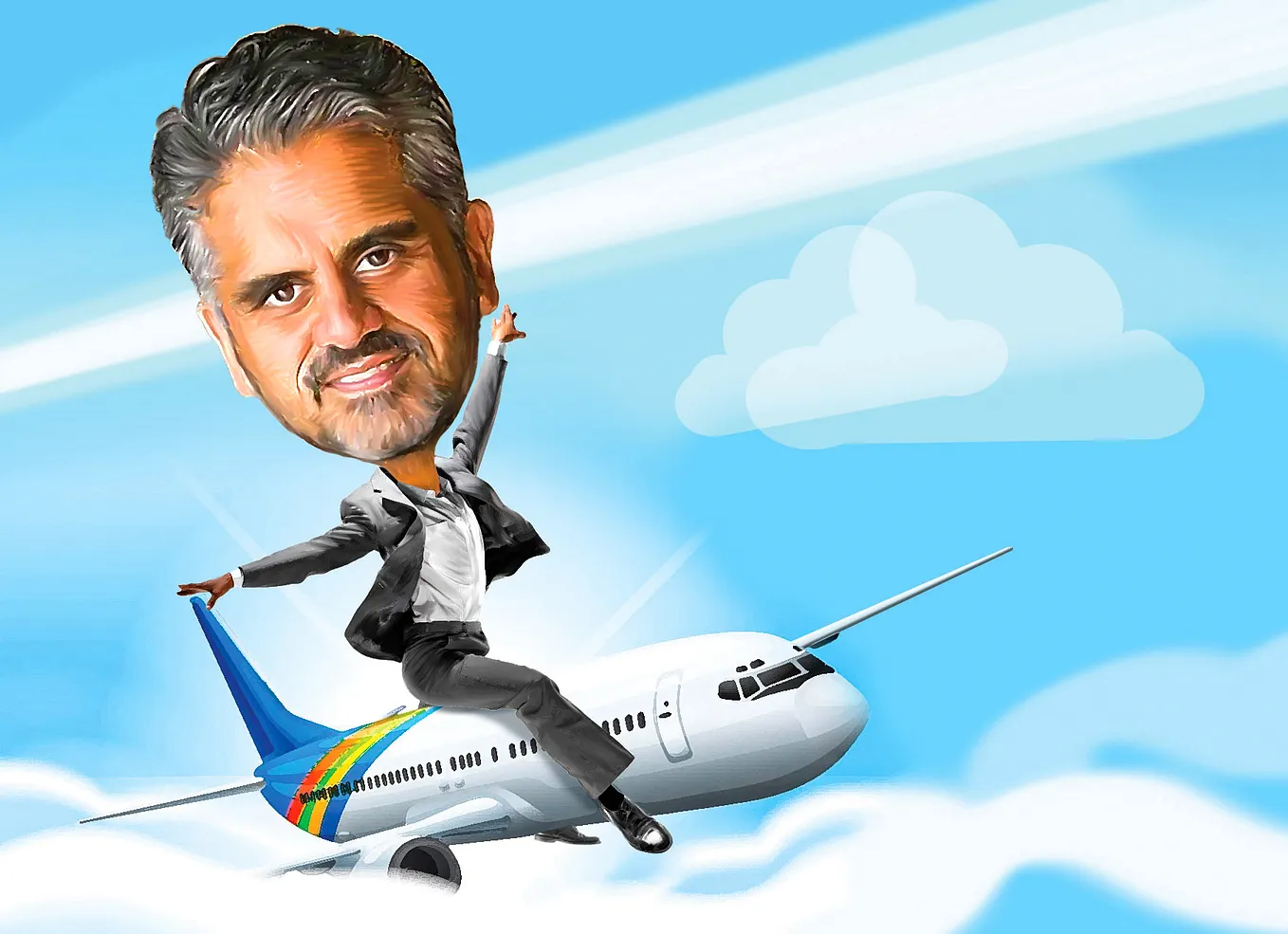
Pilots, Bootstrapped Engine & Rocket Fuel

Jimit Bagadiya and Tejas Mehta propelled their robust, sustainable, and highly profitable journey with bootstrapped fuel. A decade later, though, the co-pilots discerned a pressing need for rocket fuel to crank up pace in the 10–100 journey. Enter Group.one, and SocialPilot is set for a heady ride
“Dhandha aacha chal raha hai (the business is doing well),” exults Tejas Mehta. The venture has been growing exceedingly well, reiterates the plucky cofounder of SocialPilot. His co-pilot and partner-in-crime, Jimit Bagadiya, interjects. “It’s a high EBITDA business, and even bankers are stunned by our numbers,” underlines the Gujpreneur from Ahmedabad who, along with Tejas, started the social media management platform for SMBs (small and medium businesses) and agencies back in 2014.
The friends were not running a normal business. It was a magical business. Here’s why. “It’s bootstrapped, we don’t have any bosses, and we can do whatever we want,” Tejas and Jimit burst into a loud guffaw. Freedom? Yes. Growth? Absolutely yes. Master of your destiny? “Indeed,” the duo erupt in raucous laughter.
But what made their incredible story resemble a fairytale was three priceless ingredients: Sharing a hearty laugh with cofounder, navigating the uncertainties of entrepreneurship without stress, and JOMO (joy of missing out)…Tejas and Jimit were doing something that not many entrepreneurs would manage to do, and a lot many would envy. “Dhandha aacha chal raha tha (business was doing well),” says Tejas. “Phir, kyon baahar niklein (then, why to exit),” adds on Jimit.
But they did, eventually. A north of $50-million buyout deal with group.one. A blockbuster exit. But a billion-dollar question that still remains is: why?
Welcome to The Grit Stories. We are trying to find out why entrepreneurs, who run an insanely profitable and lucrative bootstrapped business, finally press the exit button?
Is it for money? Nah. Had it been so, Jimit and Tejas would have yielded to the temptation of multiple unsolicited acquisition offers that came their way over the last five years.
Then what is it? Is it the grueling toil of over a decade that finally takes a toll: mentally, emotionally, and psychologically? No, it can’t be so. Reason? Tejas and Jimit are not hanging their boots, but are starting a new innings with renewed energy, commitment, and resolve.
Okay. Then what nudges them to press the exit button? Is it because of the laws of diminishing marginal utility? The law states that the more of something a person has or consumes, the less value each additional unit brings. Did eleven years of grind diminish the passion? In some cases, this could be the reason but for Jimit and Tejas, SocialPilot was their life. And they have enjoyed every bit of it, every frame of it, and every moment of it. “We still yearn for more,” smiles Jimit.

‘WHY’ THIS KOLAVERI
Okay, then what is it that makes committed founders say a ‘yes’ to acquisitions?
Let’s go back to the journey of SocialPilot to find out the ‘why.’
Tejas starts the ‘why’ conversation by sharing loads of ‘desperation’ stories.
Over the last decade, especially over the last five years, a battery of private equity and rival companies tried to woo the ‘eligible bachelors.’ “They were desperate to acquire us,” he recounts. To be honest, it was tough to resist the temptation. Money was on the table, an open offer to sweeten the deal was also on the table, but the friends never walked up to the table. Though buyout proposals failed to entice the bootstrapped founders, there was something they relished. It was the captivating charm of a long queue to acquire them. “We never needed validation from outside but so many guys chasing us made it crystal clear to us that we were on the right path,” recalls Jimit.
Indeed, it was a great path to walk. Indeed, it must have been an amazing feeling to be pursued. Indeed, it would have been hard to politely decline. But the unadulterated thrill of building something tangible, substantial, and profitable negated the impact and charm of everything else. To others — especially to the ones wooing the cofounders — the duo might have looked stupid in declining offers. But ask any founder about the joy of building a bootstrapped business and invariably many would resort to the dialogue from Bollywood movie Om Shanti Om: ek chutki sindoor ki keemat tum kya jaano Ramesh babu! The unsullied charm of building your business without outside capital, interference, and pressure. It’s bliss.
The bliss, though, ran its course after a decade. Reason? Except love, everything in this world has a shelf life. Product, service, relationship, business model…they all expire, and if you don’t want it to happen, you need to reinvent the wheel. The SocialPilot cofounders too were gripped with the question of either remaining bootstrapped, which helped immensely in 0 to 1 and 1 to 10 journey, or finally handing over their baby to an amazing guardian who would shower love, care, and affection to the employees, and bring in capital to scale the business furiously in in its 10 to 100 journey.
Get Avinash Raghava’s stories in your inbox
Join Medium for free to get updates from this writer.
The choice was a no-brainer. Group.one, the cofounders reckon, was built with the same bricks of values, culture, and empathy with which SocialPilot built its foundations. The synergies tallied, the horoscope matched, and the bachelors ended their bootstrapped innings by selling out to group.one in a $50-million deal.
REALITY BYTES
Though the exit stars aligned this year, the nudge to exit happened last year. It was sometime in March 2024. There was a sudden slump in the growth trajectory due to change in SEO of a top social media platform as well as a bunch of other external market dynamics. “We tried everything in the organic marketing playbook to spur the growth,” recalls Jimit. Nothing worked, though. The duo explored paid marketing, created a brand team, and pushed the envelope in terms of trying new hacks in social media management. After a few months, there was progress. But it was still not commensurate with the efforts put in by the founders.
The sluggish growth triggered a priceless realisation. “If we are not able to grow the company the way it should be, it’s a grave injustice to the employees as well as the company,” reckons Jimit, who factored in another interesting aspect. SocialPilot had turned eleven. What it means is the ‘0 to 10’ journey took over a decade. “We didn’t want the same pace of growth for ’10 to 100’ journey,” he adds. Tejas explains the mindset of a founder who had admirably grown at a decent pace while staying bootstrapped. “The 10 to 100 journey needed rocket fuel,” he says, adding that from one product SocialPilot is now a platform with multiple products. The rocket was ready. The engine had been built using the bootstrapped wires. Now, all that the vehicle needed was rocket fuel. “We had enough money in the bank. But it was not the rocket fuel,” he says.
But why did the money lying in the bank not act as a stimulant? Tejas gives us a candid answer. “We had the money but we didn’t know how to spend it more efficiently,” he confesses. Jimit, for his part, talks about the ‘Gujju’ mindset and the Gujju way of doing business. “We have been taught to build a profitable business and depend on whatever capital we have,” he says. Back in 2014, and even many years after that, the math was simple: how much money are you earning, how much money is in the bank, and how much is the profit. The VC money or PE capital were never ever in the equation.
A bootstrapped mindset, undoubtedly, built a sustainable foundation. It inculcates a frugal mindset. It encourages a culture where one starts valuing money. It fosters an environment where every penny spent is questioned, and looked from the lens of a RoI. It creates a business model which is not built on the foundation of cash burn or reckless spend or high customer acquisition cost. It can also enable you to build a big business from tier II or beyond. This is what Jimit and Tejas did. So, the positives are everlasting and limitless.
But there is a flip side as well.
First, one is always strapped for resources. “You need to grow with whatever you have,” says Jimit. While this ‘hustle and grow’ helps in 0 to 1 and 1 to 10, it acts as a baggage in the next phase of the growth. VC money is not plain vanilla capital. VC money also brings with it connections, and endless possibilities. Second, lack of money hampers your effort to hire talent. Now, there are companies that have grown with limited resources but if money lets you roping in the best minds in the industry, then why not? It’s a competitive and decisive edge over rivals. “We had the mindset of figuring it out with whatever we had,” says Tejas.
Interestingly, this ‘figuring it out’ also comes with an expiry date. What has brought you and helped an entrepreneur in ‘0 to 10’ is not going to be of much use in ’10 to 100.’ In the case of SocialPilot, the big factor that egged the cofounders to move under the stable of group.one was the choice of a perfect partner. Group.one, reckon Tejas and Jimit, not only mirrored the values and ethos imbibed by SocialPilot but also had considerable might in terms of market presence, sizeable customer base that could be tapped for upselling and cross-selling, and a shared vision. “Partnering with them is like a marriage made in heaven,” says Jimit.
Third, a bootstrapped culture also curtails the intent to spend ‘more’ money on marketing, advertising, and hiring. Again, it works brilliantly in the formative stages but it hurts during the advanced stage of growth.

VC MONEY A SILVER BULLET?
But is having money or VC capital a silver bullet? Jimit and Tejas disagree. “Money is just a tool. Everything depends on you how you use this tool,” says Jimit, adding that loading yourself with venture capital or external funds won’t guarantee success.
Tejas, meanwhile, tells us another interesting fallout of possessing a frugal mindset. “The frugal DNA is so deeply ingrained that you don’t realise when personal and professional lines get blurred,” he reckons. “At times, I have to push Jimit to spend money,” he smiles.
Okay. After over a decade of bootstrapped life, the gritty cofounders are ready to share their top learnings. First relates to hiring. Hiring earlier: SocialPilot, underlines Jimit, learned too late to delegate work and hire people. “For a considerable period, we did everything on our own,” he recalls. “So, hire early,” he advises. The second related learning is around money. Learn to spend money. “Bootstrap founders learn to use money as a growth tool too late, whether for hiring, ads, or branding,” says Tejas.
The third take-away revolves around pricing the product or service. “Avoid under-pricing,” says Tejas. Indian founders, as compared to foreign counterparts, often under-price. “And they do so despite building world-class products,” says Jimit. Another learning focuses on branding. “While we built the brand organically through good product and marketing, we should have made conscious branding efforts earlier,” rues Jimit. The fifth mistake, and learning, is something that most of the entrepreneurs — and the ones who are not entrepreneurs — do. They don’t say ‘no.’ Here’s what Tejas has to say. “Learn to actively reject customers,” he says. In 2023, SocialPilot began rejecting wrong-fit customers to maintain a healthy portfolio and avoid draining resources. “We should have done it earlier and more often,” he says.
The last learning is equally priceless. “Articulate your brand story. Take it out to the customers and users,” says Jimit. SocialPilot, he underlines, always had a gritty story. But it was never told in a powerful way. “But when one is bootstrapped, all such things fall on your blind spot,” he smiles. When the fight is to survive every day, every single penny becomes a priceless pound. So, it has to be used judiciously or one needs more than a strong reason to spend it where immediate returns are not visible.
Any advice for a young entrepreneur? Jimit takes the first stab. “Having a product-market fit is a prerequisite,” he reckons. Irrespective of the kind of venture one is building — AI or non-AI — if one is not solving a problem or a pain point, then it’s not a business. “AI is a technology and not a solution,” he says. How one uses the tech to solve a problem is the key. Tejas chips in with his wisdom. “Talk to customers and do so frequently,” he says, adding that a lot of founders build things in isolation. “Don’t make this blunder,” he says. Speed, he spins out another gem, is the name of the game. “You can’t be slow. Act fast,” he says.
The biggest gem, though, is something that would resonate most with the young entrepreneurs. An entrepreneur is bound to encounter umpteen naysayers, arm-chair critics, and disbelievers in the journey. “You just need one person to believe in you. And that person is you,” says Jimit. An entrepreneur, he adds, will face countless low moments and maybe a few near-death experiences. “But if you can muster enough grit to hang on, you will be proud of yourselves,” he reckons. You don’t become an entrepreneur to make money. “Money is just a byproduct. You become an entrepreneur to solve a problem that nobody is solving,” he says. “Live your dream. Life might not give you a second chance,” he signs off.
Here’s wishing the co-pilots a rocking second innings and hyper-growth with SocialPilot. It’s time to fly high.
TheGritstories are curated by Gritty baba.