MLB & NYC: A Love Story
Delivered at the New York State Museum on October 6, 2024


I have loved baseball all my life, from flipping cards against the apartment-house stoop in the Bronx to following the Brooklyn Dodgers … to awaiting their return, forlornly … and then to loving the Mets.
I was always more a fan than a player. My youthful trail was a twisty one (the course of true love ne’er did run smooth), with scholarly and editorial stops along the way. These led to my writing the first of many baseball books a half-century ago, to becoming a “talking head” in various media and, for nearly fifteen years now, serving as Major League Baseball’s official historian.
It is good to be an old boy, still caring about the things that animated me so long ago.

Baseball in New York may best be understood as a love story, marked by courtship, romance, breakup, and reconciliation. But its greatest feature is that, like America itself, our game has welcomed outsiders, allowing them to connect with something larger than their selves.
In this, baseball’s love story parallels my own. I began life in a Displaced Persons camp in Occupied Germany, born to Polish Jews who had survived the Holocaust. My birth — two days after Jackie Robinson’s debut with Brooklyn — was to be their revenge against Hitler. When I came to America at two and a half, I was a stranger in a strange land; baseball was the beacon for my becoming an American. As an immigrant I attached my hopes to the Dodgers, champions of the underdog and the homeless.

As early as 1871, the first year of professional league play, a Jew had played alongside a Cuban for the Haymakers of Troy, just across the river from Albany. Before then, amateurs — their motive for play lurks in their name, for “amat” is Latin for love — had gravitated to baseball for the pure joy of it. For farm boys driven to the city by prospects of employment, the idea of a park within the city seemed nostalgic.
In our years as a British colony all the way up to the Civil War, cricket was the national pastime, both for Mother Country and its offspring. Records reveal a match between Londoners and New Yorkers in 1751 and another great contest in Brooklyn in 1779. (Brooklyn was a separate city until 1898, when “Greater New York” came to include the boroughs beyond Manhattan.) The evolution of intricate rules for cricket, plus the opportunity for wagers, made the imported game seem worthy of attention by adults while baseball, played under a variety of regional norms, was a game for kids.

Baseball’s first appearance in print by that name occurs in a children’s book, John Newbery’s Little Pretty Pocket-Book, published in England in 1744, which contains a woodcut showing boys playing baseball and a rhymed description of the game. Hugh Gaine, a New York printer, imported this same book in 1762. His book does not survive, but an Americanized version by Isaiah Thomas of Worcester, published in 1787, does.
After the Revolution, the playing of baseball in New York began, in documented form, in 1805. Two clubs from Columbia College — the Gymnastics and the Sons of Diagoras — played a bat-and-ball game they called “bace.” The new sport was an American game that could challenge not only boys but also young men. Slowly, this game would take its place in the life of our nation, across all social strata, as cricket had done for the upper class in England.
Did Americans toss cricket aside in a hatred for all things English? Yes, baseball seemed somehow patriotic. Men played baseball on Broadway and Eighth Steet in the1820s, then at Madison Square Park in the next decade. Clubs sprang up, including the Gothams and the Knickerbockers, and then such Brooklyn clubs as the Atlantics and Excelsiors. Rules were published in booklets that improbably survive and are treasures of the early game.

These men cavorted not in New York, where the march of industry had overtaken their playing grounds, but in Hoboken or Brooklyn or Westchester. Enhanced skills led to under-the-table payments for the best players, yet amateurism remained the watchword.
In 1869, the openly professional Cincinnati Red Stockings took on all comers, including the best in the East, winning all their games. A circuit of paid players was the next logical step, and it was founded on St. Patrick’s Day, 1871, in a saloon on lower Broadway. That National Association of Professional Base Ball Players broke up and was swiftly succeeded by a second league, marked by a different structure: investor-capitalized clubs that negotiated salaries with players.

The National League, founded on February 2, 1876 at the Grand Central Hotel, survives today and marks the beginning of Major League Baseball. It has become the model for all professional leagues across all sports. (Prophetically, in November 1949 I spent my first night in my new land at this hotel.)
Having established baseball as a New York Game, let’s do a racehorse run through its story.
Unlike its predecessor, the new National League was guided by principle, to its detriment. When the New York Mutuals and Philadelphia Athletics failed to play out their road schedules, both franchises were expelled, to their surprise. Struggling through its next few seasons without representation in the nation’s two largest cities, the league nearly crashed as clubs were stationed in such unpromising outposts as Syracuse, Indianapolis, and Milwaukee.
In 1879 the first ballpark on Manhattan Island was built not for a league team but for the Ladies’ Athletic Association, two teams of Blonde and Brunette baseballists who played in bloomers and short skirts for the lust if not love of male spectators. Their park, reserved for women at play, went up at 59th and Madison, near the present site of Bloomingdale’s.

This year also marked the presence of the first African American in what would become known as MLB: William Edward White, a student at Brown University who was substituting for the Providence Grays’ regular first baseman. Black Americans had played baseball for their own clubs since the 1850s, in the Weeksville section of Brooklyn, then against white clubs in the 1860s and, after a brief period of racial integration, once again on teams of their own.
Before the 1883 campaign, the League canceled its multiyear commitments to Worcester and Troy and replaced them with Philadelphia and New York, restoring the constituents of 1876. The former club was the Phillies; the latter soon became known as the Giants. A rival big league, the American Association, welcomed the New York Metropolitans, or Mets, previously a touring club who shared the original Polo Grounds (at Fifth Avenue and 110th Street) with the Giants.
Brooklyn, too, had a professional team in the Interstate League, playing at Washington Park, which enclosed The Old Stone House made famous in the Revolutionary War. In 1884 Brooklyn would enter that rival big league, joining the New York Mets who, in baseball’s first World Series, lost to Providence. By 1886, the Mets had moved to Staten Island, where spectators at their lavish new ballpark were able to see the Statue of Liberty being assembled. These Mets disappeared after the 1887 season; one may wonder to what extent the 1962 club was named for them.

The Eighties were a glorious time for baseball in New York; love was in bloom. In 1888 De Wolf Hopper recited “Casey at the Bat” publicly for the first of, by his counting, 10,000 times. In 1889, at a Delmonico’s banquet for Albert Spalding’s returning “World Tourists,” Mark Twain declared that the game was “the very symbol … of the raging, tearing, booming nineteenth century.” Also in that year, the Dodgers lost their first World Series of many … until 1955.
In 1890 there were three major leagues: the National, the American Association, and the Players’ League, born of a salary dispute and a rupture of trust in who would best manage the future of the game, players or magnates. The Players’ League “Giants” played in what was to become known as the uptown Polo Grounds, while the National League Giants played at the adjoining Manhattan Field. (The two parks were separated by a fence of canvas stretched over wood.) In 1891 the Players’ League, in truth controlled by industrialists and not the players, went up in smoke. The old Giants moved into the Players’ League ballpark; it would be their ancestral site until 1958.

After destroying both its rivals, the National League should have exulted in triumph. But in fact it was left as a bloated twelve-team monopoly that struggled to survive amid the rise of college football and bicycling and increasing levels of “rowdyism” and leather-lunged swearing. Gentle men and the ladies who had accompanied them to the ballparks were horrified. Undeterred fans like Frank B. Wood, who greeted fine plays and bad ones with a whoop of “Well! Well!! WELL!!!” were hard on the ears. Later on, that would be true of Hilda Chester’s cowbell at Ebbets Field. Lovebirds can be noisy.
Get John Thorn’s stories in your inbox
Join Medium for free to get updates from this writer.
Brooklyn and New York both had teams in the expanded circuit, which permitted only one champion. New York and Brooklyn continued as big-league entrants when this solitary league contracted from twelve teams to eight … thus setting the stage for the creation of a major rival, the American League, which debuted in 1901 without a New York entry, though founder Ban Jonson devoutly wished for one.

In 1902, the Baltimore Orioles exploded in mid-July, unable to field a team and forfeiting their franchise to the American League. After securing other players for the Orioles so they they could play out the schedule, Johnson had opened a slot for a New York entrant in 1903 — much as the Giants had come to New York when the National League ended its stay in Troy. This team, soon to be known as the Yankees, debuted as the “Greater New Yorks” in 1903. In the press it was nicknamed the Highlanders or Hilltoppers for the location of their northern Manhattan ballpark, on a rise overlooking the Hudson River. National Leaguers called them the Invaders, but before long saw how a rival might spark fans’ ardor, as it had done in the 1880s.
In 1905 came what I view as the first World Series. Following a peace agreement between the leagues that stopped player raids of the older league by the newer one, John McGraw’s Giants defeated Connie Mack’s Philadelphia Athletics; Christy Mathewson, already the idol of the nation, threw three shutouts. The postseason championship of 1903, generally called the first World Series, had reflected only an agreement between clubs, not leagues.

Joining “Casey at the Bat” as a baseball icon in 1908 is “Take Me Out to the Ball Game.” Katie Casey was baseball mad, had the fever and had it bad. In this great decade for the game, women returned to the ballparks after the crude, rude 1890s had driven them away. Like the 1888 ballad of the republic, the song inspired magic-lantern shows, sing-alongs, silent films, and endless memorabilia.
Also in this “Crazy ’08,” Fred Merkle failed to touch second base in a September game, costing the Giants a pennant. And baseball anointed Abner Doubleday as its inventor despite, within a year, advocates springing up for Alexander Cartwright, who thirty years later got a plaque in Cooperstown’s Hall of Fame. Doubleday, however, got the building and a national celebration.

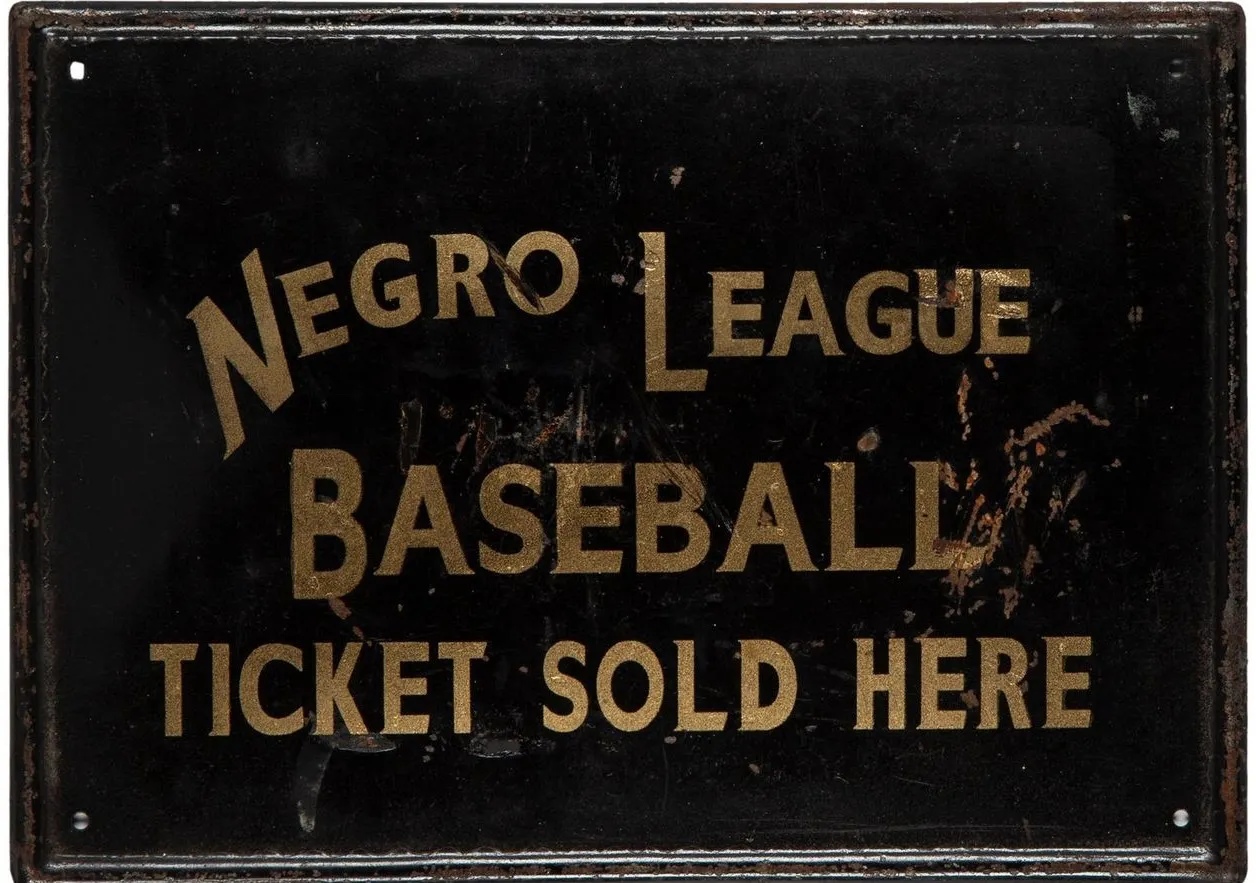
In the 1910s, many barnstorming all-Black clubs — the Cuban Giants, the Lincoln Giants, the Brooklyn Royal Giants, and so on — survived and even thrived, prompting Rube Foster to establish the Negro National League in 1920. A hundred years later, MLB would embrace seven Negro Leagues as equivalent majors and record their stats within the single database that defines the game’s history.

Owners’ faith in the future prosperity of baseball as a spectator attraction made itself clear in Pittsburgh with the opening of Forbes Field in mid-1909, MLB’s first concrete-and-steel stadium. Two years later the wooden Polo Grounds burst into flame and was replaced by an enduring model, one that would, half a century later, greet the Mets. By 1913 the steel-decked Polo Grounds welcomed the New York Female Giants, led by pitcher, actress, and vaudevillian Ida Schnall.

In Brooklyn, owner Charles Ebbets replaced the parks of the 1890s with the beloved Ebbets Field. Meanwhile, the Yankees’ ten-year lease on wooden Hilltop Park ran its course after the 1912 season and, homeless, they were compelled to rent the Polo Grounds from their hated rivals. The advent of the Federal League in 1914 and 1915 provided an additional entrant in Brooklyn. The Tip-Tops, named for the sliced bread baked by their owner, played in the Dodgers’ old home of Washington Park. No Feds team emerged in New York as a counterpart to the Giants and Yankees, though the league did have a franchise in Newark.
Following the purchase of Babe Ruth from Boston, the new powerhouse Yanks became, in 1920, the first team to draw a million fans. The Bambino, who had set a new home-run record with 29 in 1919, had hit only nine of these at Fenway Park; in the prior year, in which he had led all batters with 11 four-baggers, none came at home. So the Yankees’ owners, in acquiring Ruth, who went on to hit 54 in his first year in New York, may have been the first to display a knowledge of sabermetrics. In the early 1920s the leased Polo Grounds was still home — Ruth was said to have wept when he had to leave that park’s short right-field fence — but Yankee Stadium, an amphitheater built across the Harlem River, was in the offing for 1923.

In this year the World Series was brought to a national radio audience, as the National Broadcasting Company aired the matchup between the Giants and Yankees, who won the first of their 27 championships. As Manhattan’s long-favored club faded, the Bombers of the Bronx ascended, welcoming Lou Gehrig and Joe DiMaggio and, a bit later, Yogi Berra, Whitey Ford, and Mickey Mantle.
In 1935 MLB staged its first night game. Three years later, in the first contest under the lights at Ebbets Field, Johnny Vander Meer of the Reds threw his second consecutive no-hitter. Night basball was born of the Depression — though it had been a dream since a first attempt in 1880. Like radio, it permitted working men and women to enjoy big-league baseball through hard times.

In 1941, President Franklin D. Roosevelt issued Executive Order 8802, banning discrimination in the defense industries during World War II. Meanwhile, Jackie Robinson left UCLA short of graduation to play pro football in Hawaii. And Brooklyn, his ultimate destination, lost to the Yankees in the World Series, as they would in their next four tries.
After the 1942 season, the Dodgers hired Branch Rickey, long attached to the St. Louis Cardinals, as their new general manager. Despite a pennant in 1941 and a second-place finish the next year, Rickey saw a Dodger team that was old, with a roster about to be depleted by military service. He had longed to integrate a team, but in St. Louis, with its tradition of segregated seating and neighboring race riots, he knew that such a move was out of the question. In October 1945 he signed Robinson to a contract with Montreal.

On April 15, 1947 Jackie Robinson made his debut at Ebbets Field, playing first base. He would shift to second base in 1948, and third base in the mid-1950s. At last, baseball was truly the game for all America. Black pitcher Dan Bankhead joined the Dodgers later in 1947; Roy Campanella and Don Newcombe would arrive soon, and so would Monte Irvin with the Giants. The Yankees would be slow to integrate, waiting to bring up Elston Howard from the minors until 1955.
While baseball in New York was televised in the late 1940s, the first nationally televised MLB games were the three games of the National League playoff of 1951, which culminated in the Bobby Thomson home run and another crushing defeat for the Dodgers, who had lost to the Phillies on the final day in 1950. The first national tv broadcast of a World Series came days later, as the Giants faced the Yankees and lost, as Casey Stengel’s men won the third of their five straight world championships.

In 1954 the Yankees finished second to Cleveland, which lost to the Giants in four straight World Series games, still famous for Willie Mays’ back-to-the-infield grab of Vic Wertz’s liner to deep center field. But the big news, culturally, was the marriage of retired baseball star Joe DiMaggio to movie star Marilyn Monroe. Talk about “Love and Baseball”!
In 1955, the Dodgers finally defeated the Yankees in the World Series but Stengel’s men reversed the outcome in the very next year, as Don Larsen threw a perfect game. Robinson, who had been the hero of Game Six with an extra-inning hit that drove in the game’s only run, knew that his body was betraying him. Unable to land the managing position he wished, he retired as a player even though the Giants expressed an interest in signing him.

In 1956 Ozzie Virgil joined the Giants, becoming the first player in MLB from the Dominican Republic; more than a thousand have followed. While the percentage of African-American players has diminished since a high of nearly 19 percent in 1975, the percentage of men of color in MLB has increased, to nearly 39 percent, largely Hispanic. After Steve Bellán of Cuba in 1871 and Luis Castro of Colombia in 1902, baseball has slowly but surely welcomed outsiders in.
In midseason of 1957 came a shock to the city … and to ten-year-old me. The Dodgers and Giants announced their intention to leave New York, transforming a city of three MLB franchises into a one-horse town. The Giants of Horace Stoneham at first seemed headed to Minneapolis-St. Paul but then changed their destination to San Francisco when Walter O’Malley of the Dodgers selected Los Angeles.

This is the way the joke goes: “If Stalin, Hitler, and O’Malley are in a boat and you only have two bullets, who do you shoot?” The answer: “O’Malley, twice.” Advocates for Stoneham and O’Malley — as I now am — would later say that a regional pastime did not truly become national until those teams moved west.

The National League’s exit from New York for 1958 prompted Branch Rickey, formerly of the Dodgers, to announce formation of a new circuit, the Continental League, in large part to assure the National League’s return to New York. This bluff prompted the established leagues to expand to ten teams. The American League expanded first in 1961.
Then, in 1962, New York welcomed the Mets and pilot Casey Stengel, who had been let go by the Yankees after their loss in the 1960 World Series. They would play in the abandoned Polo Grounds before relocation to Flushing, site of the 1964 World’s Fair. With these moves, MLB became transcontinental and New York had a history of major-league teams in each of its five boroughs.
Love’s Labor’s Lost, and Love’s Labor’s Won.