Monday, May 29, 2017

Review of "House of the Rising Sun: A Hackberry Holland Novel" by James Lee Burke


In this 4th book in the 'Hackberry Holland' series, Hackberry tries to help the grown son he abandoned as a child. The book can be read as a standalone.

*****

Hackberry Holland, former Texas Ranger and lawman, seems to find trouble wherever he goes. He runs his mouth, gets blackout drunk, and is quick to use his guns and fists.


As the story opens, it's 1916 and Hackberry (Hack) is in Mexico searching for his estranged son Ishmael - a captain in the U.S Army.


The Mexican Revolution is ongoing, and there have been sporadic hostilities between the U.S. and Mexico. Hack comes upon a brothel called 'The House of the Rising Sun'......


.....where thuggish Mexican troops are guarding a hearse. 


The Mexicans are furious about Texas Rangers shooting up a train full of civilians, so they grab Hack, torture him, lock him up, and plan to kill him.

Hack is freed by the brothel's owner, Beatrice DeMolay - a madam and shrewd businesswoman - who gives him a couple of guns. Hack kills four Mexican soldiers and searches the hearse, which contains a large cache of weapons, money, and a bejewelled double chalice. Hack takes the money and chalice, blows up the weapons in the hearse, and heads for his home in Texas.


Unfortunately for Hack, the hearse - and its contents - belonged to an Austrian arms dealer named Arnold Beckman, a sadistic sociopath who claims the chalice is the Holy Grail - and who'll do anything to get it back.


In flashbacks to the past, Hack meets Ruby Dansen, a beautiful Danish woman who's down on her luck. Hack and Ruby have a son - Ishmael - but can't marry because Hack never bothered to divorce his previous wife, Maggie Bassett. All this leads to a world of trouble.

Hack's drinking and trouble-making drive Ruby and Ishmael away, and Maggie - who was a schoolteacher turned prostitute - swoops back into Hack's life. At one point Hack tries to make up with Ruby, but things go wrong and Ruby and young Ishmael are left poor, on their own, and very resentful of Hack.


For her part, Maggie eventually divorces Hack, taking half of everything he owns.

Back in the present, a grown up Ishmael is sent to Europe during WWI, and is badly injured at the Battle of the Marne in 1918. Ishmael ends up in a San Antonio hospital, on the long road to recovery.


Hack, who claims that he always loved the boy, writes Ishmael letters.....but the lad won't even open them. By now Ruby is a socialist firebrand and union organizer. She wants to take care of Ishmael, but runs into tough interference.


During all this, Beckman has been trailing Hack and scheming to get his hands on the chalice. The Austrian - being rich, powerful, and evil - has spies everywhere, co-opts law enforcement, hires murderous punks, and even makes an arrangement with Maggie - who's almost unbelievably devious and amoral.


Sadly for Ishmael, he becomes a pawn in the duel between Hack and Beckman - with terrible consequences all around. As events play out, Maggie, Ruby, and Beatrice all play important parts in the story.....but I don't want to give too much away.

The book has deep, compelling characters and rich, evocative scenes that draw the reader in. Like many of Burke's books, the story involves a struggle between 'good' and 'evil' and - while Beckman is a wonderfully despicable villain - Hack is something of a 'flawed hero.' He administers frontier justice and treats women in a less than noble fashion. Furthermore - in one scene - Hack gets behind the wheel of a friend's car (which he doesn't know how to drive), purposely wrecks it, and leaves the black chauffeur to deal with racist authorities. I can't fathom this behavior.


The book has elements of magical realism: Ishmael and Hack have a channel of communication through visions and dreams and Beatrice's chauffeur, André - a former voodoo priest - also has spiritual abilities.


All this adds an intriguing element to the story. My biggest criticism of the book is probably that the climax is unnecessarily long and drawn out. This is a minor quibble though.

I enjoyed the book and recommend it - especially to fans of James Lee Burke. 


Rating: 4 stars

Friday, May 26, 2017

Review of "Due Justice: A Willa Carson Mystery" by Diane Capri


In this first book in the 'Judge Willa Carson series', we learn that Willa lives on Plant Key - near Tampa, Florida - with her restaurateur husband George. The couple are wealthy and have a lovely apartment above George's upscale eatery, where the local glitterati are frequent guests.


In between judging cases, Willa visits with friends and relatives, meets people for coffee and drinks, goes to parties, smokes cigars, jogs, plays with her two dogs, and shares quiet time with her loving husband.

The biggest fly in Willa's ointment is her boss, the Chief Judge (CJ), who holds a grudge because Willa once accidently took his parking space. The low-key 'feud' between Willa and the CJ injects humorous elements into the story.


The plot: Federal Judge Willa Carson knows something is up as soon as her foster sister, Carly Austin - whom she hasn't seen in a year - ambushes her at home. Carly confides that an unidentified body pulled out of Tampa Bay might be Dr. Michael Morgan, a plastic surgeon who's been missing for a month.


Morgan was on the team that developed silicone breast implants, which he's surgically embedded into the chests of thousands of women.....for a very handsome income.

After dropping this bombshell, Carly - an attorney for the breast implant manufacturer MedPro - hurries off and becomes unreachable. Willa knows she should tell Police Chief Ben Hathaway that the body might be Morgan, but - fearing her foster sister might be in trouble - keeps schtum.

When the news emerges that the body was Morgan and that he was murdered, Willa becomes even more antsy and launches her own investigation. Willa spends a good deal of time trying to track down Carly, but the lawyer is elusive, tells a lot of lies, and keeps running away. (I kept thinking, Willa has to cut this unreliable fruitcake loose and go to the cops. Seriously!)


As it happens, many lawsuits have been filed about breast implants, claiming silicone leakage has made women sick. These lawsuits are a cottage industry in Tampa, with attorneys for the plaintiffs (the injured women) as well as the defendants (the implant manufacturers) all hoping to reap millions of dollars in fees. Apparently, Dr. Morgan thought he could PROVE the implants were safe, which might derail all the lawsuits. Could this be a motive for murder?


The book has a lot of chatter about lawyers, doctors, and other interested parties on both sides of the implant debate: their rivalries, love lives, infidelities, money troubles, and so on - and it becomes difficult to keep track of all the characters. In addition, the plot contains multiple blackmailers and victims, which adds to the confusion.

In her quest to gather clues, Willa interacts with many of these folks, sometimes on the golf course - where she hears a lot of snide remarks about her game. (Ha ha ha) Nevertheless, Willa perseveres, and eventually discovers who killed Morgan.


I have some quibbles with the story:

At one point, Willa threatens to file a restraining order so the cops can't investigate Carly. This is SO illegal....it's impossible to believe.

The characters in the story, including Willa, drink a lot (okay, that's normal social interaction.) However, they DRINK AND DRIVE. In one scene, George polishes off a few cocktails before driving Willa to a party, and in another scene, Willa consumes half a bottle of wine before taking to the road. The book is set in 1999, but Mother's Against Drunk Driving (MADD) was established in 1980. So it's hard to believe the characters are so nonchalant about this.

After all the hemming and hawing about breast implants and women becoming ill, the reason for Morgan's murder is anti-climactic and not altogether satisfying.

Though it has flaws, the book held my attention and I learned quite a bit about breast implants - which are especially important to women who've had mastectomies. Also, Willa is an interesting character and south Florida is a nice setting. So, it you're a fan of cozies, you might want to try this series.

I received this book as a prize from the the "Women of Mystery" reading group on "Goodreads." Thank you!


Rating: 3 stars

Thursday, May 25, 2017

Review of "Dark Places: A Novel of Suspense" by Gillian Flynn


On a tragic evening 25 years ago farm-owner Patty Day and two of her young daughters, Debby and Michelle, were slaughtered. Seven-year-old Libby Day survived and her brother, fifteen-year-old Ben Day was convicted of the crimes and imprisoned. Libby testified against Ben, is convinced of his guilt, and has had nothing to do with him for a quarter century.


As an adult Libby lived off a fund donated by a sympathetic public, but now, at she age of thirty-one, her money is depleted. Libby - a traumatized, maladjusted, petty thief who is barely able to get out of bed, much less keep a job - happens across a new way to make money.


Members of an organization called 'The Kill Club', who study crime, believe Ben Day is innocent and are trying to get him freed. They're willing to fund Libby if she'll talk to people they view as suspects/persons of interest.


Libby agrees and, after talking to Ben, begins to waver in her belief that he's guilty.

The story alternates between events that occurred 25 years ago and what is happening today. Between Libby's current investigation and flashbacks to events leading to the murders, we learn about various characters: Ben was a troubled, angst-ridden teen, ashamed of his family's poverty, who fell in with a bad crowd. His story makes up a good part of the book.


Patty's husband Runner Day, instrumental in bankrupting the farm, was an absentee dad who came home only to ask for money.


Patty, exhausted physically and mentally by the age of thirty-two, couldn't cope with her four children and was barely able to scrape together money to feed them.


Various other characters, including Patty's sister, a banker, Ben's friends, members of The Kill Club, etc., round out the story.

The book made me uncomfortable at times because most of the characters are unlikable people who behave badly. It would be a spoiler to tell more so I'll just say the book has many threads which are skillfully woven together to lead to the twisty, satisfying conclusion. This is a well-written mystery, highly recommended. 👍

Rating: 4 stars

Wednesday, May 24, 2017

Review of "The Dark Forest: Remembrance of Earth's Past #2" by Cixin Liu


This is the second book in a trilogy that starts with The Three-Body Problem.

As The Dark Forest opens a large fleet of hostile Trisolaran aliens is headed for Earth, destined to arrive in 400 years. Presumably this is when the 'Doomsday Battle' will occur between the human race and Trisolarans.


Humans are aware of the danger but are hampered in making preparations because the aliens have sent 'sophons' to spy on Earth. Sophons are souped up protons that (due to quantum physics) can INSTANTANEOUSLY transmit every single thing humans say and do to the Trisolarans.


Thus, the aliens can 'hear' all discussions about how to combat them and 'see' all weapons being developed. To make matters even worse, the sophons have blocked technological advancements, curtailing Earth's ability to develop the most effective/advanced weapons systems.

The Trisolarans one weakness is their inability to read human minds. Thus, the United Nations institutes the 'Wallfacer Project' in which four individuals - called Wallfacers - are instructed to develop a strategy to fight the Trisolarans.

The Wallfacers are:

Frederick Tyler, former U.S. Secretary of Defense.


Manuel Rey Diaz, former President of Venezuela.


Bill Hines, Nobel Prize-winning Neuroscientist.


Luo Ji, Astronomer.


Each Wallfacer is to work alone, write nothing down, and use evasive measures to flummox the Trisolarans. The Wallfacers have almost unlimited resources with very little accountability, so they can do pretty much whatever they want. And Wallfacer Luo Ji seems more concerned with having a comfortable life in a beautiful isolated home than with fighting the Trisolarans.


The Trisolarans, in turn, designate four humans sympathetic to their cause to be "Wallbreakers" - whose mission is to sabotage the Wallfacers' plans.


The Wallfacers are very clever and inventive, but the Wallbreakers are pretty smart too. (The author has clearly done a lot of research for these books.)

Around the time this is going on some humans - including people with serious illnesses, a couple of Wallfacers, and various professionals - are put into hibernation. The plan is to awaken them at a later time when they can be cured and/or be useful to humanity.


Skip ahead two hundred years. Some hibernators have been revived and Earth looks very different. There are well-designed underground cities as well as large fleets in space, which are now considered to be separate 'countries.'


The Trisolaran fleet is due in two centuries, but the aliens have launched a fast 'probe' which will arrive any day.


Oddly enough, people seem to be relatively optimistic. Some think humanity will win the Doomsday Battle while others believe the Trisolarans might turn out to be friendly. Surprises abound after the probe enters the Solar System, and things take a rather dramatic turn...all very exciting.


There's a good deal of philosophical underpinning to some of the plot developments. For example, 'escapism' - the plan to launch some people into space to preserve the human race (just in case) - is outlawed, presumably because there's no fair way to decide who will go. Is this right?

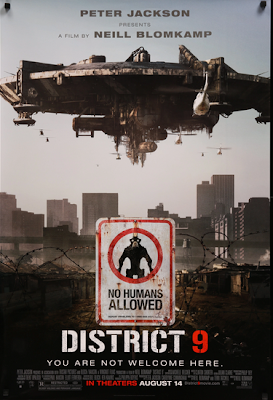
And when there are limited resources and too many individuals, what should be done? And IF the Trisolarans are defeated, should alien survivors be treated in a 'humane' fashion? (This debate reminded me of American Indian history as well as the movie 'District 9.') All things to think about.


I found the story a bit dense and slow-moving - with few important female protagonists - but overall I enjoyed the book, which is full of inventive ideas and interesting characters. I don't think it's giving away too much to say that - at the end of book 2 - there are still humans and Trisolarans. I'm interested to see what happens in the final volume of the trilogy.

I read the book and listened to the audiobook, narrated by P.J. Ochlan, who does a fine job.

Overall, I'd highly recommend this series to science fiction fans.

Rating: 4 stars