Anthotypes – exploring plant-based emulsions on hand-made papers

The first set, using red cabbage, yellow and red onions, coltsfoot and dandelions on left-over Fotospeed Fabriano paper.

For a while, I’ve been musing over how to make the physical production of my artworks more sustainable, my last blog discussed the environmental impact of our hunger for gear and ever-increasing internet usage, and following that my thoughts turned to papers and inks.
A couple of things steered me in the direction of anthotypes – a comment from a friend on Instagram about using lupine emulsion and a chat with Tim Parkin from On Landscape.


Finding ourselves in the low-distraction world of lockdown seemed like the perfect opportunity to start tinkering. My pursuit for sustainability took me down two paths, first sourcing the plant emulsions and secondly making the paper, I’ll talk about both below.
The raw materials: I wanted to use plants that I could find around our home, so I started out by researching possibilities for both. Pretty quickly I decided I didn’t want to use anything particularly poisonous – it would seem counter-intuitive when we’re all so busy trying to avoid illness – which ruled out daffodils, iris and a couple of other possibilities for the paper. I was also limited by the season, I could only use the earliest of spring plants and flowers.
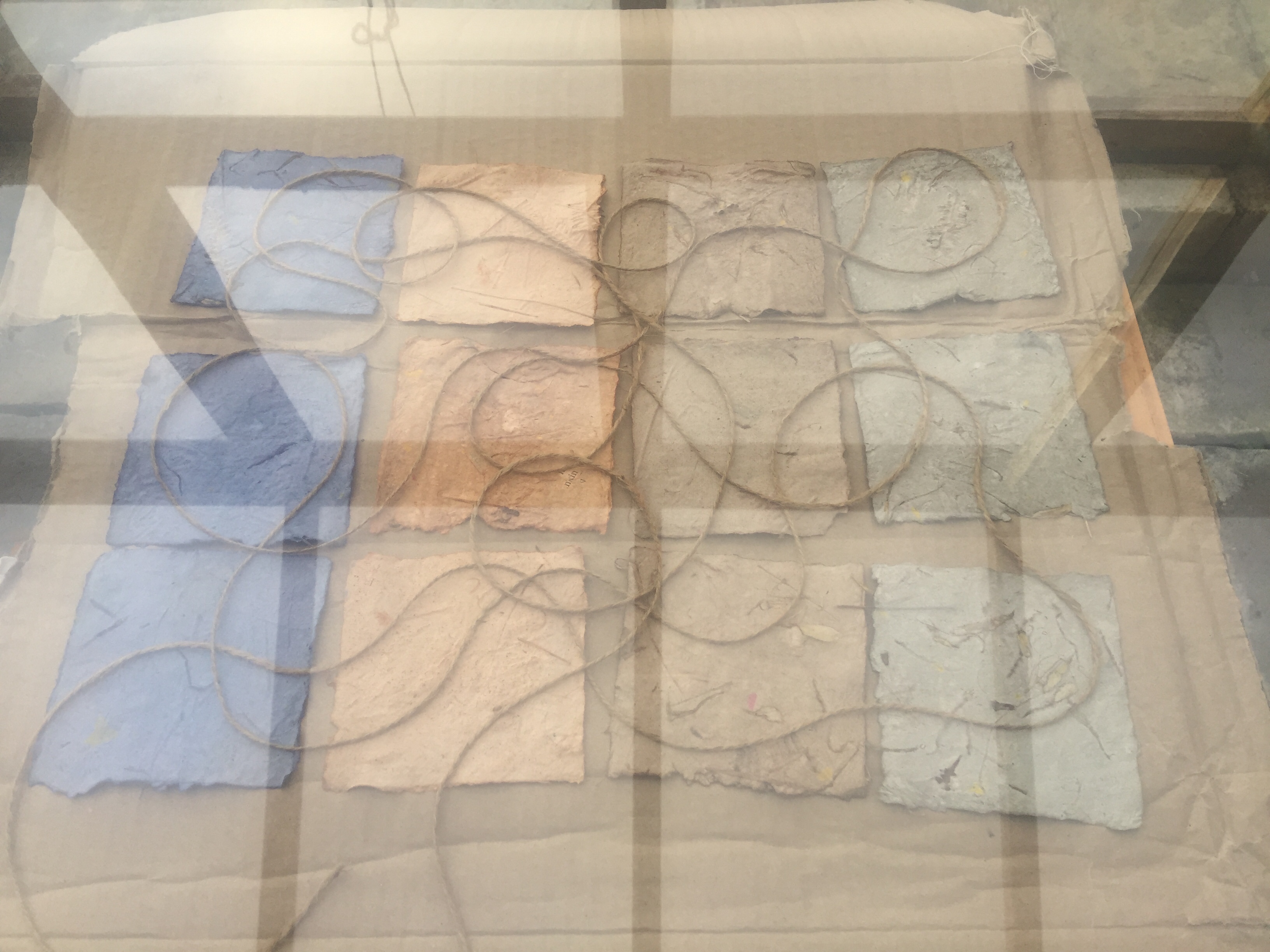
String on handmade recycled paper, using red cabbage, red onion, yellow onion and a mix of coltsfoot and cabbage.


For the paper I settled on willow – we have scrub willows in abundance having let our land regenerate post-grazing for 11 years, they grow back vigorously from every cut which meant I could put aside any tree hacking guilt. For the emulsions, I started with dandelion and coltsfoot, which pleasingly were growing around the base of the willow, happy synchronicity meaning I could potentially make an artwork from a very small area of land. For a bit of variety, I also prepped colours from red and yellow onions and some red cabbage which we’d been carrying around for a few months.


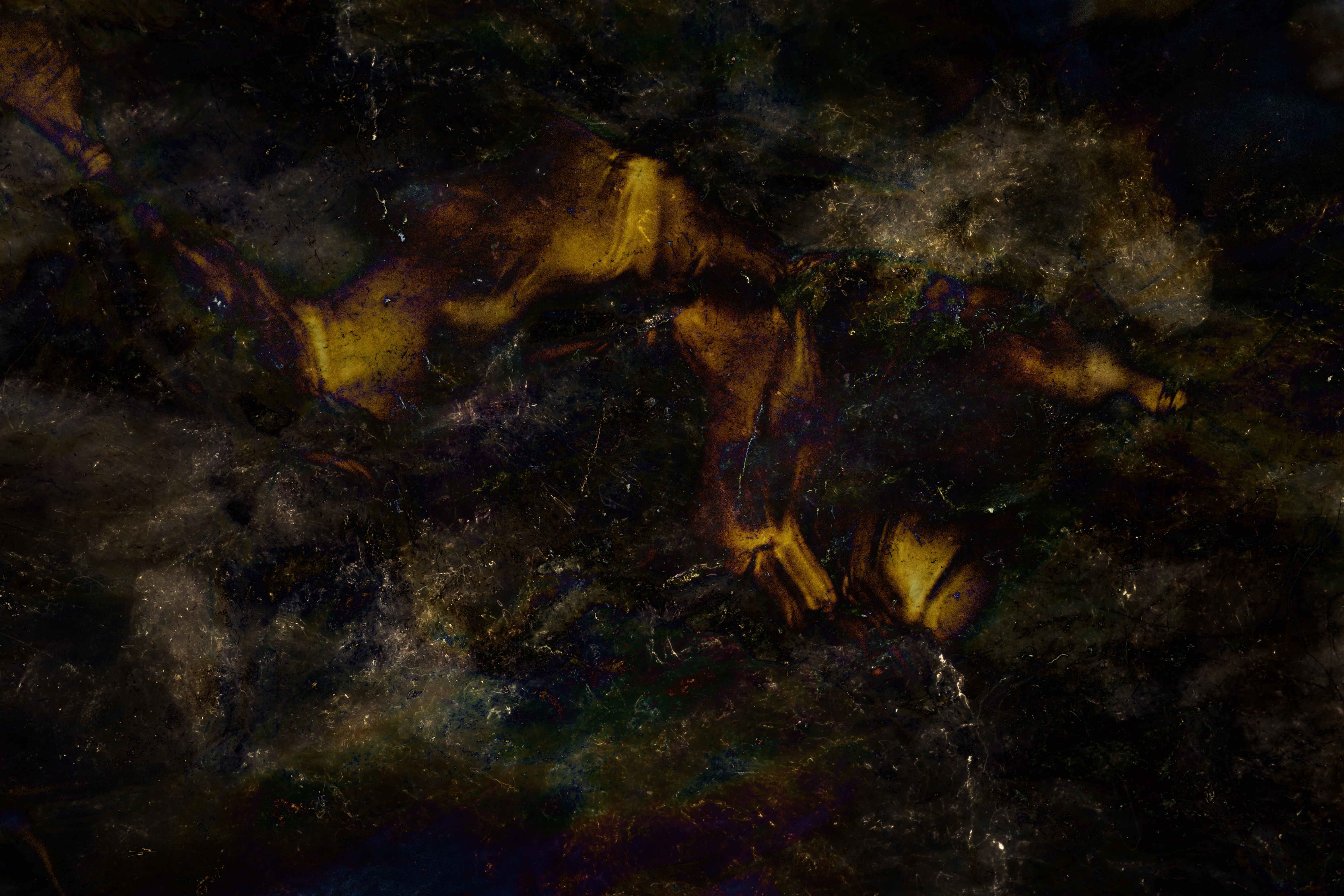
The emulsions were pretty straightforward to prepare, I simply took the raw materials, whole coltsfoot, dandelion heads, cabbage and onion skins and extracted them into a little hot water. I then blended them with a stick blender and strained them through a muslin cloth, and they were ready to go. I did get momentarily distracted when some of the cabbage water froze a little overnight in the fridge, creating a glittering galaxy-scape to explore with my 100mm macro for a while. Plant colours are a lot of fun, if I forgot to mention it.

Frozen cabbage water distractions


The paper was an entirely different ballgame. I had to literally ‘strip the willow’ – ceilidhs will never be the same again – and for some reason decided my fingernails were the ideal tool for this. For those that have never tried it, taking ‘bast’ fibre from willow involves stripping the outer bark from the wood and then separating the outer layer from the inner layer. I need several pounds of this material, and it took me more than one day to process enough. By the end, my fingernails felt very bruised, and I did manage to speed things up a little towards the end by using a potato peeler. As with any long tasks I questioned my sanity a few times but came round to thinking how ironic it is that humans spend so much time inventing time-saving gadgets, then end up burning out and seeking quiet retreats… offering slow, mindful tasks.

Willow Paper


I won’t go into all the ins and outs of the papermaking here as that can be a blog for another day. Suffice to say the paper I made from willow was unexpectedly rustic, and I was glad to also have some that I’d made from recycling various paper scraps from around the house.

I immersed the various papers into different dyes for a few minutes, and agitated them to get a good covering, then left them to dry in a dark place. (If you do this using home made recycled paper from scraps it might not be very strong and can only be dipped for a few seconds without the risk of breaking up.)

Papers left to right: red cabbage (with vinegar), red cabbage, blueberry, blackberry, beetroot


When it came to choosing subjects for exposing, I looked to the garden for attractive flowers and leaves, and also used some of the willow strippings and micro veg we were growing to eat. Lastly, I did some with string, something that I’m always drawn to when I’m playing with alternative processes, you can see a cyanotype exposure made with string here, along with some other experiments and finished pieces.


In a dark space, I set the paper up with the objects in place and then covered them with a spare piece of glass from the greenhouse. I then put them in the greenhouse on tables, (outside isn’t usually an option for us in Scotland as it can get incredibly windy and wet). I was pleasantly surprised to have weeks of sunshine to work on this, a real rarity where we live.


I left these initial exposures out for a couple of weeks with varying results.

I also had some other plant type dyes around from a big wool dyeing session last summer so the second batch were set up using spirulina and alkanet root (although I’d forgotten that you need to extract the latter into oil or alcohol which I should have remembered from my soap making days). I ended up adding oil to the extract which immediately turned it red, but now I have some slightly rank smelling bits of paper. The spirulina prints exposed very quickly so were only out for a couple of days. It was one of the only colours that was dark enough to make an impression on the very brown willow paper.

Working with all natural materials and plants in this way was a rewarding experience and I wanted to see what else I could experiment with and decided to make use of some of the berries we’d stored from last summer, along with two red cabbages which had overwintered in the garden and were being eaten by ants and earwigs, and a little leftover beetroot from the fridge. (I’m a massive fan of using things that are already to hand, especially if they are likely to be wasted otherwise). I had a large sheet from a failed cyanotype which I hadn’t exposed correctly so I decided to create an abstract emulsion wash on the cloth. I rarely get great results when I directly apply colours or inks with a brush, I much prefer to mark-make, pour, recently even using my hair, so although I started applying it with a sponge, I quickly switched to pouring the emulsion, then tipping the table to spread it. Random bubbles started popping up in the fabric, and I could see they were having a pleasing impact on the way the dye was being absorbed, so I began to incorporate some scrunching. You can see the whole process speeded up in this timelapse.


I hung the sheet up to dry and took some photographs to preserve an idea of the original colours, as I knew they would start to fade quite quickly, then I tucked it away for a couple of days waiting for the wind to drop. Yesterday I set the sheet up outside and covered it in wild oat trimmings from the garden, which I’ve also been making cyanotypes with – the tips remind of birds in flight, and the stalks arranged in abstract fashions are reminiscent of mountains. I laid the material quite densely as I want to preserve a significant amount of the original emulsion colours across the cloth during the exposure.

I’m not sure how long it will take to expose but I’ll be sure to let you know how it goes. In the meantime I hope you found that interesting and I’d be really happy to help with any questions you might have about trying out the process, and to see any of your own experiments.

The sheet exposing in the sun, oat trimmings held down by a (re-purposed) perspex sheet.
This is a cyanotype version which shows the effect I’m hoping to achieve with the oats, it’s unlikely to come out as clearly as this with the plant emulsions.

Lastly I should thank the author of this book, which is a mine of information and recommended reading: Anthotypes by Malin Fabbri. And thanks to Katie Ione Craney and Tim Parkin for the flashes of inspiration.

On Living and Working Lightly in a Consumerist Industry

Spiders webs, light and aperture interplay, taken within a few feet of the ‘Time’ shot below.

Right at the beginning of this piece, I want to be clear that my intention is to stimulate debate and discussion, as opposed to preaching or lecturing and I’d very much like to hear other peoples thoughts and opinions on the subject in response.

In a world of built-in obsolescence and yearly upgrades and updates to our phones, computers, cameras, accessories and software it’s not easy to tread a comfortable line between being well equipped and up to date without biting off a much larger share of the worlds resources with each new purchase than is sustainable globally.

Time
A series of images taken of a local burn over a six month period.

The temptation of an extra few megapixels here, and a slightly sharper lens there, a modicum of additional functionality on top is hard to avoid. Yet, I think it’s a relatively widely accepted premise that companies drip feed their releases piecemeal to maximise our purchases every step of the way.

Old Man's Beard
Old Man’s Beard – Playing with multiple exposures and blend modes, although the originals were probably captivating enough on this occasion.

On the other hand, it could be argued that unless you’re regularly printing your photographs at a vast scale a lot of this technology is over-egging the pudding, or using a sledgehammer to crack a nut.

October Liguria Workshop 2019
Creating landscapes using the form and shadow of waves.

Partly stemming from the environmental projects Ted and I have been working on, and if I’m frank a degree of laziness and the 10% possibility of getting anything reliably delivered to our new house, over the last year or so we’ve been experimenting with “making do”.  For example, I stupidly caught my filter holder on a balcony the previous year, meaning I lost my favourite filter and the holder.  Initially, I didn’t replace it because I thought I would be able to get it back when I could return to the hotel and get access to the adjacent land, yet even when I realised this hope was fruitless I decided to try and get by with my other (admittedly numerous) accessories.*  For a while, I was often caught lamenting the loss of my beloved 1.2 stop but as time went by I started experimenting with new techniques that would enable me to capture images I liked in a variety of circumstances where I would have quickly reverted to type given my usual kit.  I’ve made work over the last year that I don’t think I could have imagined if it wasn’t for that moment of clumsiness.

High Seas on the Italian Riviera
Using light and exposure to capture the drama.

As far as my camera body, I haven’t upgraded it for five and a half years now – it does pretty much everything I need it to. While the guys at Canon have generously loaned me other models to try over the years – that undoubtedly are better at certain things – at the moment I can’t see how I would justify buying a new model.  This is also, by the way, a great testament to buying a solid piece of kit that will go the distance and tolerate a high level of abuse.  I feel the same about my rucksacks – one of which I’ve had for about 10 years now (an fstopgear Tilopa).  It’s still my go-to pack and the one I would trust to keep my gear pretty much safe and dry come hell, high water, hail, snow or a gigantic wave (I’ve tried them all except hell so far).  My phone is five years old too, and has seen a fair share of repairs during my scatterbrained custodianship.  Technical clothing is becoming increasingly easier to maintain, with many of the outdoor companies offering repair services, although I’d be really grateful if someone could point me in the direction of a pair of trail running shoes that last more than six months.

Next, we plan to turn our attention to filing – we’ve had the policy over the years of keeping all our shots, with three backups.  Given that we’re probably switching to cloud-based storage, and that data centres require huge amounts of energy, I’m going to do my best to sort out the wheat from the chaff, it will probably be quite liberating and uplifting to whittle things down that way.

I’m not expecting it to be easy, and I imagine I’m still going to have to make the occasional second-hand purchase here and there (my tripod head is a daily annoyance I really need to get round to sorting) but it’s what I’m doing for now.  I’d love to hear other peoples stories, whether it’s solutions they’ve found, issues they struggle with, or contrasting opinions.

Flatline
Experiments with exposure, Outer Hebrides.

*Honesty fact check! Ted has reminded me that I did buy a really terrible cheap replacement holder from eBay.  I hate it.

Climate Strike – 20 September 2019

Hi all

Unfortunately I live remote from a “climate strike” location but as an photographer exploring issues around climate change I feel I must do something to be a part of this phenomenal movement that I see as the most likely way we will kickstart politicians and industry into “real” action to address climate change.

As such I will instead be trying to send an email with the image below to all UK and EU MP’s MEP’s, together with as many press, CEO’s and other organisations as I can find via a web search.  I will also be posting on Instagram and Facebook.

144 Calendar - Flat.jpg

144 represents the number of months before we reach the 12 year “tipping point” when climate change will become irreversible as quoted by Sir David Attenborough to the UN on 3 December 2018.  I am then thinking I might continue to send them all a gentle monthly update for the next 135 months, including

  • crossing off an additional “month”
  • a different quote on an issue relating to climate change
  • an idea of something “you” could do each month to be part of the solution

But to get this message out I really also need your help.  So I would be super grateful if you could in any way share this with your global friends, followers, members or other parties you may know and by all means forward it to anyone who you think “needs” to see it e.g. CEO’s of major companies, politicians, Donald Trump (I will try too!).

Oh, and if you have any ideas as to how we could otherwise expand the concept and increase awareness I would be very happy to discuss them with you.

the very best for all our tomorrows

t

p.s. The 144 images in “Individually Insignificant Global Time Bombs” were originally shot  using the 21 centuries ultimate disposable product, an iPhone, which we unnecessarily upgrade every two years because industry has programmed us to do so to sell more products.   The images of global products and services are taken in and around a nameless shopping mall that could be anywhere in the world. These everyday items we devour relentlessly, hypnotised by advertising and the desire for convenience and to consume.  That individual plastic straw they gave me at MacDonalds doesn’t count right?!?!?!? 

The 144 month climate tipping point calendar is an ongoing art project and will be updated monthly with a further month crossed out.  A new quote will be added and a suggestion as to what you might do to make a change to your life and be part of the solution.  It will be sent monthly to politicians, leaders, CEO’s and as many people as possible to help raise awareness and proactively offer small contributions you can make to be a part of the solution.  The project was part of our wider Scottish Arts Council funded Upland  “ENERGISE” residency exploring energy and climate change.

Why not join us and make a real difference (if you sign up to our Blog you will receive the update automatically by email

Becoming an Ignorant Observer

Sensing Awe

The overwhelming sensation as my exploration of Scotland’s rapidly changing landscape continues is that the more I see, the less I know. I am becoming an ignorant observer. But as I slowly meander through our incredible and varied countryside, it is gradually dawning on me that a lack of knowledge is not always the weakness one might imagine, but perhaps something to embrace! I recognise this is at odds with a societal norm that revers expertise and science, but allow me a moment to indulge my thesis before concluding I’ve spent too long in the saddle! My reasoning goes something like this.

On this trip, I often find myself cycling through unknown environments for the first time, seeing through fresh eyes and witnessing as an observer rather than a participant. It’s the same sensation I get when arriving on a plane or stepping off a train in a new country, where for those special first few hours, everywhere I look and everything I witness is somehow exaggerated and enhanced, as if seeing with heightened awareness. Those same enchanters are subsumed into the background a few days later, however hard I look. They become the familiar, the normal, the ‘just how it is’.

It’s Just How It Is

When travelling by car, train or bus, you pass through the landscape, cosseted in a blurred cocoon with most of your senses lying dormant or, at best, repressed.  A bike, however, demands that you constantly employ a range of senses, smelling the land (not always pleasant), tasting the air, and feeling the wind on your cheeks.  As such, you are constantly connected to your surroundings, with each new bend re-stimulating and reinvigorating, inviting investigation.  Together with time, which a bike also requires, this connection has allowed me to slowly and more fully explore without the burden of familiarity, to question rather than accept.

By way of example, whilst cycling through a horrendously hagged upland peat bog recently, horribly eroded by decades of overgrazing, I asked a local expert why it was like that. Her reply was that folk simply state, ‘it’s always been thus’, as though what we see today reflects not only how things have always been but also why nothing needs to be done about it. I sense I am witnessing countless examples of the depletion of our lands, some of which are openly visible while others lie hidden behind various shades of green. This seems to be backed up by Nature Scot, who say rather depressingly, ‘Scotland is famous for its spectacular wildlife and wild places, but historic nature loss means it is one of the most nature-depleted countries in the world’. I confess my growing ignorance is not bliss!

‘It’s Always Been Thus’ – Hagged Peat Bog, Shetland

I have yet to fully rationalise where this slow contemplation of place leaves me. As I transition between different land uses and management approaches, I am left with an overwhelming sense that our land and seas are becoming increasingly commoditised and commercialised. Siloed and simplified. Managed from behind a desk by an accountant’s spreadsheet. Neat and tidy. Each individual modification may be incrementally minor, but together, they result in generational changes that quickly become the accepted norm. Experts will tell you this is called shifting baseline syndrome, but to me, this translates simply to ‘just how it is’.

The Opencast Peat Mine
Glensanda Superquarry

I cannot simply undo the feelings this leaves me with. They don’t just resolve themselves. And yet I do not have the power to deliver solutions. But when I see the inspirational exemplars of positive future thinking that are all around us when you start to look, living quietly in the shadows and yet gradually building in momentum and confidence, it gives me hope, allowing me to join the conversation and start asking questions. For it is these quiet determined voices, as much as any top-down directives, that will bring about the positive tipping point of real change.

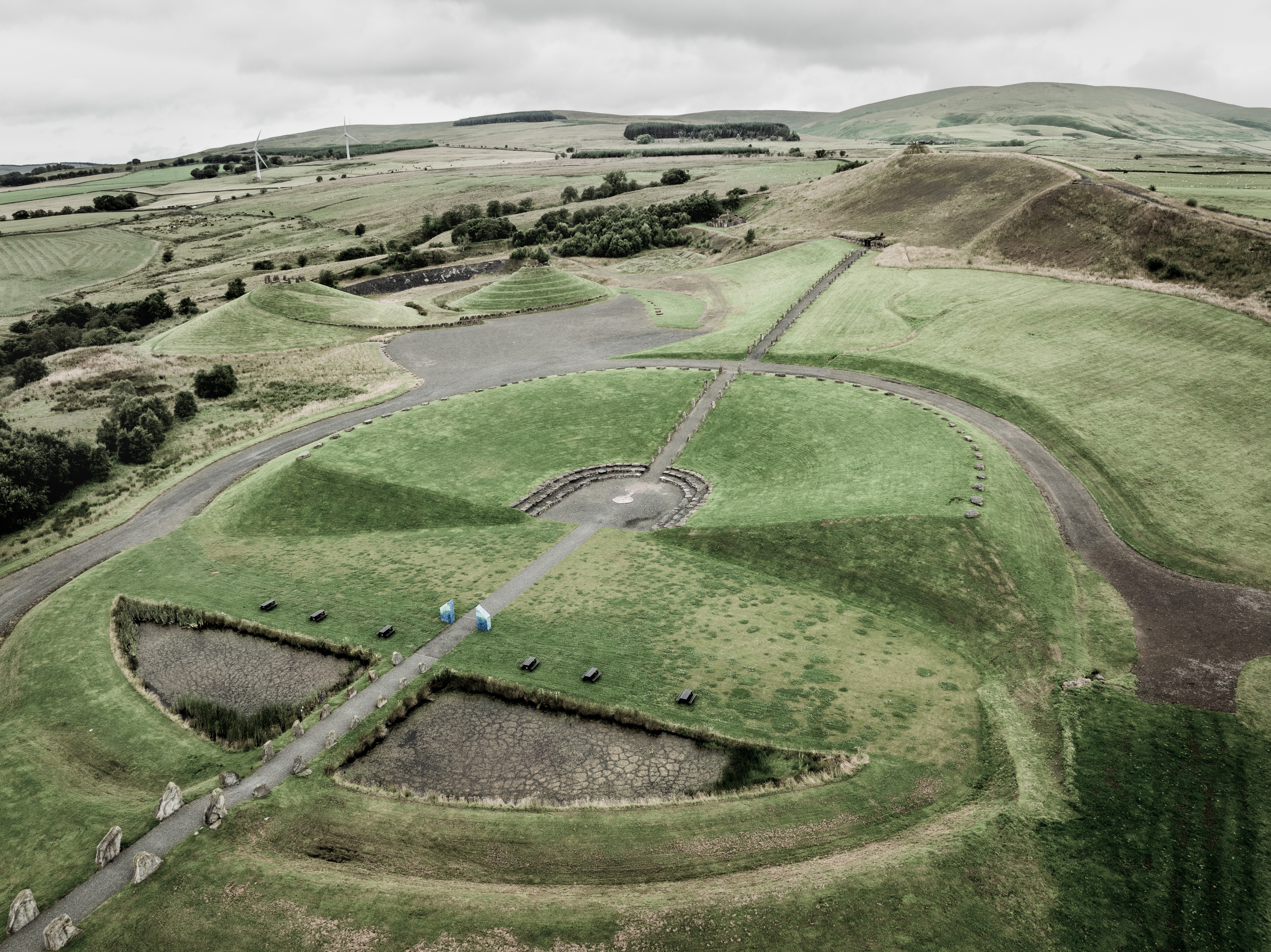
Land as Art, Crawick Multiverse

As the big wheels keep on turning (I wonder what the cities will reveal as I steer in their direction in the coming months), and I continue my descent into ignorance, I will be exploring these and other themes in a visual discussion around my cycles to date, together with a creative workshop, at The Catstrand on 9th November. I don’t offer answers, for they lie within the destiny of others, but together, we might provoke a conversation or two.


Ted’s workshop s from 2-5pm on Saturday 9th November, with his talk/discussion starting at 7:30pm on the same evening

Much Ado About a Park

The following is a slightly amended version of an article I wrote for the Glenkens Gazette on the proposed Galloway National Park. The amendments reflect updates based on additional information and include images to make the article pretty :o)

Galloway Glens

With some pretty strong opinions quickly forming on the proposed Galloway National Park, I thought I might carry out a little research to help me make up my own mind, noting that as I write this I am yet to complete this research and have yet to decide my position.

Whilst still in the early days of information gathering, my initial findings suggest that, above all else, not all National Parks (NPs) are the same. The way they are structured and run varies significantly and is unique to the attributes of each and the communities that lie therein. Here’s a few initial discoveries as I continue my search. 

On tourism, Loch Lomond & the Trossachs NP has some 4.1 million visitors a year (with 30 rangers) whilst the Cairngorms NP has 2.1 million (with 50 equivalent full time rangers) [Ref: LINK]. Tourism across the two Parks regularly generates some £700 million into the local economies [ref:LINK]. This same LINK report concludes that on planning, consenting is no less onerous within the National Parks than without (unless you are a wind farm or an agricultural building greater than 465m2 in size), though the two Scottish National Parks deliver development control in different ways.

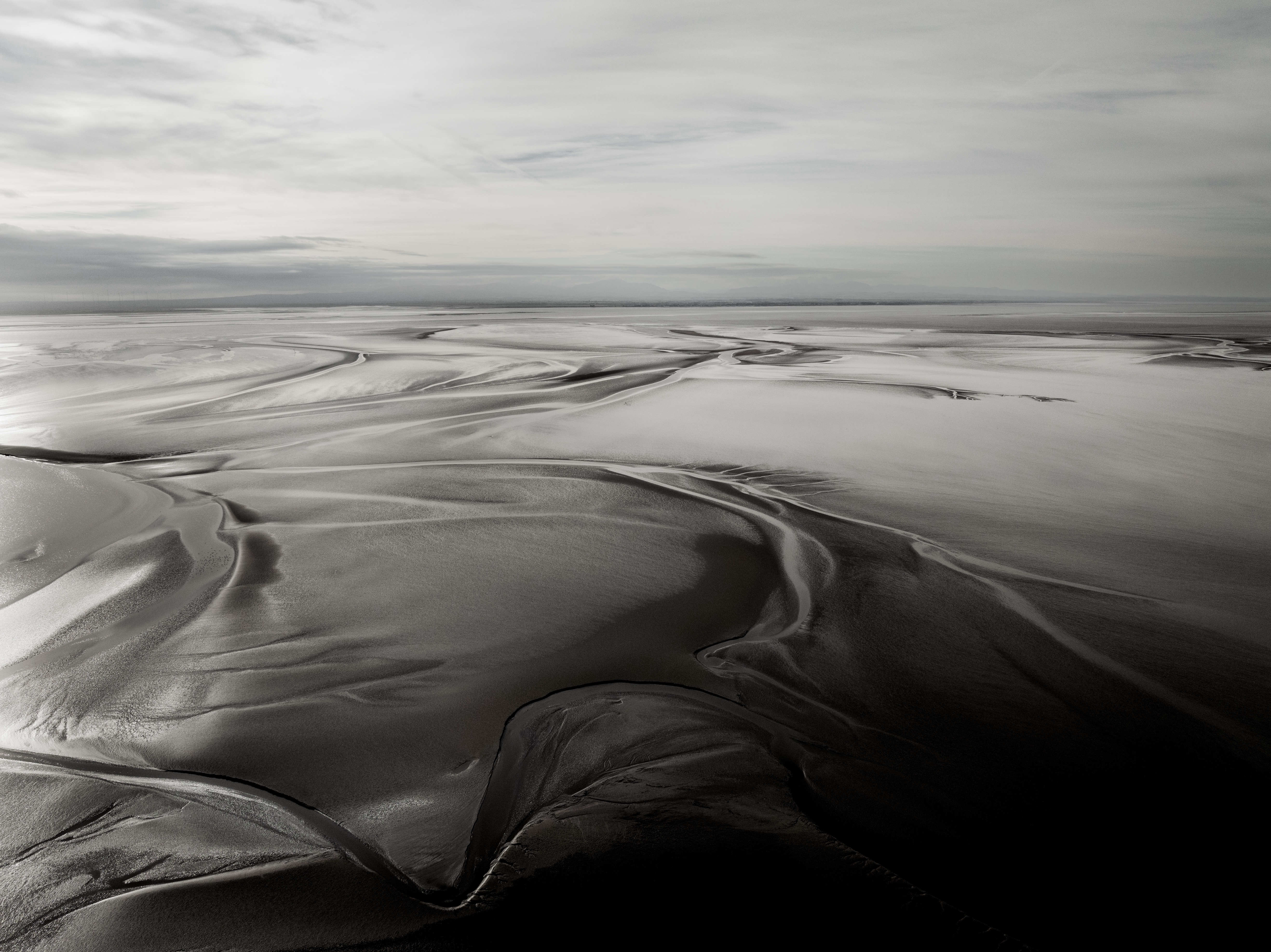
The Solway

On housing, it seems that the existing National Park Authorities develop local housing strategies and collaborate with the Regional Councils on their implementation.  At 45%, Cairngorm NP delivers significant greater levels of affordable housing than the national average of 25%, and has a policy to deliver 75% by 2030.  Loch Lomond achieved 62% between 2018-22.  Separately to this, a recent BBC article shows that by raising rates on second homes in Wales has made them less attractive (I note, however, that to make this happen does not require National Park status, any local authority can deliver this if minded).

On how a National Park is run, the Act of Parliament states a minimum 20% of Board members must be locally elected, with 40% allocated by the local authorities and the remainder centrally appointed.  Once elected, one of the first duties of the Board (over 18-24 months) would be to consult locally to understand what locals want from their park from which a National Park Plan is written. This is then authorised by the Minister, after which all Governments advisors and bodies are required to help deliver that plan. The extent to which local opinion influences the Plan I am yet to determine but continue to dig.

Earlier today, as I looked at the paint peeling off our local school in Dalry that was on the brink of being mothballed earlier this year, I cannot ignore a potential £16 million+ a year, the 2024 base budget i.e. not including external funding, for the Cairngorm National Park (of which 41% goes on some 125 staff) [Ref: CNP] could benefit the long term sustainability of our communities. To give this local context, over five years the Galloway Glens Landscape Partnership delivered some 40 community led projects on £1 million a year. I hear some voices saying that the money should be given to existing entities, to which I ask if this is possible, please let me know how and who is looking into this, as I want to hear all the alternatives before making my decision. 

I know that there will be costs, compromises and consequences whether we get a Park or not.

Isle of Whithorn

Before I decide which is better (not just for my own interests but for those of the wider community), it would be useful to know whether a Galloway National Park would be…

• A park run by and with local people, supported by experts in their various fields?

• A park that improves the potential of real job opportunities and training, allowing our young to remain in, and return to, our amazing local area?

• A park that can protect against house inflation, help deliver for known housing shortages and protect against ‘second home syndrome’.

• A park that delivers a year- round sustainable tourism strategy, with infrastructure, services and management in place from day one to protect and enhance our unique local environments?

• A park without ‘ivory towers’, where the staff are embedded in, and part of, the community

• A park with a truly sustainable transport policy, focussed towards public and low carbon transport?

• A park that recognises local uniqueness, both on land and sea?

• A park that incentivises new thinking & innovation, without being afraid to fail

• A park with soft borders and sensible buffer zones

• A park that recognises all elements of our landscape, developing voluntary partnership approaches for the greater benefit of all

• A park that thinks towards the future and not just today or yesterday.

The formal consultation on the National Park starts in November and continues until January 2025. I look forward to finding answers in the coming months that will allow me to decide on way or the other. As such, right now I am neither yes or no, but asking “what” and “how”?

Ted Leeming, Dalry resident

To help answer these and other questions, Ted is in discussions with the Chief Executive of the Cairngorms National Park to come to Galloway to present his experiences and answer questions. We will look to keep you informed via various channels as the date and venue as and when these are confirmed.

On Shetland

With an overnight ferry from Kirkwall to Lerwick I wake early to find myself cruising into the Shetlands for the first time in my life. As I am directed from the port by a kindly soul I am faced with a steep early climb out of town as I head to the hamlet of Gilsta to visit a Nature Scot peat restoration site. My first case study on the Isles and I find myself drawn the information boards and the subject.

Gilsta Peat Restoration Project. (Note the fence above the loch and the different states of the peat either side in just 3-4 years)

The site itself is some 40 hectares in size but over the coming days I realised this is but a microscopic fraction of the total area of peat bog on these islands, of which much appears to my eye to be severely degraded. And degraded peat, it turns out, is not good at all, emitting up to 18 tonnes of carbon dioxide per hectare per annum into the atmosphere. The crazy thing the boards also tell me is that in good condition peat can sequester (store) 25 times more carbon than any other method, including trees as the mosses and dead matter are surrounded by water and thus do not rot. I am in the presence of massive potential reserves. I realise why these quaking mosses, which can be 90% water, are called ‘Scotland’s rainforests’.

Degraded peat can emit up to 18 tonnes of carbon into the atmosphere per hectare per year.

And yet aside from this exemplar project I could see precious little evidence of any attempts at restoration and a truly depressing level of poor quality bog in desperate need of good management. The imminently to be completed 103 turbine Viking wind farm is seeking to restore 250hectares but this seems but a notional contribution to secure a planning consent rather than solving a far wider problem. I can’t help but wonder if more could and should be done. This seems to be a prime example of knowing the solutions to a problem but those with the ability to effect change not listening. And this applies across Scotland, not just on Shetland. We all need to talk about peat!

Restoration in Progress, turfs cut to block drains are planted with sphagnum moss which refills the hole

It was an inspiring and educational visit with project officer Sue White, but I came away with a slightly depressing start to my whistlestop tour of our most northerly islands, as I watched the overhead lines to the wind farm being built across the bog and thinking that just a handful of these turbines would supply Shetland whilst the remainder of the electricity will travel a very long way south to the big demand centres. I lodge in my mind to pick up on these issues again at some point, but for now my time is short and my next stop, after Frankie’s fish and chip shop in Brae for a delicious late morning latte, was the mighty oil/gas/storage/refinery/loading facility at Sullom Voe.

Sullom Voe – West End
Sullom Voe – centre
Sullom Voe – East End

Truly epic in proportion, I struggle to come to terms with the scale of what I am looking at. And the numbers are staggering. 25% of all the UK’s oil and gas arrives here via a 135 mile pipeline from platforms in the North Sea. 3 of the storage tanks alone are sufficient to supply one day of the UK’s entire demand. The figures are impressive indeed. But at the same time it just seems so incongruous in so remote a setting. Though it brings jobs and is the ultimate wealth on the islands, and I suspect it may be the reason there are no potholes in the roads on Shetland. If only the wind farms, forestry and agriculture could be as beneficial to Dumfries and Galloway!

I have barely begun my processing of everything I see, but again my time is limited so I am on the road again almost immediately, this time heading for a space station. For at Saxa Vord, almost at the northern tip of Unst, Shetlands most northerly main isle, lies this most unexpected of phenomena. Given that at Cape Canaveral a fart or a wisp of cloud on the horizon can stop a launch I am intrigued to see how well things will fare later in 2024 when the station goes ‘live’, but for now I just want to see the location. And in all honesty, Cape Canaveral it is not. If fact I would venture to say I was marginally underwhelmed. And unwelcome it seemed.

Petrol Stations Before Consumerism
Marginally Underwhelmed (and unwelcome) at the Saxa Vord Space Station HQ.

But my disappointment grew even greater when I arrived, soaking wet after a truly steep climb into thick icy fog, at the entrance to the launch site…

disappointment Grows as I Try to Get to the Launch Site
I’ll take that as a no then.

Mission to cycle until the road ran out accomplished (almost), a wet, cold and slightly downhearted cyclist turns round and points his handlebars to the south. Almost immediately the wind changes direction and is, once again, at my back and I would now be blown back to Lerwick. Any cyclist on Shetland will know this is about the biggest luckout you can wish for and a small grin soon cracked as I sped back down the hill. I descend from the clouds and buy chocolate covered bananas from the first (only) shop I see (they disguise them well up here) to nourish me as I start pedalling for the night ferry to Aberdeen.

Island Life

The weather cheers and with it my mood, and I start to appreciate island life. This landscape is a step more rugged and remote than Orkney, with any ‘twee’ I might have sensed there long gone. This really is living on the edge (albeit tempered in some respects by the proceeds of oil), though I fear I have seen the islands in the most benign of conditions and simply wonder at what it must be like in a true Atlantic storm. As I pedal I meet crofter Guido, cutting next years peat to heat his home, stark contrast to the sleek SUV’s that speed along to triple glazed houses.

Guido Gathering Peat

I spot fish farms on sealochs and huge fishing vessels who apparently haul in £1 million each time they drop their nets. I wonder where the fault lies as fishermen on Scotland’s rivers have to return their fly caught catches. The modern world is very present here, sitting alongside an ancient survival culture. But I have no time to really discover. I feel I am passing through rather than exploring from within.

Fish Farm

I venture on friendly ferries between the isles and back into Lerwick for the overnighter. A huge cruise ship sits in the bay and its passages shuffle around the town on what was otherwise a sleepy Sunday afternoon.

4,000 arrive into Lerwick. The next day it’s 6,000.
The total Shetland population is some 23,000.

Once on board what now feels like my own little cruise, I settle in. Dune2 is playing in the onboard cinema and I am allowed to watch with a cider with a pack of Revels as I begin my decompression back to the real world. What luxury. I sit back and realise I have barely scratched the surface of these isles in my haste and have not done them or their population justice. But they have been kind to me and my glimpse has left me intrigued to know more.

…and We’re Off

He’s an article from our local paper, the amazing Glenkens Gazette, that outlines the current project I will be working on throughout the year and am very excited having just got home from my first trip to the Highlands, Orkney and Shetland. What an experience slowly passing through landscapes and learning more of the cultures.

What is going on here?…keep watching and I will let you know in a future blog.

More to follow very soon so stay posted. I hope you enjoy the blogs and I’d be delighted to hear any thoughts you may have.

Who lived here? and when?

What an Extraordinary place…

…Orkney is. I’ve literally time travelled through 6000 years in the last few days. Makes Stonehenge look infant and the Egyptians at kindergarten. Then you’ve got the vikings and the Picts (if I remember rightly) before the medieval era and finally the incredible history around the Second World War and the oil boom. A cultural smorgasbord.

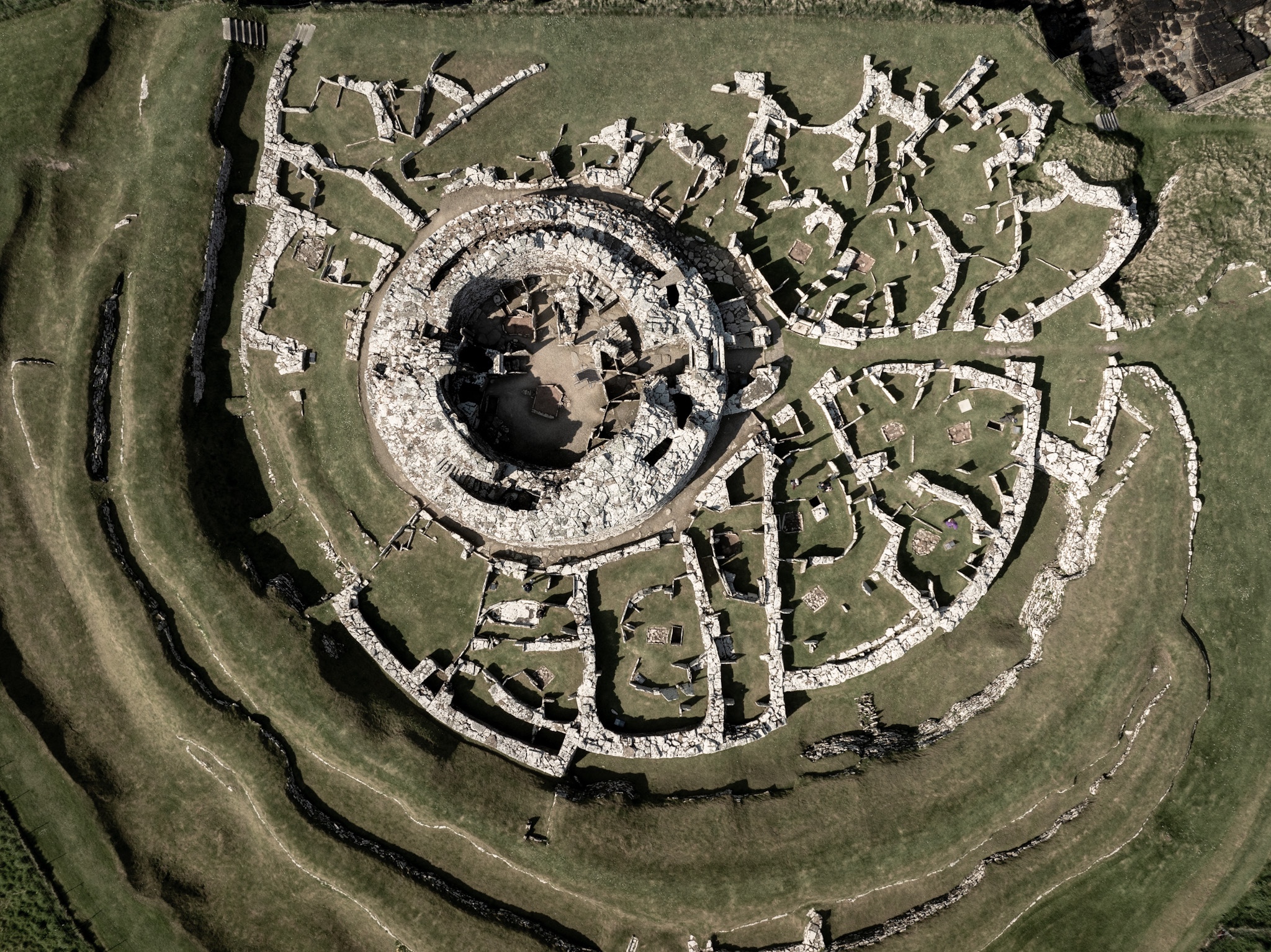
Broch of Gurness
Saltmarsh

I imagined I would be travelling to the end of the world, the very fringes of the United Kingdom, but instead I felt as if I had arrived at a cultural core. How the islands have been inhabited, invaded and requisitioned for use by others. Some never leaving while others, myself included, merely passing through. The cruise ship in Kirkwall, one of 200 due this year, somehow incongruous in this setting.

Scuttled Ships Around the Flow Protected the Fleet Against UBoats

through the Second World War tens of thousands of groups and POW’S were based here, building defences to protect the naval fleet based in Scapa Flows immense natural harbour. The detritus, both onshore and off, remains memorial to a recent past never to forget.

Church in a Nissan hut – built by Italian POW’s.

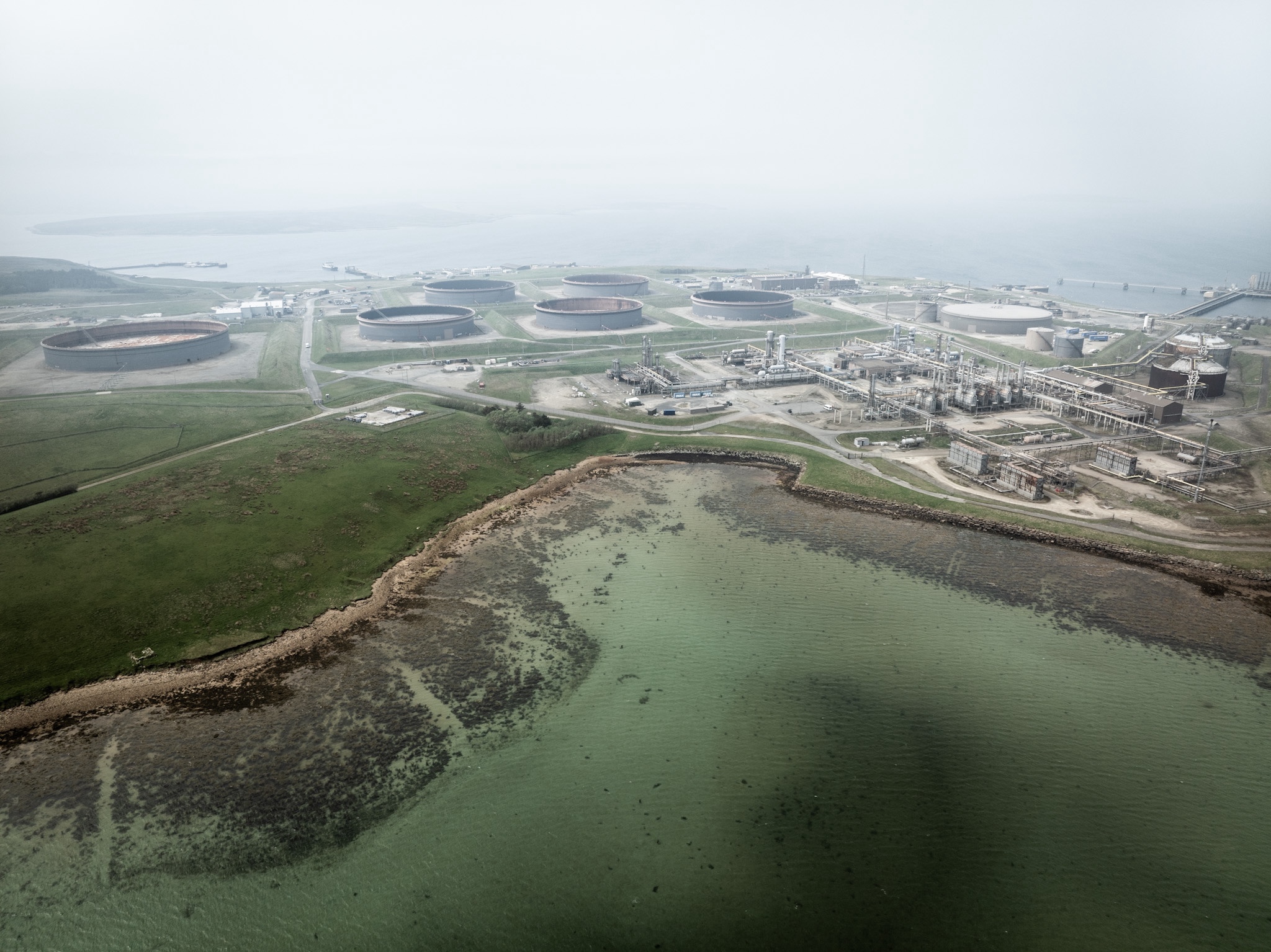
Today the island’s, are a land base to the oil industry, with some 10% of our petroleum coming ashore at the strangely out of place ultra modern oil refinery on Flotta via a 135 mile pipeline from the North Sea fields. It helps bring jobs and prosperity to the isles, but somehow feels, like the cruise ship, an imposed intervention.

Flotta Oil Refinery
Oil Rig & Tankers

But my overriding memory of this shortest of visits, will be that of bird song. As I cycled round I was in their constant presence, an orchestra of countless voices. I am left wondering quite why it is, living in a very rural area myself, that the sheer volume of their numbers is so different. Both here and Dumfries and Galloway are rural, with predominantly sheep and cattle as the main forms of agriculture, and yet our fields are silent in comparison. What methods are they adopting here that allows the curlew and the oyster catcher (two of the few I can recognise instantly) of the multitude of species flourish to such an extent? I ask, and am told it is largely due to the lack of pesticides, herbicides and predators. I can’t help think that lessons could be learned and applied simply from what we can hear to be the answer.

Bogging!!!

My exploration of land use across Scotland commenced with a week of cycling off-road through the magnificent Highlands of Scotland with friends. And what better place to have as my first case study than the RSPB nature reserve and National Nature Reserve known at Forsinard Flows.

Truly Epic Forsinard RSPB Reserve

Such an inspirational location, the birdsong as you pass through is simply intoxicating. The ‘flow’ country as it is known is essentially a blanket bog of epic proportions stretching way further than the eye can see in all directions, truly immersing you in a sense of place and perspective rarely privileged in our curated landscapes. But it is special for several reasons, not only for its biodiversity and birds, but for its importance as a peat bog for storing carbon. This truly is a Scottish rainforest and one of our most important ecosystems. We are only just beginning to fully realise the importance of such places which should be prioritised for their protection and restoration.

Interesting fact: blanket bog can store 25 times more carbon than trees.

Looking out across the ‘flow’ country

And of all the nights to be passing through we were there on one of the most phenomenal natural displays you could possibly imagine, as the northern lights truly overwhelmed the setting with one of the best displays in decades. Unfortunately I only had an iPhone with me (probably a good thing as otherwise I might have focussed too hard on the images rather than the spectacle) but here are just a couple to give an idea of just how lucky I was.

As we cycled out we passed through the immense restoration project taking place on the flows where 1980’s conifer plantations are being felled as they mature and the ground rightly restored to sphagnum bog. It is truly an exemplar project of what can be achieved when inspired action on the ground, together with political influence coincide to deliver positive futures. Thank you to all involved and may we all learn from your drive, passion and vision of what is possible. But one can’t help but wonder why such actions are not being taken across the country with such vigour?

Landscape scale ‘Forest to bog’ restoration

What a start. I couldn’t have asked for more. Moving forward I will be doing brief updates of my adventures which can be viewed on our blog “Wanderings of a Photographic Duo” (just enter your email address and I will notify of ongoing adventures)

NOTE : when visiting sensitive locations such as these it is important to work with those whose role it is to protect the habitat and species. Respecting wildlife is essential. Here I contacted the RSPB well in advance who were exceptionally helpful in working with me, including my use of a drone, to ensure I minimised any potential impacts.

Unsung Heroes

Who would have thought that sitting in a peat bog at 3am with several million midges could be fun!

Waiting for nightjars…

One of the things that has most inspired me in recent times has been seeing the incredible work done by dedicated volunteers across the land. The values surrounding such acts is something we should all aspire to as one of the foundations of a just society.

Still going at 3am!

Last year, as part of our “Artful Migration” residency, I had the privilege of spending time with volunteers from the BTO (British Trust for Ornithology) who shared wisdoms, laughs, responsibilities and a sense of community with us as we progressed our residency. It is through their dedication, year on year, that we better understand the lives, behaviours and threats to the various species of birds they monitor.

The extraordinary & enigmatic nightjar

When it comes to ringing, geotagging and collecting species data for nightjars, the ‘day’ begins at around 8pm, as nightjars are crepuscular i.e. they fly from dusk till dawn. Everyone has finished work and already had their dinner when they start mingling at the designated meeting point before sharing cars along rutted forestry tracks to the evenings venue. Incredibly fine nets are set up to catch the birds (it takes two years of training to be allowed to actually remove and tag the delicate birds to ensure no harm comes of them), which are located along rides within the forest they are known to fly along.

Setting the nets

Once set you simply wait. And sometimes you then wait a while longer. And then a bit more. Patience is a definite attribute in this game. But you are also in the middle of know where listening to nature on a gently cooling summer evening. I felt a true sense of peace as we watched and waited. Sitting with the midges was indeed an exhilarating experience (midge hats do offset what could otherwise be torture!)

It tickles

As the night draws we gather once more to tag and record data on the birds that feeds into the ongoing archives. That information informs how well the species is doing, not only in that year but over longer periods time. It is an essential record that feeds what actions we take moving forward for their protection. Despite being 3am and everyone has to be back in work by 9am, no one seems in a hurry to leave. No one is getting paid. There is no medal. And yet here is peace, harmony & and true sense of satisfaction.

Such a character

At a macro perspective we now know from this sort of work that the number of birds migrating from Europe to Africa annually has halved in the last 50 or so years. This allows for future planning on what needs to be done to protect habitats for a whole range of species. It is a call to arms. And only known because of the work of thousands of unsung heroes.

Setting the record straight

The amazing thing is that anyone can get involved. Nightjars may not be your thing but simply volunteering and getting involved on a subject or issue that genuinely interests you can be a hugely rewarding experience, both at a personal level as well as benefiting the wider community. You grow as an individual, meet like minded people, and are contributing to a wider set of important values that are becoming ever less understood.

Our exhibition tribute to volunteers. Thank You

My heartfelt thanks to all those that showed me what is possible when we share and work together. It was an honour to spend time with you.

Looking for a Name

Tomorrow I will be heading for the Highlands, Orkney and Shetland on the bike as part of my new project ‘time capsuling’ Scotland’s rapidly changing landscape as we strive towards a sustainable future. What does it look like? What will it mean for our future generations?

Loading Turbines in Dundee for an Offshore Wind Farm

Over the past year I’ve become fascinated at the extent to which landscapes change over time as a result of our needs. As part of our recent ‘artful migration’ residency I researched what just a couple of hundred year’s ago was one of Europe’s most extensive peat bog’s at the Lochar Mosses near Dumfries to find less than 3% remains largely untouched, with the majority now drained to agricultural fields, plantation forestry and the expansion of the town itself. I was truly shocked at what we see as ‘the norm’ is in fact a recent creation. With this in mind I am intrigued to explore generational land use change, and the extent to which our practices in 2024 are extractive or regenerative, in harmony or in tension.

Carsfad Hydro Electric Dam

I will be posting regularly with images and updates as the project and my travels progress over the summer and into the latter end of the year, where I am arranging a number of talks, workshops and hopefully an exhibition. A number of cycles (I am seeking to minimise my footprint for the project) will slowly find me traversing Scotland from the space station on Shetland to the Glensanda super quarry, salt marshes in the Solway to the peat bogs of Forsinard, our urban conurbations to the wilds of the outer isles. If you know of any venues you think I should visit (good, bad or ugly), or interesting people I should meet, please do let me know.

The Enclosed Enclosure

I am currently thinking about the title for the project which is frustrating me. “The Times They Are A Changing” seems to fit well, but so do “‘the Beginning of the End of the Anthropocene”, “the Land Project”, “Nothing Comes For Free”, and “ISOA” (“In Search of Awe”). I’d love to hear any thoughts if you have them, both for the name and for the project itself and look forward to sharing my journey with you.

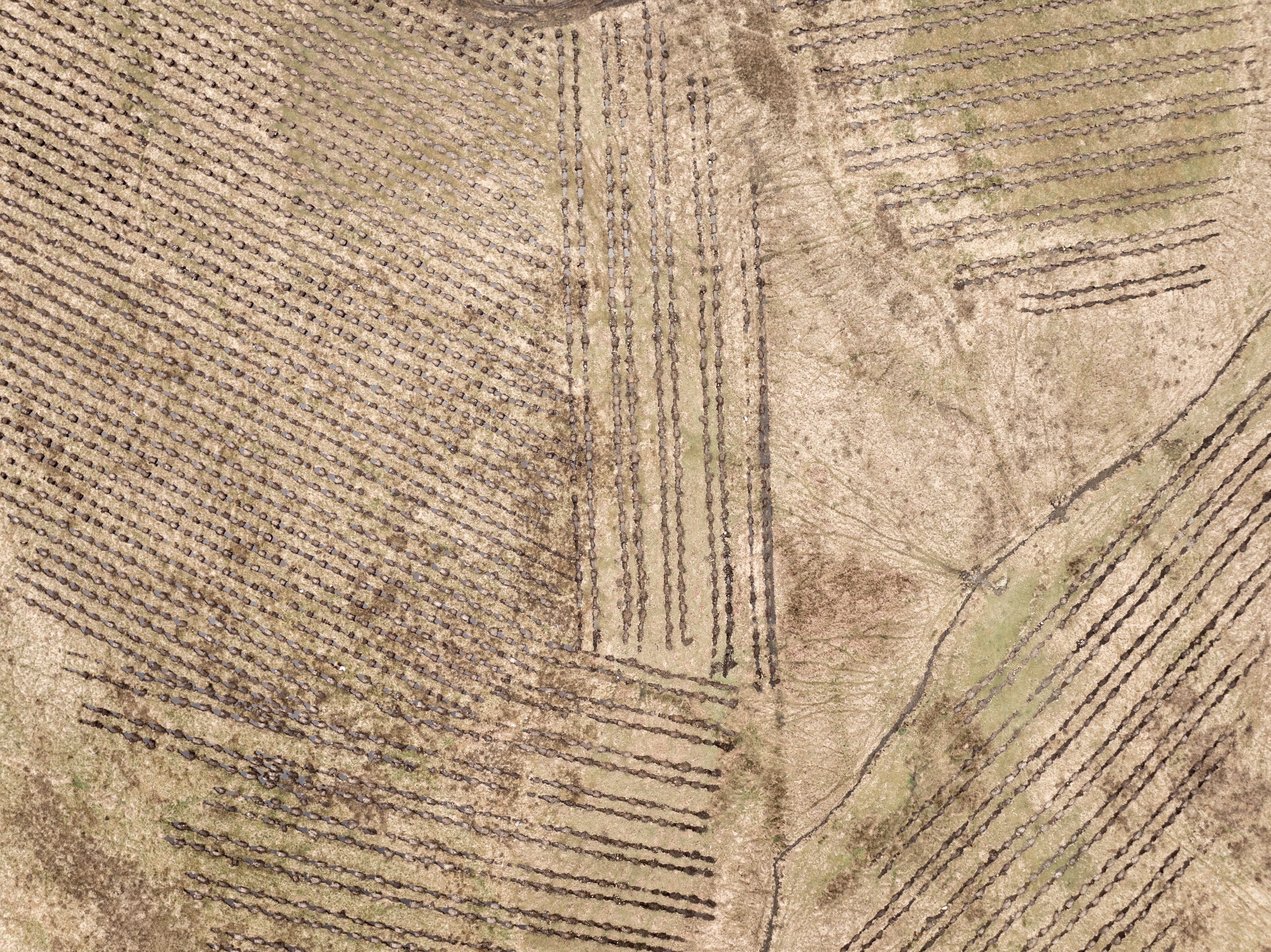
Mounding – on a Newly Consented Conifer Plantation

Look forward to catching up with you again soon…

Changing Landscapes/4 – A Different Approach

The final article in the series for Outdoor Photography explores the re-evaluation of our photography business in 2016 and deciding to stop running our lucrative workshops due to the carbon footprint associated with them. We realised that, despite seeing ourselves as environmentalists and offsetting the workshops, what we were in fact doing was posting ‘exotic’ location images online and actively encouraging people to fly all over the planet. The photography workshop industry has exploded in the last 15 years and whilst no individual flight is in itself the cause, each plays its role towards the industry becoming a significant carbon emitter. With almost no policies to control this, we decided to make our own decisions and take action.

The Ice Lagoon
Somewhere A Clock Is Ticking…

In making the change we rediscovered the extraordinary beauty of local and, be it urban or rural, just how easy it is to find amazing subjects & locations without travelling far from home…

…and without the jet lag!

I can truly say that whilst I love travelling and the sense of community I experienced working with lovely people on the workshops, I feel that I have gained far more from making this decision than I lost. We now spend far more time taking images rather than travelling, and in doing so find ourselves increasingly immersed within the landscape and building a deeper understanding of what it is to be part of something, rather than merely travelling through.

The Tourist
Minded Towards Oblivion

The images used in the article were from a series I once used to sell photographic workshops to Iceland, a land I dearly love and miss. Each one was re-imagined and given a new title, forming a personal response to COP27, reflecting my emotions at the time. In doing so what shocked me most was the realisation of just how powerful an image can be, how it can be used in different ways, and the influence it can have. And that with power comes responsibility.

NIGHTJAR RESIDENCY – Blog No.2 – “The Lure of the Churr”


The Great Moss (Work in progress…)

3am. 3am. 1am. Early to Bed! 2am. 2am. It turns out out the ‘dullest place in the UK’ (see previous blog) might not be quite so boring after all. I never imagined this residency was going to be my new rock and roll, but this curious enigma of a bird seems to have the ability to enchant and intoxicate. They beguile with the briefest of glimpses as they silently dance the gloaming skies, and as often as not you see nothing at all, or at best a shadowy wisp fleeting the corner of your eye. Gone as soon as you turn to look. Or perhaps it’s their hypnotic churr (song) that casts the spell?


Finally a Glimpse…

The privilege of time, space and focus through this Artful Migration residency has opportuned us entry into this extraordinary world to glimpse previously unseen imaginations. The lost art of simply sitting in unfamiliar environments as the sun drops beneath distant horizons and the wind runs out of puff, embracing the tingle of of a Scottish dusk, in itself becomes harmonic. And then, just as you think they might never arrive, they begin their chorus. And once they start their voices fill the skies in luring chants that mesmerise, reminding me of ‘Kaa’, the snake with the rolling eyes in The Jungle Book. I confess that before we started I didn’t really get why there seemed to be such a ‘thing’ about this quirky looking bird. What was all the fuss about Chris Packham, that makes you exude so lyrically? But as I sit in silence and simply marvel, I realise that this is one big, endless and easy to tumble into rabbit hole.

Work in Progress…


As I begin to relax, my mind follows the sun as it drops and I imagine being in their world for a few moments. Flying twice a year to and from, from and to, the Democratic Republic of Congo and Angola, nightjars, along with some 2.1 billion other birds a year that make the annual pilgrimage to their various homes, don’t recognise or have boundaries. Often as we retire, at certainty time of the year, the world above our heads becomes a motorway of freedom to their unrestricted lives. The thought is enticing, though my reverie is short lived as I discover that this number is just half what it was just a few short decades ago, as the pressures of our anthropogenic world tightens its grip. My romantic bubble pops.

Thats Some Mouth! You’ve Got!


Following ospreys on their annual migration from the UK to Africa along a similar corridor to that used by our nightjar, Sasha Dench and her team from Conservation Without Borders identified 38 human created threats along their migratory route. In just a single example, at one of Europe’s most important nature reserves for migratory birds, they discovered that planes fly overhead spraying insecticide to kill mosquitoes, one of the birds main food sources, because the tourists don’t like them. You have to ponder this concept for the enormity of its message to truly sink in, and what it says of our priorities whilst in the midst of a biodiversity emergency. Elsewhere across both continents land is, small piece by small piece, being continuously ‘improved’ from salt marsh to agricultural land, a new container port, housing development, or some other form of human ‘need’. Closer to home, all around The (once) Great Moss, fields are cut for silage 3 or 4 times a year as young birds crack through the thin shells of their eggs to raise their beaks and take their first breath.

What if Sea Level Rises?


Such improvements become so familiar to us in the rapidly changing landscapes of the modern age that we barely question, assess or consider their true and incremental impacts, let alone the fragmentation each act has at a wider, non human scale. We live for the minute and aside from nature, rather than part of it. We are outraged at the actions of remote and developing nations, be it aerial insecticide spraying, salt flat drainage or felling tropical rainforests, but who polices the protection and enhancement of our own shores? The result of current policies and subsidies is that for our nightjar, there has been a decline in insect numbers (their food source) of some 60% across the UK in recent years. This decline might seem unthinkable but because it has happened, like habitat fragmentation and so many things, on a generational basis it goes unnoticed. Had we known the consequences would we have started on that journey? Who knows but we need to act urgently to reverse the trend.

Just 3% of the original Great Moss remains largely unaffected by the fingerprints of humans


And as we do, amongst much gloom there are also real signs of proactive change all around us. Individuals and projects of all sizes from back gardens to progressive farming and landscape scale initiatives paving the way towards new thinking. And a true exemplar is occurring on The Lochar Moss itself, for the story of our nightjar is, at least in Scotland and the UK, a positive one with Numbers increasing. Forest and Land Scotland, who own a huge conifer plantation on the bog, recognised its unique qualities and sought to designate it a Site of Special Scientific Interest and Special Area of Conservation in recognition of its ecological importance. Following its designation they have implemented a 25 year plan to restore the entire plantation under their control to blanket bog. Well done FLS.


Such local initiatives start conversations and leave others wanting to know more. Perhaps even look at their own land holdings to see what they can do? This is being implemented by many enlightened ‘Land Custodians’, but ultimately the direction of travel will have to be furthered through policies that both encourage and require all landowners to adopt nature based farming and other land use methods, to deliver generational guardianship rather than short term returns.