
 Sign in with Facebook
Traveller's Reviews > Foucault’s Pendulum

Foucault’s Pendulum
by

Descartes said: Cogito, ergo sum.
Eco says: I seek meaning, therefore I am human.
It's very hard to succinctly describe exactly what this novel is. From looking at the plot description, you may be forgiven for assuming that it is a book like Holy Blood, Holy Grail, by Michael Baigent, Richard Leigh and Henry Lincoln, or Dan Brown's The Da Vinci Code. There is an overlap in the fact that all three books deal with conspiracies that revolve around the mystical and mythical order of the Knight's Templar, (view spoiler)
 as well as the mystical and mythical quest for the Holy Grail,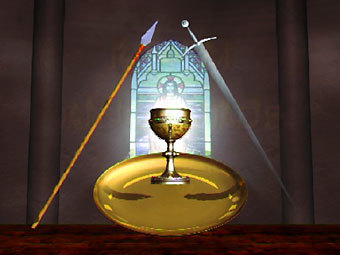
and mystical aspects revolving around the Torah, the Bible, and various cults that have existed around all of the aforementioned cultural phenomena. However, that is more or less where the similarity ends. The Baigent book presents itself as non-fiction; as a serious thesis presenting an alternate history of Christ, Christianity and phenomena such as that of the myth of the Holy Grail and the true origin of the Knight's Templar. Holy Blood, Holy Grail was first published in 1982, and its authors apparently built most of their theory on the testimony of Pierre Plantard for the argument in their book.
Now bear with me on this: One of the theses I'd like to pose in my review, is that Eco's novel, Foucault's Pendulum, (which was first published in 1988), is to some extent reactionary to this whole pallaver, which caused a big stink toward the end of the twentieth century, especially since many readers had taken the Holy Blood and the Holy Grail pretty seriously:
" The Prieuré de Sion, translated from French as Priory of Sion, is a name given to multiple groups, both real and fictitious. The most controversial is a fringe fraternal organisation, founded and dissolved in France in 1956 (abiding by the 1901 French Law of Associations) by Pierre Plantard.
In the 1960s, Plantard created a fictitious history for that organization, describing it as a secret society founded by Godfrey of Bouillon on Mount Zion in the Kingdom of Jerusalem in 1099, conflating it with a genuine historical monastic order, the Abbey of Our Lady of Mount Zion. In Plantard's version, the priory was devoted to installing a secret bloodline of the Merovingian dynasty on the thrones of France and the rest of Europe. This myth was expanded upon and popularised by the 1982 pseudohistorical book The Holy Blood and the Holy Grail and later claimed to be factual in the preface of the 2003 novel The Da Vinci Code.
After becoming a cause célèbre from the late 1960s to the 1980s, the mythical Priory of Sion was exposed as a ludibrium created by Plantard as a framework for his claim of being the Great Monarch prophesied by Nostradamus. Evidence presented in support of its historical existence and activities before 1956 was discovered to have been forged and then planted in various locations around France by Plantard and his accomplices. Nevertheless, many conspiracy theorists still persist in believing that the Priory of Sion is an age-old cabal that conceals a subversive secret.
The Priory of Sion myth has been exhaustively debunked by journalists and scholars as one of the great hoaxes of the 20th century. Some skeptics have expressed concern that the proliferation and popularity of books, websites and films inspired by this hoax have contributed to the problem of conspiracy theories, pseudohistory and other confusions becoming more mainstream. Others are troubled by the romantic reactionary ideology unwittingly promoted in these works. (See: http://en.wikipedia.org/wiki/Priory_o... )
In the novel under review, Eco has written an elaborate critique of hoaxes such as that of Plantard and of others like him who have made an appearance through the course of history. (Plantard seems to make an appearance in the novel as well, (view spoiler)). Eco's novel exposes the perfidious at worst and delusive at best nature of conspiracy beliefs and scams such as these, and while doing so, he shows the history of many theories and myths that have existed around secret societies and occult schools of thought through the centuries. Eco displays a delicious sense of humor, poking fun with many of the ideas and personages. (For instance, Eco even manages to work in, in a very humorous way, the controversy around the 'real identity' of Shakespeare and similar controversies that don't usually have anything to do with the Knights Templar or secret societies as such.)
However, the novel is more than just that. It also extensively delves into the fields of semiotics (the examination of meaning and how it is interpreted ) and epistemology, and even ontology.
This brings me to make a confession: silly little me, not knowing my history of science well enough, had, until I researched Foucault's pendulum, (-the actual scientific discovery/mechanism, not the novel), not realized that Léon Foucault is not the same person at all as Michel Foucault , the poststructuralist sociologist/ philosopher/psychologist, the latter whom I would immediately associate with Eco, via the link of being associated with linguistics and semiotics, since both published work in these areas in more or less the sixties to the eighties, so I'd be much more likely to associate Michel Foucault with Eco rather than I would associate Leon Foucault, a physicist living in the nineteenth century, with Eco.
Perhaps I can be excused for having fallen foul of the psychological phenomenon of tending to want 'closure'. http://en.wikipedia.org/wiki/Closure_...
This psychological phenomenon can be illustrated more clearly by a similar phenomenon that we find with our brain's cognitive function in regard to perception; and most strikingly so when it comes to visual perception. (See emergence and reification here: http://en.wikipedia.org/wiki/Gestalt_... )
 Reification: In the image, a triangle is perceived in picture A, though no triangle is there. In pictures B and D the eye recognizes disparate shapes as "belonging" to a single shape, in C a complete three-dimensional shape is seen, where in actuality no such thing is drawn.
A bit further down on the linked page, we see that :"The fundamental principle of gestalt perception is the law of prägnanz , (pithiness), which says that we tend to order our experience in a manner that is regular, orderly, symmetric, and simple. [And meaningful]. "
In fact, my error with the "wrong" Foucault, perfectly illustrates the law of closure which states that individuals perceive objects such as shapes, letters, pictures, etc., as being whole when they are not complete. Even if you literally 'don't have the full picture' your mind will fill it in for you, because doing this tends to make our daily functioning more fluid and efficient, except on the off-chance that our brain filled the picture in WRONG.
Most often though, the filling in it does, is quite adequate; since it bases its assumptions on previous experience. Our minds file all of our experience in a sort of subliminal database which is often the source for a 'sixth sense' feeling about something.
I also fell foul of the law of similarity, which states that elements within an assortment of objects are perceptually grouped together if they are similar to each other. In my mind, Michel Foucault and Umberto Eco often get grouped together in regard to structuralist/poststructuralist theory, so I automatically grouped them together. But, as regard to the Foucault referred to in the novels' title, I was WRONG!
Why am I embroidering on my little mistake for so long, you may ask? Well, because it so eloquently describes exactly the kind of thing Eco is talking about in this book. Psychologically speaking, humans simply don't like things that don't make sense.
We tend to group things together based on various associations, through likeness, symbolism, or a variety of other associations.
We also need to see the 'sense' of things, we need to know the 'why' of things, which is why, perhaps, it was necessary for so many religions to put the emphasis on belief as opposed to knowledge, on faith as opposed to proof, and why Jesus exhorts his followers to become as the little children [who believe blindly and innocently]. The relevant religion then becomes the 'reason' for everything unexplained in life: "Your child died because God willed it so; He wanted your child to be with the angels, where he/she belongs better than on earth." or, "War and pestilence and sorrow and tsunamis and tornados and earthquakes happen because of original sin; because humans have, through their sins, caused that the world, God's perfect creation, has become an imperfect place, and we have brought all of these sorrows upon ourselves, just by dint of our being.
Also, if something does not make sense to us, we'll fill in the missing bits out of what seems most reasonable to us, rather than to leave things unexplained. For instance, seeing strange flying things in the night, would 200 years ago most probably have been explained as having seen ghosts, whereas many modern people would prefer to believe that they saw UFO's.
But in addition, humans are intensely social creatures, and we can conceptualise social phenomena as constructs which can regulate our behaviour in emotional ways; for instance, we have a need to belong, we have a capacity to feel guilt, and we believe in cause and result. Many humans also have a desire for spiritual meaning - a need to believe that life has a "higher purpose".
These and other characteristics cause us to often seek solace and 'meaning' with cults and religions.
Eco dissects the results of these tendencies, he shows us how myths are created, often through humans' need for closure-so if there is something missing in our 'picture' of something, we tend to make up the missing bits to best fit in with our currently held needs and beliefs.
Eco eloquently demonstrates this when the central group of characters in the novel, three editors at a publishing firm, work out an elaborate esoteric explanation for some of the missing text on a partly destroyed piece of paper that they have been told holds a great secret concerning the Knight's Templar; only to be shown up by the narrator's wife, who deftly demonstrates that the partly obliterated text actually represents a shopkeeper's goods delivery list, and nothing close to the two or three different interpretations that had been made by people who had assumed that it holds a tantalizing secret.
Fun of a similar manner ensues in various places in the novel, for instance when one of the editors aptly applies the shape and the meaning of the Mystical Kabbalah to the body and inner workings of a motor vehicle.
Eco shows us how easily connections are formed in the human mind, and how easily such a chain of associations can lead through the most unlikely chain of associations, right back to the origin again, if necessary.
Drawn in by the "game" of applying mystical symbolism to "everything", our three editors devise a story which they call "The Plan" . The Plan works very much like a regular game of "Word Association" :
"In our game we crossed not words but concepts, events, so the rules were different. Basically there were three rules.
Rule One: Concepts are connected by analogy. There is no way to decide at once whether an analogy is good or bad, because to some degree everything is connected to everything else. For example, potato crosses with apple, because both are vegetable and round in shape. From apple to snake, by Biblical association. From snake to doughnut, by formal likeness. From doughnut to life preserver, and from life preserver to bathing suit, then bathing to sea, sea to ship, ship to shit, shit to toilet paper, toilet to cologne, cologne to alcohol, alcohol to drugs, drugs to syringe, syringe to hole, hole to ground, ground to potato.
Rule Two says that if tout se tient [the connections prove valid] in the end, the connecting works. From potato to potato, tout se tient [therefore it holds true]. So it's right.
Rule Three: The connections must not be original. They must have been made before, and the more often the better, by others. Only then do the crossings seem true, because they are obvious. "
Throughout the book, Eco basically shows us that one can justify any theory, any line of thought if there is a psychological or practical need to make the argument 'work', and that any theory, if you formulate it according to certain 'rules', can become accepted by a large group of people.
Hubris: One of the themes of the novel is that our three protagonists become the victims of their own hubris. As one of the three editors, Diotallevi, points out, that after their 'game' had drawn them in, it started consuming them with its addictive power and it started spilling over into reality in alarming ways, like a Frankenstein's monster run wild: " You're the prisoner of what you created. But your story in the outside world is still unfolding."
Eco points out that when we create a story, whether meant to be fictional or not, that story takes on a life of its own, and it has consequences. ...but even more so than when the story is presented as fiction, is when the story is presented as truth. When we meddle with how history is presented, we create consequences. Certainly, history is written by the victors and is therefore almost always a subjective account of events, so we must be very very careful when presenting versions of events. Versions of events are often skewed for personal gain, but, as Diotallevi points out, when we do it as a game, just for fun, that is particularly unforgivable, because whatever version of events that we'd put out there, it still has consequences.
Interestingly, each person in the novel experiences the consequences of their deception in a different way. All of them experience guilt in various ways, ...but let me stop there lest I put out too many spoilers.
The best part of the novel for me, was the poignant character sketch of Jacopo Belbo, the introvert who struggles to engage, who can never put himself in the midst of things, who is always on the periphery, except forone two glorious moments in his life, when Eco brilliantly makes him become the center of the universe.
IS ECO A PART OF WHAT HE SCORNS? Ironically, to some extent yes. In the novel, Eco himself is prone to showing off and legerdemain, almost as much as his characters who become a part of the conspiracies they have scorned.
BOTTOM LINE: Five stars for the astonishing range and depth of Eco's erudition, for his mischievous and clever sense of humor and his amazing accomplishment of drawing so many threads together in a remarkable tapestry of history, epistemology, semiotics and characterization; but minus a half star for the many superfluous bits of knowledge that are repeatedly offered, in what seems to be more showing-off sessions than being really functional with regard to the novel's plot or theses.
by
Traveller's review
bookshelves: four-and-a-half-stars, translated, 1001-books, favorites
Dec 27, 2011
bookshelves: four-and-a-half-stars, translated, 1001-books, favorites
Descartes said: Cogito, ergo sum.
Eco says: I seek meaning, therefore I am human.
It's very hard to succinctly describe exactly what this novel is. From looking at the plot description, you may be forgiven for assuming that it is a book like Holy Blood, Holy Grail, by Michael Baigent, Richard Leigh and Henry Lincoln, or Dan Brown's The Da Vinci Code. There is an overlap in the fact that all three books deal with conspiracies that revolve around the mystical and mythical order of the Knight's Templar, (view spoiler)
as well as the mystical and mythical quest for the Holy Grail, and mystical aspects revolving around the Torah, the Bible, and various cults that have existed around all of the aforementioned cultural phenomena. However, that is more or less where the similarity ends. The Baigent book presents itself as non-fiction; as a serious thesis presenting an alternate history of Christ, Christianity and phenomena such as that of the myth of the Holy Grail and the true origin of the Knight's Templar. Holy Blood, Holy Grail was first published in 1982, and its authors apparently built most of their theory on the testimony of Pierre Plantard for the argument in their book.
Now bear with me on this: One of the theses I'd like to pose in my review, is that Eco's novel, Foucault's Pendulum, (which was first published in 1988), is to some extent reactionary to this whole pallaver, which caused a big stink toward the end of the twentieth century, especially since many readers had taken the Holy Blood and the Holy Grail pretty seriously:
" The Prieuré de Sion, translated from French as Priory of Sion, is a name given to multiple groups, both real and fictitious. The most controversial is a fringe fraternal organisation, founded and dissolved in France in 1956 (abiding by the 1901 French Law of Associations) by Pierre Plantard.
In the 1960s, Plantard created a fictitious history for that organization, describing it as a secret society founded by Godfrey of Bouillon on Mount Zion in the Kingdom of Jerusalem in 1099, conflating it with a genuine historical monastic order, the Abbey of Our Lady of Mount Zion. In Plantard's version, the priory was devoted to installing a secret bloodline of the Merovingian dynasty on the thrones of France and the rest of Europe. This myth was expanded upon and popularised by the 1982 pseudohistorical book The Holy Blood and the Holy Grail and later claimed to be factual in the preface of the 2003 novel The Da Vinci Code.
After becoming a cause célèbre from the late 1960s to the 1980s, the mythical Priory of Sion was exposed as a ludibrium created by Plantard as a framework for his claim of being the Great Monarch prophesied by Nostradamus. Evidence presented in support of its historical existence and activities before 1956 was discovered to have been forged and then planted in various locations around France by Plantard and his accomplices. Nevertheless, many conspiracy theorists still persist in believing that the Priory of Sion is an age-old cabal that conceals a subversive secret.
The Priory of Sion myth has been exhaustively debunked by journalists and scholars as one of the great hoaxes of the 20th century. Some skeptics have expressed concern that the proliferation and popularity of books, websites and films inspired by this hoax have contributed to the problem of conspiracy theories, pseudohistory and other confusions becoming more mainstream. Others are troubled by the romantic reactionary ideology unwittingly promoted in these works. (See: http://en.wikipedia.org/wiki/Priory_o... )
In the novel under review, Eco has written an elaborate critique of hoaxes such as that of Plantard and of others like him who have made an appearance through the course of history. (Plantard seems to make an appearance in the novel as well, (view spoiler)). Eco's novel exposes the perfidious at worst and delusive at best nature of conspiracy beliefs and scams such as these, and while doing so, he shows the history of many theories and myths that have existed around secret societies and occult schools of thought through the centuries. Eco displays a delicious sense of humor, poking fun with many of the ideas and personages. (For instance, Eco even manages to work in, in a very humorous way, the controversy around the 'real identity' of Shakespeare and similar controversies that don't usually have anything to do with the Knights Templar or secret societies as such.)
However, the novel is more than just that. It also extensively delves into the fields of semiotics (the examination of meaning and how it is interpreted ) and epistemology, and even ontology.
This brings me to make a confession: silly little me, not knowing my history of science well enough, had, until I researched Foucault's pendulum, (-the actual scientific discovery/mechanism, not the novel), not realized that Léon Foucault is not the same person at all as Michel Foucault , the poststructuralist sociologist/ philosopher/psychologist, the latter whom I would immediately associate with Eco, via the link of being associated with linguistics and semiotics, since both published work in these areas in more or less the sixties to the eighties, so I'd be much more likely to associate Michel Foucault with Eco rather than I would associate Leon Foucault, a physicist living in the nineteenth century, with Eco.
Perhaps I can be excused for having fallen foul of the psychological phenomenon of tending to want 'closure'. http://en.wikipedia.org/wiki/Closure_...
This psychological phenomenon can be illustrated more clearly by a similar phenomenon that we find with our brain's cognitive function in regard to perception; and most strikingly so when it comes to visual perception. (See emergence and reification here: http://en.wikipedia.org/wiki/Gestalt_... )
Reification: In the image, a triangle is perceived in picture A, though no triangle is there. In pictures B and D the eye recognizes disparate shapes as "belonging" to a single shape, in C a complete three-dimensional shape is seen, where in actuality no such thing is drawn.A bit further down on the linked page, we see that :"The fundamental principle of gestalt perception is the law of prägnanz , (pithiness), which says that we tend to order our experience in a manner that is regular, orderly, symmetric, and simple. [And meaningful]. "
In fact, my error with the "wrong" Foucault, perfectly illustrates the law of closure which states that individuals perceive objects such as shapes, letters, pictures, etc., as being whole when they are not complete. Even if you literally 'don't have the full picture' your mind will fill it in for you, because doing this tends to make our daily functioning more fluid and efficient, except on the off-chance that our brain filled the picture in WRONG.
Most often though, the filling in it does, is quite adequate; since it bases its assumptions on previous experience. Our minds file all of our experience in a sort of subliminal database which is often the source for a 'sixth sense' feeling about something.
I also fell foul of the law of similarity, which states that elements within an assortment of objects are perceptually grouped together if they are similar to each other. In my mind, Michel Foucault and Umberto Eco often get grouped together in regard to structuralist/poststructuralist theory, so I automatically grouped them together. But, as regard to the Foucault referred to in the novels' title, I was WRONG!
Why am I embroidering on my little mistake for so long, you may ask? Well, because it so eloquently describes exactly the kind of thing Eco is talking about in this book. Psychologically speaking, humans simply don't like things that don't make sense.
We tend to group things together based on various associations, through likeness, symbolism, or a variety of other associations.
We also need to see the 'sense' of things, we need to know the 'why' of things, which is why, perhaps, it was necessary for so many religions to put the emphasis on belief as opposed to knowledge, on faith as opposed to proof, and why Jesus exhorts his followers to become as the little children [who believe blindly and innocently]. The relevant religion then becomes the 'reason' for everything unexplained in life: "Your child died because God willed it so; He wanted your child to be with the angels, where he/she belongs better than on earth." or, "War and pestilence and sorrow and tsunamis and tornados and earthquakes happen because of original sin; because humans have, through their sins, caused that the world, God's perfect creation, has become an imperfect place, and we have brought all of these sorrows upon ourselves, just by dint of our being.
Also, if something does not make sense to us, we'll fill in the missing bits out of what seems most reasonable to us, rather than to leave things unexplained. For instance, seeing strange flying things in the night, would 200 years ago most probably have been explained as having seen ghosts, whereas many modern people would prefer to believe that they saw UFO's.
But in addition, humans are intensely social creatures, and we can conceptualise social phenomena as constructs which can regulate our behaviour in emotional ways; for instance, we have a need to belong, we have a capacity to feel guilt, and we believe in cause and result. Many humans also have a desire for spiritual meaning - a need to believe that life has a "higher purpose".
These and other characteristics cause us to often seek solace and 'meaning' with cults and religions.
Eco dissects the results of these tendencies, he shows us how myths are created, often through humans' need for closure-so if there is something missing in our 'picture' of something, we tend to make up the missing bits to best fit in with our currently held needs and beliefs.
Eco eloquently demonstrates this when the central group of characters in the novel, three editors at a publishing firm, work out an elaborate esoteric explanation for some of the missing text on a partly destroyed piece of paper that they have been told holds a great secret concerning the Knight's Templar; only to be shown up by the narrator's wife, who deftly demonstrates that the partly obliterated text actually represents a shopkeeper's goods delivery list, and nothing close to the two or three different interpretations that had been made by people who had assumed that it holds a tantalizing secret.
Fun of a similar manner ensues in various places in the novel, for instance when one of the editors aptly applies the shape and the meaning of the Mystical Kabbalah to the body and inner workings of a motor vehicle.
Eco shows us how easily connections are formed in the human mind, and how easily such a chain of associations can lead through the most unlikely chain of associations, right back to the origin again, if necessary.
Drawn in by the "game" of applying mystical symbolism to "everything", our three editors devise a story which they call "The Plan" . The Plan works very much like a regular game of "Word Association" :
"In our game we crossed not words but concepts, events, so the rules were different. Basically there were three rules.
Rule One: Concepts are connected by analogy. There is no way to decide at once whether an analogy is good or bad, because to some degree everything is connected to everything else. For example, potato crosses with apple, because both are vegetable and round in shape. From apple to snake, by Biblical association. From snake to doughnut, by formal likeness. From doughnut to life preserver, and from life preserver to bathing suit, then bathing to sea, sea to ship, ship to shit, shit to toilet paper, toilet to cologne, cologne to alcohol, alcohol to drugs, drugs to syringe, syringe to hole, hole to ground, ground to potato.
Rule Two says that if tout se tient [the connections prove valid] in the end, the connecting works. From potato to potato, tout se tient [therefore it holds true]. So it's right.
Rule Three: The connections must not be original. They must have been made before, and the more often the better, by others. Only then do the crossings seem true, because they are obvious. "
Throughout the book, Eco basically shows us that one can justify any theory, any line of thought if there is a psychological or practical need to make the argument 'work', and that any theory, if you formulate it according to certain 'rules', can become accepted by a large group of people.
Hubris: One of the themes of the novel is that our three protagonists become the victims of their own hubris. As one of the three editors, Diotallevi, points out, that after their 'game' had drawn them in, it started consuming them with its addictive power and it started spilling over into reality in alarming ways, like a Frankenstein's monster run wild: " You're the prisoner of what you created. But your story in the outside world is still unfolding."
Eco points out that when we create a story, whether meant to be fictional or not, that story takes on a life of its own, and it has consequences. ...but even more so than when the story is presented as fiction, is when the story is presented as truth. When we meddle with how history is presented, we create consequences. Certainly, history is written by the victors and is therefore almost always a subjective account of events, so we must be very very careful when presenting versions of events. Versions of events are often skewed for personal gain, but, as Diotallevi points out, when we do it as a game, just for fun, that is particularly unforgivable, because whatever version of events that we'd put out there, it still has consequences.
Interestingly, each person in the novel experiences the consequences of their deception in a different way. All of them experience guilt in various ways, ...but let me stop there lest I put out too many spoilers.
The best part of the novel for me, was the poignant character sketch of Jacopo Belbo, the introvert who struggles to engage, who can never put himself in the midst of things, who is always on the periphery, except for
IS ECO A PART OF WHAT HE SCORNS? Ironically, to some extent yes. In the novel, Eco himself is prone to showing off and legerdemain, almost as much as his characters who become a part of the conspiracies they have scorned.
BOTTOM LINE: Five stars for the astonishing range and depth of Eco's erudition, for his mischievous and clever sense of humor and his amazing accomplishment of drawing so many threads together in a remarkable tapestry of history, epistemology, semiotics and characterization; but minus a half star for the many superfluous bits of knowledge that are repeatedly offered, in what seems to be more showing-off sessions than being really functional with regard to the novel's plot or theses.
Sign into Goodreads to see if any of your friends have read
Foucault’s Pendulum.
Sign In »
Reading Progress
January 22, 2010
– Shelved
(Other Paperback Edition)
December 27, 2011
– Shelved
September 14, 2013
– Shelved as:
to-read
September 15, 2013
– Shelved as:
to-read
(Other Paperback Edition)
November 20, 2013
–
Started Reading
January 3, 2014
–
50.24%
"Why are pyramids found on both sides of the Atlantic?"
"Because it's easier to build pyramids than spheres. Because the wind produces dunes in the shape of pyramids and not in the shape of the Parthenon."
"I hate the spirit of the Enlightenment," Diotallevi said."
page
313
"Because it's easier to build pyramids than spheres. Because the wind produces dunes in the shape of pyramids and not in the shape of the Parthenon."
"I hate the spirit of the Enlightenment," Diotallevi said."
January 6, 2014
–
52.97%
"We always have to blame our failures on somebody else, and dictatorships always need an external enemy to bind their followers together. As the man said, for every complex problem there's a simple solution, and it's wrong."
page
330
January 6, 2014
–
53.13%
""Synarchy is God."
"God?"
"Yes. Mankind can't endure the thought that the world was born by chance, by mistake, just because four brainless atoms bumped into one another on a slippery highway. So a cosmic plot has to be found—God, angels, devils. Synarchy performs the same function on a lesser scale.""
page
331
"God?"
"Yes. Mankind can't endure the thought that the world was born by chance, by mistake, just because four brainless atoms bumped into one another on a slippery highway. So a cosmic plot has to be found—God, angels, devils. Synarchy performs the same function on a lesser scale.""
January 8, 2014
–
77.85%
""The first duty of a good spy," I remarked, "is to denounce as spies those whom he has infiltrated.""
page
485
January 9, 2014
–
83.47%
"Life—his life, mankind's—as art, and art as falsehood. Le monde est fait pour aboutir à un livre."
page
520
January 9, 2014
–
94.7%
"People like your Dr. Wagner, don't they say that a man who plays with words and makes anagrams and violates the language has ugliness in his soul and hates his father?"
"But those are psychoanalysts. They say that to make money."
page
590
"But those are psychoanalysts. They say that to make money."
January 9, 2014
–
96.31%
"Our cause is a secret within a secret, a secret that only another secret can explain; it is a secret about a secret that is veiled by a secret.
—Ja'far as-Sādiq, sixth Imam"
page
600
—Ja'far as-Sādiq, sixth Imam"
January 10, 2014
–
97.27%
"The conspiracy theory of society ... comes from abandoning God and then asking: "Who is in his place?"
—Karl Popper, Conjectures and Refutations, London, Routledge, 1969, iv, p. 123"
page
606
—Karl Popper, Conjectures and Refutations, London, Routledge, 1969, iv, p. 123"
January 13, 2014
–
100.0%
"The conspiracy theory of society ... comes from abandoning God and then asking: "Who is in his place?"
—Karl Popper, Conjectures and Refutations, London, Routledge, 1969, iv, p. 123"
page
623
—Karl Popper, Conjectures and Refutations, London, Routledge, 1969, iv, p. 123"
January 13, 2014
– Shelved as:
four-and-a-half-stars
January 13, 2014
– Shelved as:
translated
January 13, 2014
–
Finished Reading
December 7, 2015
– Shelved as:
1001-books
November 10, 2021
– Shelved as:
favorites
Comments Showing 1-49 of 49 (49 new)
date newest »
newest »
 One of my favorite books!
 You can always come and join us on our immanent discussion of it, if you wish, Carlo, and let the discussion sweep you along towards perhaps finishing it: https://www.goodreads.com/group/show/...
And you, David- I thought you were, though?
Unfortunately, I have not stayed on top of the going-on in any groups, just due to prioritizing things in my non-digital life...so I was unaware of this discussion. I'll take a peek at it but to be honest, I read it so long ago, about 23 years ago when I was in Italy, that I only remember how much I loved it and couldn't stop reading it. And the general mathematical/mystery/decryption plot and conspiracy, etc. Most of the details have escaped me.
 Trav, I've started this novel yesterday and I've had a peak at your discussion thread, which I must say is really helpful. I'm totally lost with all those scientific, religious and esoteric terms, though...
Oh, please come and join us there, Ema! I feel a bit lost myself, but, as a tip, one or 2 friends have told me that there is a basic plot that you can follow quite successfully without getting involved in all the geeky interesting side issues that Eco inserts as both musings and sort of cultural and literary 'jokes'.
Trav, I've started this novel yesterday and I've had a peak at your discussion thread, which I must say is really helpful. I'm totally lost with all those scientific, religious and esoteric terms, though...
Oh, please come and join us there, Ema! I feel a bit lost myself, but, as a tip, one or 2 friends have told me that there is a basic plot that you can follow quite successfully without getting involved in all the geeky interesting side issues that Eco inserts as both musings and sort of cultural and literary 'jokes'.I wonder if we should do a separate thread where we tease out the bare bones of the actual plot as distinct from all the side stuff.
Ha, in fact this is what I am trying to do, follow the basic plot that I can glimpse at among all that information. On the other hand, I want to learn something from this novel as well, so I will stick to your discussion group even if just as a spectator (for the time being). The separate thread you mention might be a good idea, or maybe one open post which you could build progressively, while advancing into the novel.
 I wouldn't mind a separate thread for the plot...
 If you promise to review this I promise to like on it all puppyish.

 will come back in a while and read this review, trav. It seems daunting.
 WOW Trav. Another astonishingly articulate and erudite review, similar to Eco's style and discourse! Maybe you have become used to his train of thought after so many weeks spent in his most domineering company. There is so much to comment on your review, but I was most taken with the way you weave together how visual perceptions and the human need to find "closure" can play tricks in our fallible minds and then link it with Eco's ironic banter and detectable mockery of mysticism and esoterism. He certainly suffered from spiritual food poisoning or even cabbalistic indigestion! Wonderfully stated bottom line conclusion with which I couldn't feel more identified. Eco's masterful display of wisdom felt a bit overwhelming sometimes. What a blast of a review. Brilliant Trav, thanks for making even this challenging nove more accessible with your highly analytic and instructive review.
btw, love the confession on the Foucault double-trouble.
Thanks, everyone! Scribble, Riku and Dolors!
WOW Trav. Another astonishingly articulate and erudite review, similar to Eco's style and discourse! Maybe you have become used to his train of thought after so many weeks spent in his most domineering company. There is so much to comment on your review, but I was most taken with the way you weave together how visual perceptions and the human need to find "closure" can play tricks in our fallible minds and then link it with Eco's ironic banter and detectable mockery of mysticism and esoterism. He certainly suffered from spiritual food poisoning or even cabbalistic indigestion! Wonderfully stated bottom line conclusion with which I couldn't feel more identified. Eco's masterful display of wisdom felt a bit overwhelming sometimes. What a blast of a review. Brilliant Trav, thanks for making even this challenging nove more accessible with your highly analytic and instructive review.
btw, love the confession on the Foucault double-trouble.
Thanks, everyone! Scribble, Riku and Dolors!Dolors, I guess with this book, there is just so much in it, that one needs to choose only certain themes and go with them, otherwise one's review would end up being a book.
Btw, only after I'd finished the book, did I see how strong the connection with Pierre Plantard and the Holy Grail book appears to be.
Yeah, it's a bit like Eco's erudition is a two-edged sword. He doesn't seem to have the self-discipline to hold some of it back--he has to give us all of it! (Or, in any case, a too heavy dose of it for most of us...)
Riku, it's funny, when I thought back on my mistake, I thought, "Hey, I can actually use that!"
 Mistakes are ALWAYS more interesting that being-rights. I'll improve on this remark later as right now some ESL students have the fucking NERVE to demand my attention during office hours. Suave review, Travs.
 An elegant deconstruction and excellent analysis. A review I will come back to read again after I have read FP.
Thanks, David, Gregsamsa and Samadrita!
An elegant deconstruction and excellent analysis. A review I will come back to read again after I have read FP.
Thanks, David, Gregsamsa and Samadrita!How DARE those students intrude on your Goodreads time, Greg? ;)
Next thing people will actually expect us to work during office hours instead of schmoozing through GR... :P
 Very interesting and deep
 Thanks, Zo and Paul. ^_^
I can imagine this was a tough review to pull through, so I have to congratulate you on the erudite and complex outcome, Trav. I agree with your mention of Eco's "elaborate critique of hoaxes" since - opposed to Dan Brown - he doesn't want us to believe in his farce. Oh, but how easy it is to believe!
Thanks, Zo and Paul. ^_^
I can imagine this was a tough review to pull through, so I have to congratulate you on the erudite and complex outcome, Trav. I agree with your mention of Eco's "elaborate critique of hoaxes" since - opposed to Dan Brown - he doesn't want us to believe in his farce. Oh, but how easy it is to believe!I also preferred Jacopo Belbo over the others, because his stories had a human, warm facet, as opposed to the cold, scientific rambling of the other two. But even he managed to bore me sometimes...
I didn't have enough patience and faith in this novel, I admit. I read it till the end by skipping the parts I found boring or uninteresting. I must congratulate you for your patience; also, I sort of envy your interest in the subject matter, which made the time spent with it worthwhile (for me it was more of a waste because of my disinterest, I am sorry to say...).
Ema wrote: "I can imagine this was a tough review to pull through, so I have to congratulate you on the erudite and complex outcome, Trav. I agree with your mention of Eco's "elaborate critique of hoaxes" sinc..."Ha, ironically I did not have an interest in the subject matter at all, and found a lot of it pretty darn boring too, which is exactly why I was going to deduct a full star-all the boring bits that really was not necessary to the plot. But then I guess it's not Eco's fault that I'm not interested in esoteric secret societies...
The only reason why I didn't skip parts and read all of it, was because I had promised Dolors I'd read it with her, and then the group of course, (on which threads I still have to make a few final comments to finish it properly...)
So yeah, it was basically a matter of honor to push on through it.... :S
Oh well, I'm glad it's done. :) It's like getting a heavy load off my shoulders.
 Brilliantly written review, Trav. A little too much for me to assimilate in one sitting and little difficult to understand without actually reading the book so I'll surely come back to it but seriously..all praise for your long reviews ;)
Traveller wrote: "Ha, ironically I did not have an interest in the subject matter at all, and found a lot of it pretty darn boring too,"
Brilliantly written review, Trav. A little too much for me to assimilate in one sitting and little difficult to understand without actually reading the book so I'll surely come back to it but seriously..all praise for your long reviews ;)
Traveller wrote: "Ha, ironically I did not have an interest in the subject matter at all, and found a lot of it pretty darn boring too,"Oh, I could have sworn you had a deep interest in that esoteric, mystical, conspirational, Kabbalah type of knowledge. I have no idea why I thought so. Oh, wait, you said 'geekish' at some point (in the discussion group) and I got it all wrong. I guess it was your enthusiasm in the beginning that fooled me. :)
Hah, you should always just skim to the bottom of my reviews if they become too much for you Garima! The most important stuff goes at the bottom. :D(And btw, I actually do short reviews as well, now and then. ;P)
Ema, I guess I'm simply an enthusiastic person; I guess it would be silly to start a group reading off by saying "I just know this book is going to prove tedious to me." :P
 Good to know Traveller, that you have an important bottom. May it sit comfortably.
Ok this reminded me of this extract from William Gass interview:
Good to know Traveller, that you have an important bottom. May it sit comfortably.
Ok this reminded me of this extract from William Gass interview:In an oft-quoted anecdote, you appeared in a debate, back in 1978, with John Gardner, who said of your respective writing styles, “The difference is that my 707 will fly and his is too encrusted with gold to get off the ground.” To this you replied, “There is always that danger. But what I really want is to have it sit there, solid as a rock, and have everybody think it is flying.”
Ha, these writers and their egos. :)As for the bottom business, perhaps I should write my next review as usual, and then flip it over and put the bottom at the top. :P

 This is a most fantastic review, Traveller! I actually often think of Michel Foucault when I think of this book too! When I first read this book I thought Eco was making a pun of the two, like a sort of Michel Foucault pendulum :).
Anyway, this is an amazing review of a very difficult novel to review. Applaud, applaud!
 I wish I hadn't already struggled through this book; my rule of never re-reading means I can't go back and try again until people stop publishing new books and I have enough time to clear out my to-be-read shelf. (Oddly, one of the very few times I've broken this rule was Eco's Name of the Rose).
But I'd forgotten the existence of the game you've got highlighted here. One question: is there any mention of glass beads associated with it?
Thanks Bettie!Kyle wrote: "This is a most fantastic review, Traveller! I actually often think of Michel Foucault when I think of this book too! When I first read this book I thought Eco was making a pun of the two, like a so..."
Ha! I'm so glad to hear I'm not the only one. :) Thanks, Kyle.
Richard wrote: "But I'd forgotten the existence of the game you've got highlighted here. One question: is there any mention of glass beads associated with it...""The Game" is "The Plan" ; that elaborate fiction the three editors created around the 'secret' of the Templars.
Thanks for reading. :)
 Nice. Great book, isn't it?
Terry wrote: "Nice. Great book, isn't it?"
Nice. Great book, isn't it?
Terry wrote: "Nice. Great book, isn't it?"Yes, it's sort of wow what he managed to include, but it was also a pain to read all the historical secret society minutae... well for me, anyway. I loved the humor and the main characters, though.
Traveller wrote: ""The Game" is "The Plan" ; that elaborate fiction the three editors created around the 'secret' of the Templars."Yeah, I got that. I just was wondering if Eco noted the connection to Hesse's The Glass Bead Game.
 Great review, Trav!
You reminded me of Michael Shermer's book, The Believing Brain: From Ghosts and Gods to Politics and Conspiracies How We Construct Beliefs and Reinforce Them as Truths. Lots of the topics you discussed are carefully examined and exemplified with erudition in that book.
Double praise for covering such fine topics as these in a single review. You encouraged me to pick up the book again some time soon. I was really put off by Eco's wanderings to topics sometimes wholly unrelated to the main plot or even the subject matter.
Carlo wrote: "Great review, Trav!You reminded me of Michael Shermer's book, [book:The Believing Brain: From Ghosts and Gods to Politics and Conspiracies How We Construct Beliefs and Reinforce Them as Truths|97..."
Oh dear, it seems as if I missed your comment at the time, Carlo, sorry about that, and thank you! Well, the thing is that one realizes by the end of the book that you can skip through the bits of history that don't interest you, and go with the ones that do, as long as you stick to reading the immediate bits of plot that has to do with the main characters.
Thanks for the reference to Shermer's book.
Cheryl wrote: "Thanks for this great review. I feel like I am armed to make a good decision about spending time with Eco's text. I won't be casual about picking up a copy."Glad to hear, Cheryl, and hi! Well, I must admit that this book was a much bigger investment time-wise than I had originally anticipated. Especially so since at the start and for quite a while, I tried to read up on every single reference he made--and unless one has a pretty encyclopedic knowledge of the Middle Ages or done your doctorate in the aesthetics of the Middle Ages (like Eco had done), wanting to get behind every little topic Eco touches on, can be quite time-consuming...
 I've had this book for years, but have always been intimidated. Great review!
 When I saw the length of this review, Trav, I skipped to the end and read the Bottom Line - and then I read the bit above that, and then the bit above that, and on and on and on back to the beginning, so that reading the review was a little like reading a text with missing bits - very interesting!
 Thanks, Josh. I don't blame you! I was intimidated for years myself, and only managed to summon the motivation to wade through it because of a group reading.
I started re-reading this review after a friend noticed it, and then I found a mistake, and then another mistake, and in the end, I accidentally re-circulated it. Oops! :D
Fionnula... you had me laughing... as you often do, with your cleverly constructed comments and reviews. When i read your comment i thought to myself: "How apt that Fionnula should do that! XD
Thanks, Katie!
 Fantastic (and dauntingly long :) ) review, Traveller.
 I did not quite like this book in the same way as "The name of the rose" but I remember that it was a thoroughly enjoyable read.
Haha, long it certainly is, a bit like the book itself. ;/ Thank you, Fortunr. :)
 it is many years since I read this, which had been diverting, entertaining, intellectually stimulating, in a very bad time, but your review seems accurate. do not know how many readers also confused the pendulum with the philosopher- when the reference was understood it seemed to me to add an entire level of logic to the linkages you mention, analogy, similarity, etc. the only thing I wonder about in your review is whether you are desiring closure yourself, not perhaps recognizing the endless play Eco opens through his book. somewhere read that any work of art is its own best expression of whatever it concerns, represents, suggests- and all critical reviews are expansions of this or that aspect of the work, whatever medium is employed, whenever it is given, not that interpretation is endlessly valid but it is seductive fun!... thanks for your review, it almost makes me want to read it again...
 "This brings me to make a confession: silly little me, not knowing my history of science well enough, had, until I researched Foucault's pendulum, (-the actual scientific discovery/mechanism, not the novel), not realized that Léon Foucault is not the same person at all as Michel Foucault , the poststructuralist sociologist/ philosopher/psychologist, the latter whom I would immediately associate with Eco, via the link of being associated with linguistics and semiotics, since both published work in these areas in more or less the sixties to the eighties, so I'd be much more likely to associate Michel Foucault with Eco rather than I would associate Leon Foucault, a physicist living in the nineteenth century with him. "
I admit to having been briefly confused by this, too!
I never thought of it as one of Eco's many traps though. haha
Fantastic review!
 Brilliant review! Very thought-provoking.

It was fascinating...