Is there a new way that AI can read?


The limitation of human memory has been a challenge for processing vast amounts of information. While humans can read and understand text, their ability to retain and recall information is still limited and human reading skill cannot scale. As a result, Machine Reading Comprehension (MRC) has emerged in response to the increasing amount of information. MRC involves teaching machines to read and understand natural language text and then answer questions about that text. It can also extract insights from large volumes of unstructured data, such as news articles, text documents, or web pages. MRC makes it possible to search and answer questions of any texts, regardless of length, style, domain, etc.
The current approach to MRC involves the use of machine learning, e.g., deep learning models, neural networks, etc. Machine learning approach can be seen as a “black box”. We are unable to understand why the machine provides such a response and such score confidence. Although very few support the transparency at some granularity such as by explaining the results by highlighting the words that contributed to the prediction.
In fact, it was found that many existing MRC models achieved human-like performance by shortcut solutions, instead of real understanding of the text.
Currently, we are pursuing the promise of what we have termed, “Literate Intelligence” (LI), that which other places have termed “MRC” or even “Document Intelligence” (DI), but we set ourselves apart from these, and we do things on our own terms. We are able to support full transparency at every level (to know at any point what is going on). This can happen with our own patented technology, called the “Canonical Model”, aka augmented topological networks, a new symbolic paradigm, to implement natural language reasoning.
Neural network (NN) and Machine learning (ML) models only spot patterns based on statistics, but don’t know why something made “sense” to them or not. In contrast, our LI understands what’s going on and why because the logic is encoded in the “Canonical Model”. Apart from common MRC tasks that other engines support such as text summarization or question answering, our engine will be able to do inferential reasoning.
Unlike others, our engine will have true cognitive capacity, which deals with semantics (meaning). Users are able to deploy immediate usage of new knowledge without retraining or re-deploying the whole system in contrast with the current machine learning approaches.
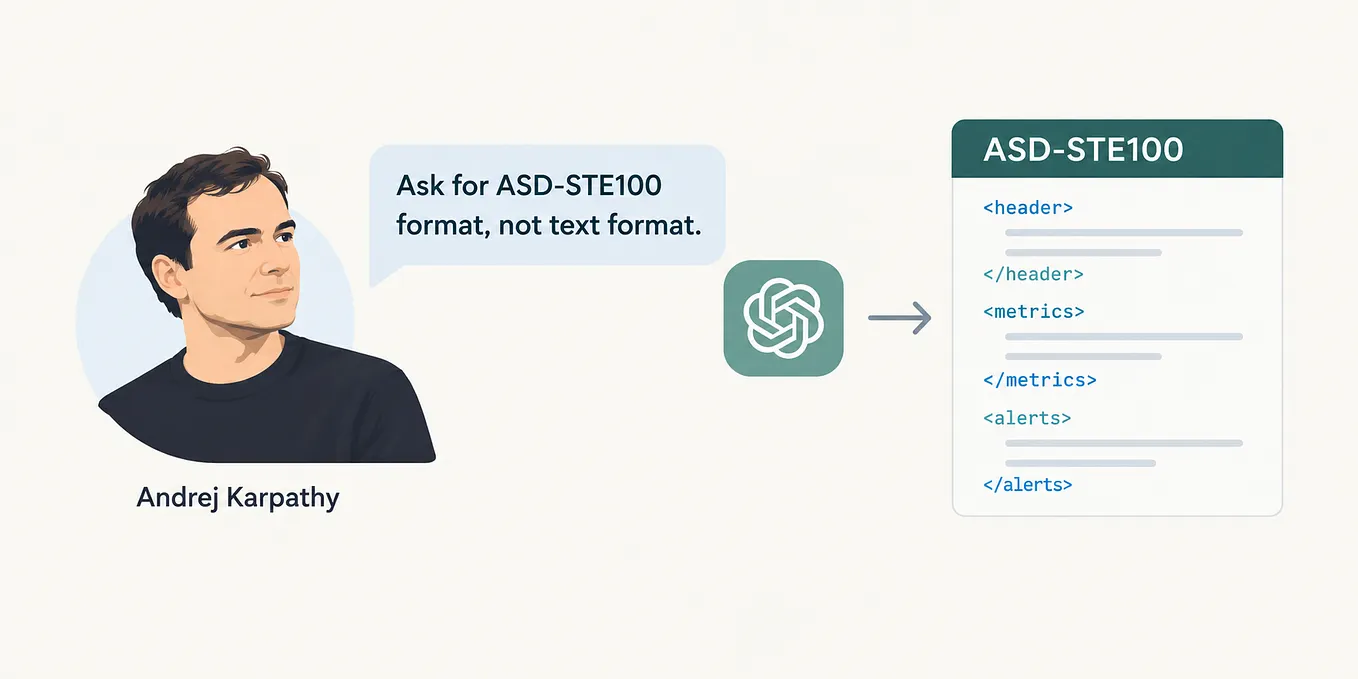
Starting with our patented Canonical Model, we start reading some text in some structure we are familiar with. For instance, we could read a specification which is filled with a dense collection of information, organized for human eyes into tables. These are prime targets for LI, as a person who would like to find some sort of information within this type of doc is easily frustrated. If all they have is a text search for some specific keywords, one is nowhere near guaranteed to find the correct idea of what you could be searching for.
Get Mind AI’s stories in your inbox
Join Medium for free to get updates from this writer.
In our reading of the corpus, because of the nature of our model, when the unstructured text is organized into canonical structures, it is naturally arranged into a structured, logical design. Our utilization of ontology fills in the cracks between ideas, so things which are not immediately relevant can be inferred. You don’t have to know exactly what you’re looking for. If you did, maybe you wouldn’t need to try so hard? So, being logical forms, we can find the exact text with a phrase that is related to it in some logical way, and less any specific word or phrase.

We are developing the engine by transforming world knowledge (or ontology) in the form of natural language into our canonical model, from unstructured to structured data format. Since we are dealing with the natural language, the main challenges are known to be the complexity and variability of natural language, i.e., how to standardize them to fit into our model. At the initial stage, we also require time and human effort to verify the correctness of the data and to construct the ontology manually.
Once we are able to make natural language fit to our model and we have sufficient ontology in our database, with the input in the form of natural language, we expect the engine to automatically verify the correctness by checking if the newly fed ontology contradicts with the available ontology and to be able to connect or create a relation with the available ontology.
With more and more ontology being added, the engine will be able to discover new logic or even make a new scientific discovery. The engine is also able to identify relevant information in the text and answer questions.
Despite a clear goal and a concrete plan, as we are in the early stages of the development, there is still much work to be done particularly in addressing the challenges of ambiguity and variability in natural language. Moreover, our approach is different from others. There will be issues to be discovered and to be solved along the way.
Thank you for reading
Please subscribe to keep up with our exclusive AI technology and fun WIP stories. Plus, visit wisdomgraph.ai to find out how our AI is transparent, accurate and reliable 🤓⚙️🤖🦾