Understanding Data Structures

When I first started coding, I treated data as nothing more than a simple list or array and thought that would be sufficient. However, as I’ve progressed, I’ve come to realize that how data is organized and stored plays a crucial role in the efficiency and scalability of your code.
This is where data structures become essential.
A data structure is a method of organizing and storing data in a way that makes it easy to access and manipulate. Choosing the right structure isn’t just a “best practice”; it’s what can significantly improve a program’s speed, reduce memory usage, and ensure it scales smoothly as the project grows.
Let’s go through some of the most common data structures:
Arrays and Lists
These are the most common ways to store collections of items. In Python, lists and arrays are flexible and easy to use. However, searching for or removing items in large lists can be slow and have a high time complexity because it might require going through each element one by one or binary searching.
Get Vardaa Maheshwari’s stories in your inbox
Join Medium for free to get updates from this writer.
Use them when:
-️ The data set is small
-️ You mostly need to access elements by index
Stacks and Queues
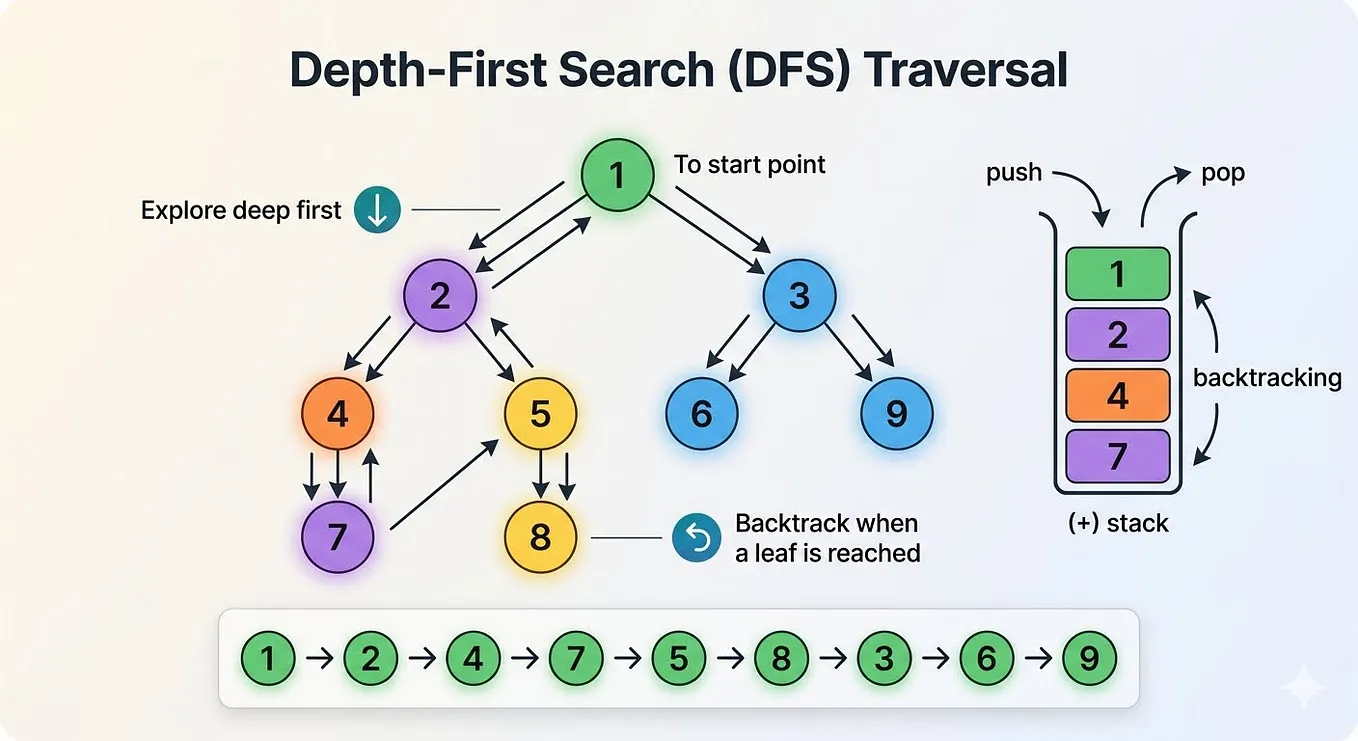
Stacks (Last In, First Out) and Queues (First In, First Out) are structures where order is important. Stacks are used in undo functions or to track recursive calls, while queues are useful for handling tasks in the order they arrive, like printing or processing requests.
Use them when:
-️ There is a need for controlled access in a specific order
-️ While working with algorithms like depth-first or breadth-first search
Hash Tables / Dictionaries
Dictionaries in Python or hash maps in Java store key-value pairs, allowing access to data quickly without scanning through all elements. This structure is the most effective when you need to retrieve information based on a unique identifier, like looking up a username or phone number.
Use them when:
-️ Fast search and retrieval are essential
-️ You need to associate related pieces of data together
Choosing the Right Structure Matters.
Imagine building a to-do list where tasks are constantly added, removed, and searched. If you store tasks in a simple list, searching through hundreds of items might slow your app down. But using a dictionary could speed things up exponentially. Picking the right data structure saves time and makes the code more efficient and elegant.