Showing posts with label architecture. Show all posts

Friday, 20 April 2018

Moral rights and architectural works in a recent Italian decision


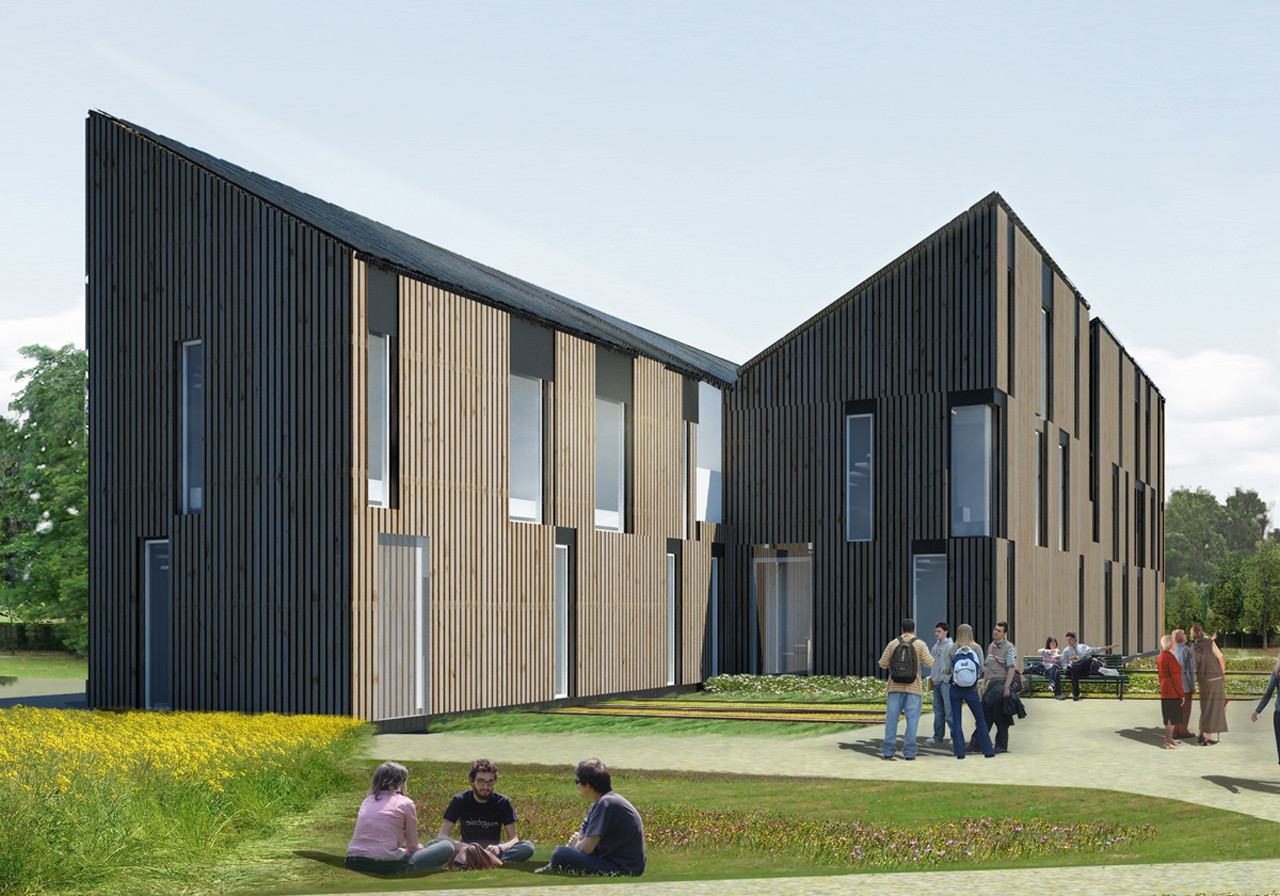
Casa Bosco
To what extent can an architectural project be modified without the express consent of the architect without such modifications being an infringement of their moral right of integrity?

This is the question that not long time ago the District Court of Milan (Tribunale di Milano) addressed in Boeri v Agnoletto, decision No 1568/2018.

Background

In late 2000s well-known architect Stefano Boeri was commissioned to realize an architectural project - then become 'Casa Bosco' - for ‘residential standardized units – Low Cost housing units’ in Milan by virtue of a contract that foresaw that the architect and the commissioning party would have the co-ownership of any resulting rights, and also that any separate use of the project – including for marketing purposes – by either party should be authorized in writing by the other party.

Following the finalization of the project and the decision of Boeri to leave it due to his political commitment with the Municipality of Milan, a new contract was concluded to prepare the final version of the project and obtain the necessary administrative/building permits. 

Also this contract envisaged that Boeri would co-own any rights to the project as finalized, save for the right to modify the project if any such modifications would be necessary to obtain the necessary authorization.

In 2014 Boeri brought proceedings for infringement of – among other things – Article 20(1) of the Italian Copyright Act. This provision states that, irrespective of economic rights and even after their transfer, the author of a work has the right to object to any deformation, mutilation or any other modifications, as well as any other act to the detriment of the work, that may be prejudicial to their honour or reputation. The architect claimed in fact that both modifications made to his social housing project ‘Casa Bosco’ and the transformation of the project into a for-profit enterprise indeed infringed his moral right of integrity.

The decision

The Court began its analysis by noting that Article 20(2) of the Act also states that [the translation from Italian is mine] “in works of architecture the author cannot object to any modifications that were necessary in the course of their realization. Similarly, they shall not object to any further modifications that were necessary to be made on a work that has been already realized.”

The judges noted that in Italian case law there have been two main interpretations of this provision. On the one hand, there is a restrictive view according to which the only possible modifications are those which in any case do not infringe the author’s moral right of integrity (hence, the provision would only apply with regard to economic rights). On the other hand, the prevalent view is that the derogation within Article 20(2) also applies to the right of integrity [this view appears preferable, also if one considers the fact that it is included within the provision devoted to moral rights]: the authorization of the author is not needed for any modifications that are detrimental to their honour or reputation should such modifications be indispensable to the realization of the work.

The modifications lamented by the architect concerned: (1) the removal of contractual clauses relating to the future sale of the units; (2) the modification of the ratio between free construction- and social construction-reserved areas. 

The Court held that the former would be outside the scope of the author’s rights as it would relate not to the project as such but the economic exploitation of the resulting units, and the latter related to something that the author had consented to by entering the relevant contracts.

The judges thus dismissed Boeri’s action.

Sunday, 12 November 2017

Does the Commercial Exploitation of France’s National Domain Violate the Constitution?


Article L. 621-42  of the French Code du patrimoine (heritage Code) authorizes using the image of a building belonging to France’s national domain for commercial purposes, in any medium, if such use has been authorized by the manager of the building, by unilateral act or contract, free of charge or with financial compensation. No authorization is, however, required, if “the image is used in the exercise of public service missions or for cultural, artistic, educational, teaching, research and information purposes and illustration of the news.”


This is a recent law, as this article was introduced by the July 7, 2016 law, no. 2016-925 about freedom to create, architecture and heritage) in order to provide buildings belonging to the national domain, such as the Louvre, Chambord, or Fontainebleau, an opportunity to financially gain from the commercial use of their image.


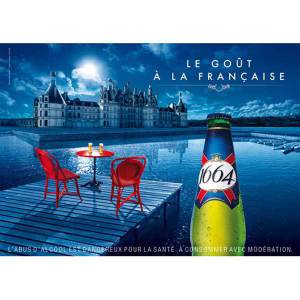
This law was enacted after the castle of Chambord unsuccessfully tried to prevent the commercial use of its image for advertising a beer. The image of the castle had also been used on a special edition of beer bottles.

Visiting castles can make you thirsty 


NGOs La Quadrature du Net and Wikimedia recently joined forces to challenge the constitutionality of the decree implementing article L. 621-42, which created article R.621-99 of the Code du patrimoine. This article gives power to the authority in charge of the national domain to negotiate the financial conditions for the commercial use of its image. From plaintiffs’ point of view, the buildings in France’s national domain are in the public domain, and thus free to be used, even for commercial purpose.


They argued that the access to culture is a human right, protected by article 14 of the European Convention on Human Rights, article 10 and 11 of the French Declaration of Human Rights,  and by the Preamble to the French Constitution, which guarantee equal access to culture for all, and that therefore article R.621-99 violated the Constitution.


They also argued that the public domain is protected by article 1 of Directive 2006/116/EC on the term of protection of copyright and certain related rights, which states that a literary or artistic work revert to the public domain 70 years after the death of the author, irrespective of the date when the work is lawfully made available to the public. As article 2 of the Berne Convention includes architecture in its definition of literary and artistic works, they concluded that works of architecture in France’s national domain are in the public domain, and that the lawmakers cannot “artificially revive exploitation rights.”


The Ministry of Culture argued in defense, rather surprisingly, that “[i]t has never been the intention of the lawmaker to establish a regime guaranteeing free exploitation of a work after the extinction of the economic rights of its owner.” Unless this refers to moral rights, which are perpetual and may sometimes impinge the commercial exploitation of a work, this argument denies a basic concept of French copyright.


On October 25, the French Council of State, France’s highest administrative court, agreed to their request to ask the Constitutional Council whether article R.621-99 violated the Constitution. The Constitutional Council will now decide within 3 months whether the commercial exploitation of buildings in the public domain, but belonging to France’s national domain, violates French Constitution. We’ll keep you informed.


Friday, 26 June 2015

Panoramic Freedom or Tyranny?

To emphasise how boring life would be without images from our built environment, this blog posting contains no pictures of buildings.
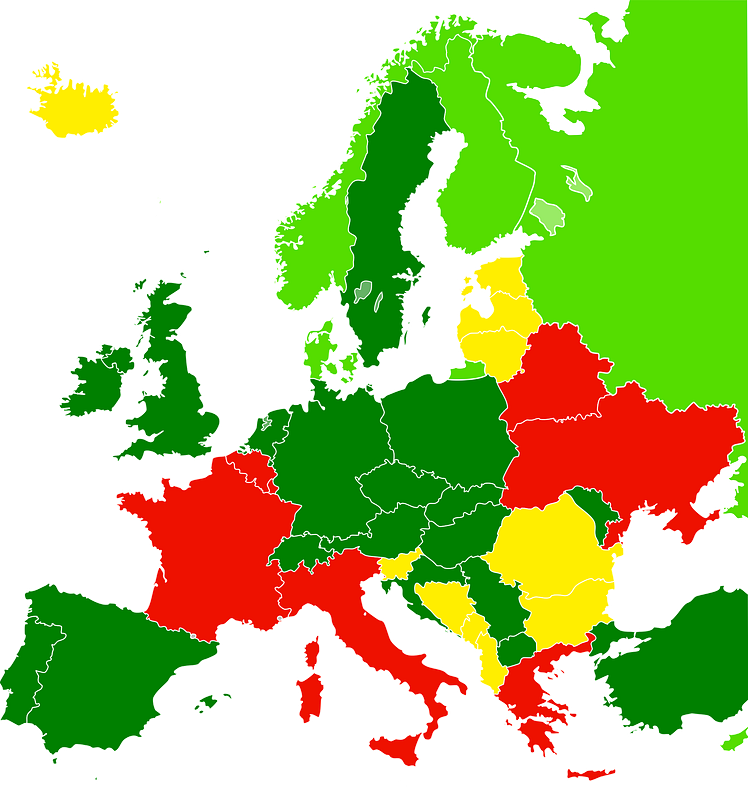


Until recently few people would have understood the expression Freedom of Panorama. Something to do with the iconic BBC TV current affairs programme maybe? But this has all changed due to the ongoing debate (for instance here, here and here) within the EU about copyright reform. At the moment the opponents of Freedom of Panorama are in the ascendant. Freedom of Panorama is of course about whether a photographer, videographer or artist may freely record and then exploit images of sculptures or buildings which are visible in public places, without seeking permission. In one sense this issue highlights the wider problem of harmonising copyright law across the EU. One look at the map below shows graphically where the 'fault' lines lie.
Map by King of Hearts and others, licensed CC BY-SA.
(obviously not all the countries shown are members of the EU) 
Countries shown in red forbid any such representations without permission, whereas those shown in dark green fully embrace the Freedom of Panorama policy. The lighter green countries only extend the exemption to buildings, not sculptures or similar works. Those in yellow permit only the recording of such works in public places for non-commercial use. It is perhaps too simplistic to say that these divisions are roughly aligned to the division between a more utilitarian view of copyright as a property right, and the droit d'auteur where the spirit of the author is exalted, but that certainly goes some way to explaining the fundamentally opposing positions taken over Freedom of Panorama.

The debate also highlights the two different senses of 'public domain'. In the wider context many people think of the public domain as that to which the public has access, such as the internet, as well as physical public spaces. On the other hand copyright enthusiasts use the words in a much more specific sense, namely the definition of the state of a work which is no longer subject to legal copyright protection. A building thus represents the paradox of standing in the public domain but not being in the public domain.

This raises the question: why should a building be subject to copyright in the first place? Without doubt architects are usually skilled artists and designers, and it is clearly fair and reasonable that their drawings should be protected in the same way as other artistic works. But why shouldn't the element of expression of their ideas (and thus copyright) be limited just to the drawings alone? It is undoubtedly true that many buildings are beautiful objects in their own right, but so are some cars or clothes or culinary dishes, but we don't feel the need to protect these things through copyright.

Unlike other forms of the traditional copyright works (literary, dramatic, musical and artistic), and despite a passing mention in Article 5(3)(h) covering exceptions to the reproduction right, a building cannot be subject to the majority of the specific provisions of the InfoSoc Directive (2001/29/EC) such as the communication right, the making available right or the distribution right. So that immediately makes a building a special case, outside the general direction of travel of copyright reform which is largely concerned with ensuring that copyright law reflects current and emerging technological changes. Furthermore because a building per se cannot be published, distributed or translated, it is effectively a continuous public performance or broadcast of the architect's creativity, open to everyone at all times. There is no need for a decision about whether a new public is being communicated to, as per Svensson. And even if the argument for according copyright to a building is persuasive, should this really extend to preventing the making of visual copies of it? After all, such images in no way affect the economic or moral rights of the architect any more than the building itself does. A photograph of a building does not compete with either the building itself or with the architect's drawings, because it does not do serve the same purpose. Such images will, in the main, only serve to enhance the reputation and renown of the architect. Perhaps if copyright in a building was similar to design right, in that what was restricted was the creation of an actual real three dimensional full-scale copy of the building, that would make sense, since the architect might be expected to earn an additional fee for any second edifice. One also has to consider how buildings come about. Architects are usually commissioned to do the job; unlike artists or sculptors, their creativity is only allowed to see the light of day because of the patronage of developers. To use the American terminology, their work is for hire. The end product of their job is not a work of artistic craftsmanship, as it is not made by their own skilled hands, and the underlying purpose of a building is utilitarian. But perhaps most significantly, the design of a modern iconic building, such as the Shard in London or the Burj Al Arab in Dubai, is not the work of one person, but huge teams of engineers, architects and other specialists. While the outline concept may originate from the mind of a single individual, the execution is way beyond the capability of any one person. This strengthens my view that allowing copyright in a finished building is absurd because it stretches the idea of 'author' beyond rationality.

And there is the entirely separate, practical argument that as far as  non-commercial photography etc is concerned, copyright in the physical building is virtually unenforceable due to today's ubiquity of cameras and smart phones. While the average person might think twice about downloading a pirated piece of music, it is unrealistic to believe they will ever see the moral case for not taking a selfie with the London Olympic Stadium or the Louvre in the background, without first seeking permission from the architect.

Many prominent architects are also particularly proficient at self-publicity and so one has to wonder exactly who is lobbying the European Parliament and Commission to ensure that Freedom of Panorama is excluded from any future EU law. Although if in doubt we can usually blame the French.  Or possibly French architects.

As Ben has previously reported, the next milestone along the road to EU copyright reform comes on 9 July when the plenary session of the European Parliament debates the subject.  Perhaps at that point the 'greens' (as shown on the map above) may manage to sway the argument back the other way.

For Eleonora's take on the subject, see this IPKat posting.

Wednesday, 18 February 2015

Jean Nouvel Sues the French Music Complex He Designed, Claiming Breach of His Moral Rights

French newspaper Le Monde reported last week that architect Jean Nouvel is suing the Philarmonie de Paris, claiming that its premature inauguration of a building he designed is a breach of his moral rights. 

Jean Nouvel won in 2007 an international competition launched to design the Philarmonie de Paris building, financed 100% by public money, the French government and the city of Paris. It is a cultural complex dedicated to music located in the Parc de la Villette area of Paris, featuring a concert hall and exhibitions spaces. The Orchestre de Paris is its resident orchestra and it will also host other orchestras, dance companies, and exhibitions.

The building was inaugurated last January 14. The same day, Jean Nouvel published an editorial in Le Monde, where he explained that he did not attend the inauguration because he believes that the building has been opened to the public too soon, without fine tuning its acoustics. The architect also claimed that the project managers cut corners to save money during its completion, and the result is that “[t]he architecture is martyred, the details sabotaged, so taxpayers will have to pay, once again, to correct these aberrational decisions.” Mr .Nouvel claimed that the inauguration of the building was “premature” and claimed a breach of his moral rights. 

He then filed suit against the Philarmonie de Paris in the Tribunal de Grande Instance de Paris (TGI).  Both parties presented their arguments on February 13. According to the Le Monde article, Mr. Nouvel is not asking for damages, but is asking the TGI to order the Philarmonie de Paris to make adjustments to twenty-six areas which are not, according to him,  in compliance with his original design, among them the foyer, the parapets, and reflectors in the concert hall. As long as these modifications are not made, he is asking the Philarmonie de Paris not to use his name and his image in connection with the project. 

Droit Moral of Architects
Building and Judging Both Requires Balancing Skills

I did not find the complaint, and thus I cannot discuss the arguments of both parties. However, while architects are indeed considered authors under French intellectual property law, their droit moral is not without limits, due to the utilitarian nature of their creations. Therefore additional considerations, such as public safety, may trump the architect’s moral rights. For instance, the French Supreme Civil Court, the Cour de cassation, held on January 7, 1992, that “the practical use of a building commissioned to an architect prevents him to try to impose an absolute inviolability on his work, to which its owner has the right to make changes when it becomes necessary to adapt it to new needs. Nevertheless, it is for the judicial authority to assess whether these alterations to the architectural work are legitimized, given their nature and their importance, under the circumstances which forced the owner to undertake them.” 

The Cour de cassation provided in 2009 a balancing test to be used by judges in these cases. They must “determine whether by their nature and importance, the changes made did or did not exceed what was strictly necessary and were or were not disproportionate to the aim pursued by the owner.”

Judgment is expected in the spring, and we’ll report on it then.

Image is courtesy of Flickr user U.S. Geological Survey under a CC BY 2.0 license. 

Thursday, 3 July 2014

The CopyKat - JCSI points to potential the illegality of a new UK copyright exception

The Shanghai Daily reports that the license of 'value-added' telecom service run by the Chinese video sharing site QVOD has been revoked by the Guangdong Provincial Telecommunications Administration over copyright infringement concerns. Shenzhen QVOD Technology Co., Ltd. can no longer be engaged in telecommunication services after the withdrawal of its license, the Administration confirmed. According to the Administration, QVOD has violated regulations of telecom service management. The company was informed of an administrative penalty - a rather large fine of 260 million yuan ($41.6 million U.S. dollars). 


The Second Circuit appellate court in the USA has ruled that architectural works cannot always be neatly categorized as compilations of unoriginal material, criticising the 2008 decision by the Eleventh Circuit in Intervest Construction, Inc. v. Canterbury Estate Homes, Inc - saying that decision was "overly simplistic", explaining that not all architectural works consist solely of unoriginal elements. "Some architectural designs, like that of a single-room log cabin, will consist solely of standard features arranged in standard ways; others, like the Guggenheim, will include standard features, but also present something entirely new. Architecture, in this regard, is like every art form."  The real issue, the Second Circuit explained, is to determine what elements of an architectural work are original and therefore protectable, versus what elements are standard and thus not protectable.  Zalewski v. Cicero Builder Developer, Inc 2014 WL 2521388, at *5 (2d Cir. June 5, 2014). More on Mondaq here.

Just days after they went on sale in the UK, Google Glass has been banned from two cinema chains who have screens across the country. Vue cinema chain and the Cinema Exhibitors' Association have both said the gadget cannot be worn during screenings, following cinema chains in the US, who have also banned the use of Glass over fears of copyright infringement being committed by customers using Glass’ forward-facing video camera to record newly released films. Image: Google.


Dr. Monica Horten, a writer, policy analyst and visiting fellow at the LSE, looks at "copyright liability for cloud computing services hovering on the EU horizon" and asks what we can learn from the case of ABC Inc v Aereo in the United States Supreme Court  - over on the LSE Media Policy Project blog in a piece headed "Copyright Liabilities Loom for Cloud Providers in Wake of Aereo Judgement". 


Hackers in Argentina (or well, I suppose they could be anywhere so I am guessing) have taken direct action after The Pirate Bay was blocked in Argentina - the first Latin American country to remove the site on the grounds of copyright infringement. Hackers  managed to replace the website of Argentinean music industry trade body CAPIF (who led the legal action to instigate the block) with a proxy to access The Pirate Bay which remained in place for some ten hours.


Not Katy Perry - but Roald Dahl's "Witches"
A group of Christian hip-hop musicians headed up by rapper Flame are suing pop singer Katy Perry and her record label in federal court in St. Louis, Michigan, claiming that the 2013 hit song "Dark Horse" infringes on their copyright of a 2008 song "Joyful Noise." That song appeared on an album that was nominated for a Grammy for best rock or rap gospel album and the claimants say "By any measure, the devoutly religious message of 'Joyful Noise' has been irreparably tarnished by its association with the witchcraft, paganism, black magic, and Illuminati imagery evoked by the same music in 'Dark Horse' ". 

In the wake of the leak of the European Commission’s White Paper on copyright policy come two articles looking at what should be done to modernise Europe's copyright regime: The first says "Achieving a modern copyright regime that is apt for a digitally connected continent requires a strategic vision" ...... and suggests that a strategic vision should include a proper balance in the copyright framework. Creativity must be incentivised and rewarded without, however, undermining legitimate interests of users and the broader development of a thriving digital economy in Europe". This article is by Jakob Kucharczyk, Director in the Brussels office of the Computer & Communications Industry Association, and is on Disco - the Disruptive Competition Project - and is well worth a read. And TechDirt have this take "EU Publishers Present Their 'Vision' For Copyright: A Permission-Based Internet Where Licensing Is Required For Everything" which can be found here.

And in the UK doubt has been raised about the UK government's power to introduce a new private copying exception to copyright without an associated mechanism for compensating rights holders. In a rather rare move* The Joint Committee on Statutory Instruments (JCSI) said it was unclear whether the introduction of a new private copying right without a mechanism for ensuring rights holders receive "fair compensation" could be permitted under European law saying "if they [the exception] are approved and made, there will be a doubt whether they are intra vires and in particular the Committee's attention had been drawn in particular to the CJEU's judgment in case C-467/08 Padawan in which the Court held that 'fair compensation', within the meaning of Article 5(2)(b) of the Copyright Directive (2001/29/EC), is an autonomous concept of European Union law which must be interpreted uniformly in all the Member States that have introduced a private copying exception; that Member States which decide to introduce the private copying exception into their national law are required to provide for the payment of 'fair compensation' to righstholders. The always readable Out-law.com has a good take on this here http://www.out-
law.com/en/articles/2014/july/doubt-cast-over-proposed-uk-laws-on-private-copying/ asking if this exception could end up being tested in the CJEU to determine the legitimacy of the UK's plans for the new private copying right. It's quite understandable that key elements in the music industry - in particular the record labels, music publishers and the sector collection societies will push for fair compensation to be included - or the exception scrapped so this one may run - although I for one will be looking for my own "fair compensation" - back from those very same labels and publishers - for all of those copyright payments I have made over the years for now obsolete formats like mini-disc, betamax,  VHS, cassette tapes and laser discs. The House of Commons will debate the proposed exceptions including private copying on the 9th July according to an IPO tweet (below).

*I am reliably informed that the fact that the JCSI has reported on the SI is very unusual. I understand that this is only the 7th time an affirmative SI has been reported by the JCSI during this Parliament (ie since May 2010). And it is the 3rd time of the 7 that the report is for doubtful vires. So, third time in four years. Quite a historic event generally and this could be seen as very historic in copyright law history!


Sunday, 8 June 2014

The CopyKat - Pirate Bay founder sails into an unsafe Swedish harbour

Peter Sunde , co-founder of file-sharing website The Pirate Bay, has been arrested in southern Sweden and is now expected to serve an outstanding sentence for copyright violations after being on the run for nearly two years. Sunde had been wanted by Interpol since 2012 after being sentenced in Sweden to one year in prison and fined for breaching copyright laws. "We have been looking for him since 2012," said Carolina Ekeus, spokeswoman at the Swedish National Police Board. "He was given eight months in jail [the sentence was reduced on appeal although the fines increased] so he has to serve his sentence." Sunde had been living in Berlin, Germany, but returned to Sweden at times due to having family there.His final appeal against his sentence failed when his request for another appeal was denied by Sweden’s Supreme Court.

In the U.S. the Department of Justice is conducting a review of the consent decrees governing the nation’s largest music performance rights organisations, which many see as a critical development amid the ongoing debate over copyright reform. ASCAP last had its consent decree, which governs how the collection society collects and distributes royalties, updated in 2001, while BMI’s has not been updated since the 1990s - and boy oh boy, has technology moved on since then! Both songwriters and publishing companies have suggested that the consent decrees need serious revision, with some even arguing they should be abolished - and ASCAP have already publicised some suggested changes. But the push for updates grew louder earlier this year when a federal rate court gave an unfavorable ruling to ASCAP in its royalty rate dispute with Pandora. Review of the consent decrees will trigger a 60-day public comment period, which is sure to draw in stakeholders ranging from songwriters and publishing companies, to broadcasters and record labels.


Colin Kaepernick
The arm tattoos on San Francisco 49ers quarterback Colin Kaepernick will be duplicated on his digital avatar in the next “Madden” video game: According to ESPN, Kaepernick secured copyright waivers from the two tattoo artists who inked the biblical psalms and other religious references and which were copied into the biceps of the virtual Kaepernic and so, and as the NFL Players Association suggests, he has their permission to include their work in the game. More here.

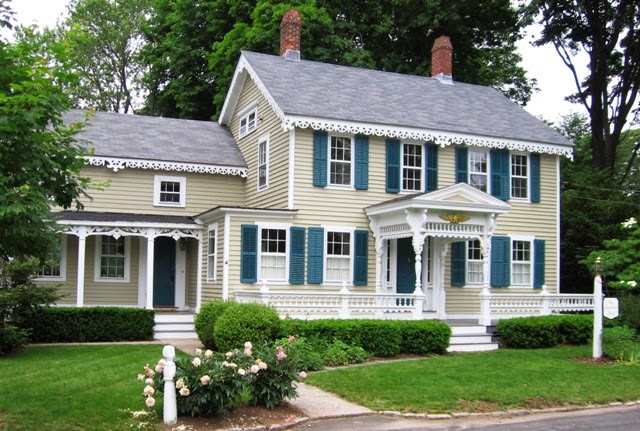
Just as Shakespeare could not copyright iambic pentameter, an architect can't claim clapboard siding on colonial houses as his intellectual property, the 2nd Circuit Appeals Court has ruled, saying "Shakespeare wrote his sonnets; Brahms composed his Hungarian dances; and plaintiff designed his colonial houses"  ...... "Because we must preserve these forms for future artists, neither iambic pentameter, nor European folk motifs, nor clapboard siding are copyrightable." in a case brought by architect  James Zalewski and his firm Draftics Ltd. against construction companies T.P. Builders and Cillis Builders, the court held that the similarities Zalewski spied between his designs and the defendants' buildings "are features of all colonial homes, or houses generally" and not protected.


The Beastie Boys have won $1.7m (£1m) in a copyright violation case against the Monster Energy Co who produce the energy drink.of the same name. The case was for copyright infringement and implied endorsement. Monster had used a montage of Beastie Boys tracks in a promotional video relating to a snowboarding event the brand sponsored, which was posted shortly after the passing of Beastie Boy Adam Yauch, who had included a clause in his will prohibiting his name, image or music being used in advertising or marketing materials. Monster conceded that it had used the music without permission, but said that it had done so by mistake, after one of its marketeers mistakenly inferred from Z-Trip, the DJ the company had worked with on the party in the promotional video, that the music had been cleared. The beverage maker had insisted it should owe no more than $125,000 (£74,000). The Beastie Boys had sought $2m (£1.1m) - and got most if it. 


China is considering raising penalties for copyright infringement, according to a draft amendment. The draft amendment to the Copyright Law will see miscreants face fines of five times their illegal gains, or up to 250,000 yuan when the exact sum cannot be established. Previously the figures were three times and 100,000 yuan. The draft document was published by the Legislative Affairs Office of China's State Council to solicit public opinion, (which must be submitted before July 5th). 


Wednesday, 22 May 2013

Building models for architectural infringement in Houston homes

Of course I used a set square!
Although when I have taught copyright law, I have always mentioned architecture and the fact that architectural designs, drawings and blueprints can be protected in British law as a artistic work, I rarely see any relevant case law. In fact my trusted copy of Cornish has just five lines on the subsistence of copyright architectural works and models. But now comes news that a federal District Court in the USA has awarded $1.3 million to a Texas design firm in an architectural copyright case, finding that Houston-based Hewlett Custom Home Designs, Inc. had a valid claim against Frontier Custom Builders, Inc. in federal law. The jury in the U.S. District Court in Houston found that Frontier had infringed Hewlett's copyrights in designing, constructing and marketing 19 houses, and Frontier's owner, Ronald Wayne Bopp, was also held personally liable for Frontier's activities.

The damages were based on the  profits Frontier had earned from the sales of houses and the court also ordered the destruction of infringing materials in Frontier's possession. Shane Hewlett, the principal of Hewlett Custom Home Design Inc., said, "I am extremely gratified that the jury vindicated our position and acted to help protect our intellectual property and the designs we proudly provide to clients."

Louis Bonham of Osha Liang LLP, who acted for Hewlett, said "Misappropriation of copyrighted building designs is a serious problem in the homebuilding industry and has been for many years. I hope the jury's message will be heard by those in the industry who do not take this issue seriously." 

Reports say that this is the second seven-figure judgment in an architectural copyright case entered by a Houston federal court. In 2012, the court awarded $3.2 million to an Austin architecture firm, Kipp Flores Architects, in a similar case against Hallmark Design Homes. Kipp had previously secured a third multi million dollar award back in 2001, in Norfolk Va.

Hewlett Custom Home Design, Inc. v. Frontier Custom Builders, Inc. and Ronald W. Bopp  Case 4:10-cv-04837; U.S. District Court for the Southern District of Texas, Houston Division.

and the CopyKat found this news story in the Sacramento Bee here http://www.sacbee.com/2013/05/20/5434324/osha-liang-llp-home-design-firm.html

More on the subsistence of copyright in architectural works, drawings, plans, designs and models here

Thursday, 3 January 2013

China: the country that can copy anything

We seem to talk about China quite a bit on this blog (see Ben's report on Apple here and my post on China's new copyright registration system here): the economic boom which it has been enjoying for the last decade, coupled with its "get rich now, fix problems later" attitude means that the country has widely-publicised problems with copyright infringement. The latest example being wholesale copying of an as yet uncompleted building, the Wangjing SOHO in Beijing.

An example of Zaha Hadid's designs
© Associated Fabrication
The SOHO building comprises three curving towers. It was designed by the Iraqi-British architect, Dame Zaha Hadid, who recently designed the Aquatics Centre for the London Olympics and who no fewer than  11 current projects in China. The SOHO towers are currently under construction, yet a group of pirate architects and construction teams is already building a copy of the towers in Chongqing , in southern China. Embarrassingly, the pirates look set to complete their building before the original is finished.
According to the German newspaper Der Spiegel, Yet You Yunting, a Shanghai-based lawyer has said that China's copyright law includes protection for works of architecture and that "SOHO could have a good chance of winning litigation in this case." However he says that "even if the judge rules in favor of SOHO, the court will not force the defendant to pull the building down. But it could order the payment of compensation."

Zaha Hadid is said to have a philosophical stance on the copying of her designs: If future generations of these cloned buildings display innovative mutations, "that could be quite exciting." I wonder if the financial backers of the Wangjing SOHO project feel the same way?
You can see a picture of the Wangjing SOHO towers here.