
 Sign in with Facebook
Frame Of Reference Quotes
Quotes tagged as "frame-of-reference"
Showing 1-9 of 9
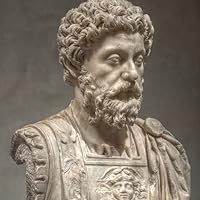
“As far as you can, get into the habit of asking yourself in relation to any action taken by another: "What is his point of reference here?" But begin with yourself: examine yourself first.”
― Meditations
― Meditations
“Accustom yourself not to be disregarding of what someone else has to say: as far as possible enter into the mind of the speaker.”
― Meditations
― Meditations

“The greatest power one human being can exert over others is to control their perceptions of reality, and infringe on the integrity and individuality of their world. This is done in politics, in psychotherapy.”
― Philip K. Dick: The Last Interview and Other Conversations
― Philip K. Dick: The Last Interview and Other Conversations
“The hermit keeps a window open onto the sky, without which the world would perish from suffocation, ugliness and boredom. He is the only one, along with the poet, who still speaks the language of the beyond, who makes existence sacred, who gives life this verticality without which humanity is buffeted about beneath itself. He is a rampart against the assaults of mediocrity, nastiness, hatred that is intolerant of its opposite. He is this force, made out of weakness, that warms the atmosphere, melts the winter of the world. For men turned toward secondary things, his presence recalls the existence of the essential things: the order of the world, knowledge, the priority of salvation and the adoration of the Supreme, by imitating the sunflower whose heliotropism has much to teach us, who never turns away from the trisolar brightness. Model and prototype, the hermit represents, in a chaotic and dehumanized world, a final landmark, an ultimate axis for reference. He allows man to remain standing by recalling the Absolute; when deprived of the Totality, man becomes totalitarian by compensation.”
―
―

“McKusick's belief in this paradigm-the focus on disability rather than abnormalcy-was actualized in the treatment of patients in his clinic. Patients with dwarfism, for instance, were treated by an interdisciplinary team of genetic counselors, neurologists, orthopedic surgeons, nurses, and psychiatrists trained to focus on specific disabilities of persons with short stature. Surgical interventions were reserved to correct specific deformities as they arose. The goal was not to restore "normalcy"-but vitality, joy, and function.
McKusic had rediscovered the founding principles of modern genetics in the realm of human pathology. In humans as in wild flies, genetic variations abounded. Here too genetic variants, environments, and gene-environment interactions ultimately collaborated to cause phenotypes-except in this case, the "phenotype" in question was disease. Here too some genes had partial penetrance and widely variable expressivity. One gene could cause many diseases, and one disease could be caused by many genes. And here too "fitness" could not be judged in absolutes. Rather the lack of fitness-illness [italicized, sic] in colloquial terms- was defined by the relative mismatch between an organism and environment.”
― The Gene: An Intimate History
McKusic had rediscovered the founding principles of modern genetics in the realm of human pathology. In humans as in wild flies, genetic variations abounded. Here too genetic variants, environments, and gene-environment interactions ultimately collaborated to cause phenotypes-except in this case, the "phenotype" in question was disease. Here too some genes had partial penetrance and widely variable expressivity. One gene could cause many diseases, and one disease could be caused by many genes. And here too "fitness" could not be judged in absolutes. Rather the lack of fitness-illness [italicized, sic] in colloquial terms- was defined by the relative mismatch between an organism and environment.”
― The Gene: An Intimate History

“Time is a wave or a black hole could not bend it; humanity rides the crest of an infinite number of waves that are perceived as linear in their limited frame of reference.”
―
―

“Self-distancing is changing the perspective of life by observing inner feelings and experiences from distance with different angles, filters and lenses.”
― Enlightenment Step by Step
― Enlightenment Step by Step

“Absolute truths are hard to come by, which is the basic premise of ‘hyper-perspectivism’. Rather, truths are always in the eyes of the beholder, truths are always observer-relative, truths are “made” by a “truth-maker.” You can approach our multifaceted reality from an incredibly large number of angles. Everything is perspectival, in other words, it all depends on your perspective, your frame of reference.”
― The Syntellect Hypothesis: Five Paradigms of the Mind's Evolution
― The Syntellect Hypothesis: Five Paradigms of the Mind's Evolution

“As soon as somebody starts talking about times when they felt excluded, betrayed, or wronged, stop and listen. When somebody is talking to you about pain in their life, even in those cases when you may think their pain is performative or exaggerated, it’s best not to try to yank the conversations back to your frame. Your first job is to stay within the other person’s standpoint to more fully understand how the world looks to them. Your next job is to encourage them to go into more depth about what they have just said. “I want to understand your point of view as much as possible. What am I missing here?” Curiosity is the ability to explore something even in stressful and difficult circumstances.
Remember that the person who is lower in any power structure than you are has a greater awareness of the situation than you do. A servant knows more about his master than the master knows about the servant. Someone who is being sat on knows a lot about the sitter—the way he shifts his weight and moves—whereas the sitter may not be aware that the sat-on person is even there.”
― How to Know a Person: The Art of Seeing Others Deeply and Being Deeply Seen
Remember that the person who is lower in any power structure than you are has a greater awareness of the situation than you do. A servant knows more about his master than the master knows about the servant. Someone who is being sat on knows a lot about the sitter—the way he shifts his weight and moves—whereas the sitter may not be aware that the sat-on person is even there.”
― How to Know a Person: The Art of Seeing Others Deeply and Being Deeply Seen
All Quotes
|
My Quotes
|
Add A Quote
Browse By Tag
- Love Quotes 102k
- Life Quotes 80.5k
- Inspirational Quotes 77k
- Humor Quotes 44.5k
- Philosophy Quotes 31.5k
- Inspirational Quotes Quotes 29k
- God Quotes 27k
- Wisdom Quotes 25k
- Truth Quotes 25k
- Romance Quotes 24.5k
- Poetry Quotes 23.5k
- Life Lessons Quotes 23k
- Quotes Quotes 21.5k
- Death Quotes 21k
- Happiness Quotes 19k
- Hope Quotes 19k
- Faith Quotes 18.5k
- Inspiration Quotes 18k
- Motivational Quotes 16k
- Spirituality Quotes 16k
- Relationships Quotes 16k
- Religion Quotes 15.5k
- Life Quotes Quotes 15.5k
- Writing Quotes 15k
- Love Quotes Quotes 15k
- Success Quotes 14k
- Motivation Quotes 14k
- Time Quotes 13k
- Science Quotes 12k
- Motivational Quotes Quotes 12k
