
 Sign in with Facebook
Natural History Quotes
Quotes tagged as "natural-history"
Showing 1-30 of 84

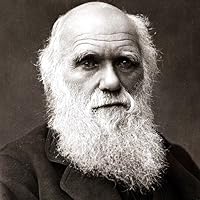
“When we no longer look at an organic being as a savage looks at a ship, as at something wholly beyond his comprehension; when we regard every production of nature as one which has had a history; when we contemplate every complex structure and instinct as the summing up of many contrivances, each useful to the possessor, nearly in the same way as when we look at any great mechanical invention as the summing up of the labour, the experience, the reason, and even the blunders of numerous workmen; when we thus view each organic being, how far more interesting, I speak from experience, will the study of natural history become!”
― The Origin of Species
― The Origin of Species
“In terms of size, mammals are an anomaly, as the vast majority of the world's existing species are snail-sized or smaller. It's almost as if, regardless of your kingdom, the smaller your size & the earlier your place on the tree of life, the more critical is your niche on Earth: snails & worms create soil, & blue-green algae create oxygen; mammals seem comparatively dispensable, the result of the random path of evolution over a luxurious amount of time.”
― The Sound of a Wild Snail Eating
― The Sound of a Wild Snail Eating

“Museums have no political power, but they do have the possibility of influencing the political process. This is a complete change from their role in the early days of collecting and hoarding the world to one of using the collections as an archive for a changing world. This role is not merely scientifically important, but it is also a cultural necessity.”
― Dry Store Room No. 1: The Secret Life of the Natural History Museum
― Dry Store Room No. 1: The Secret Life of the Natural History Museum
“Must the interest of life wane for us all as the progress of knowledge curtails the playground of imagination? No doubt it must in some measure, but there is another cause.
I believe that in these days we have too many occupations, too many interests; we know too many things, and, if you will, have too many advantages and facilities. Our faculty of taking an interest is dissipated and frittered away.”
― A Naturalist On The Prowl
I believe that in these days we have too many occupations, too many interests; we know too many things, and, if you will, have too many advantages and facilities. Our faculty of taking an interest is dissipated and frittered away.”
― A Naturalist On The Prowl

“I wonder if we are seeing a return to the object in the science-based museum. Since any visitor can go to a film like Jurassic Park and see dinosaurs reawakened more graphically than any museum could emulate, maybe a museum should be the place to have an encounter with the bony truth. Maybe some children have overdosed on simulations on their computers at home and just want to see something solid--a fact of life.”
― Dry Store Room No. 1: The Secret Life of the Natural History Museum
― Dry Store Room No. 1: The Secret Life of the Natural History Museum

“If there is anything I have learned these past six years, it is this: Each bird is surprising and thrilling in its own way. But the most special is the bird that pauses when it is eating, looks and acknowleges I am there, then goes back to what it was doing.”
― The Backyard Bird Chronicles
― The Backyard Bird Chronicles
“The (Anna's Hummingbird) males are deadbeat dads that contribute nothing to making the nest, or to feeding either the female or the nestlings. They are off to find other females they can impress with their deep dives, chasing skills, and commandeering of feeders.”
― The Backyard Bird Chronicles
― The Backyard Bird Chronicles
“During daylight hours, they (Anna's Hummingbirds) feed every 15 minutes, be it tiny insects or nectar from flowers or feeders. If they don't consume food often enough, they can die during the day. If they have not eaten enough before nightfall, they can die while asleep as they hang in suspended animation with tiny feet clutched to a thin branch.”
― The Backyard Bird Chronicles
― The Backyard Bird Chronicles
“I asked Bernd Heinrich if he knew why feeder birds, like finches, discard so many seeds. It turns out he and other scientiests did research on this back in the 1990s - of course, he did -measuring discarded seeds with painstaking accuracy. The short answer: Songbirds prefer shorter, fatter unshelled sunflower seeds, more depth than length, because they contain more oil. They take half a second to judge the seeds, dropping the low-density ones, until they find a seed to their liking.”
― The Backyard Bird Chronicles
― The Backyard Bird Chronicles

“Another day I walked out of town to do a bit of climbing in the mountains behind the airport. I scrambled up and down slopes that contained some of the oldest rocks in the world, isotope-dated at 3,800 billion years, remnants, so the geological rumor goes, of the earth's earliest terrestrial crust.”
― Last Places: A Journey in the North
― Last Places: A Journey in the North
“The greatest happiness possible to a man ... is to become civilized, to know the pageant of the past, to love the beautiful, to have just ideas of values and proportions, and then retaining his animal spirits and appetites, to live in a wilderness, - J. Frank Dobie”
― Wilderness and the American Mind - REVISED EDITION
― Wilderness and the American Mind - REVISED EDITION
“A coyote's primary prey happens to be our close fellow travelers, the mice and rats that flourish around and among us in profusion.”
― Coyote America: A Natural and Supernatural History
― Coyote America: A Natural and Supernatural History
“In Denver coyotes had become an urban presence by the 1970s. Chicago, in the 1990's was next, and by roughly 200 almost every city in the united States and Canada, no matter how small and picturesque or sprawling and ear splitting, possessed a thriving population of coyotes as full-time residents.”
― Coyote America: A Natural and Supernatural History
― Coyote America: A Natural and Supernatural History
“Altogether, we kill about 500,000 of them (coyotes) a year in the United States.”
― Coyote America: A Natural and Supernatural History
― Coyote America: A Natural and Supernatural History
“From the time the bison slaughter commenced in the 1820s, it took little more than half a century to clear the Great Plains of that ancient population of animals, which during spans of good weather must have approached 25 to 30 million animals. One effect of that species cleansing was to open up the great grasslands to domesticated animals.”
― Coyote America: A Natural and Supernatural History
― Coyote America: A Natural and Supernatural History
“We often express horror at animals that pursue and kill other animals, but such a response demonstrates a misunderstanding of our own evolutionary history. We have been a wildly successful speciesin part because of our predatory skills.”
― Coyote America: A Natural and Supernatural History
― Coyote America: A Natural and Supernatural History
“In our twenty-first-century world, the terms "genocide" and "ethnic cleansing" sit uneasily in the mind, associated with some of our darkest and most disturbing thoughts about human nature. They conjure Darfur, Servia, Cambodia and Pol Pot, and most vividly of all for many of us, the horrors in Europe before and during World War II. "Spicies cleansing," on the other hand, is not a term that falls readily to hand, although we have engaged in it without much remorse for at least 10,000 years and probably more.”
― Coyote America: A Natural and Supernatural History
― Coyote America: A Natural and Supernatural History
“But the most old-fashioned research topic of all - an idea Western culture had known since the time of Aristotle as "the balance of nature," the presence of a dynamic equilibrium in the natural world - began to push ecological sicence in the direction of understanding the role of predators. The Biological Survey's policies (the federal predator control agency) assumed the European fold position: predators were entirely disposable, and the banishment of wolves and cougards and coyotes from America would create a civilized paradise for deer and elk and ranchers and sheepmen.”
― Coyote America: A Natural and Supernatural History
― Coyote America: A Natural and Supernatural History
“The ecological niche breakthrough was critical for understanding wild coyotes and appreciating predators generally. In nature a "niche," is analagous to an occupation in human culture.”
― Coyote America: A Natural and Supernatural History
― Coyote America: A Natural and Supernatural History
“Aldo (Leopold) had argued ... for a revolutionary principle in human affairs: a recognition that other species in this world possess an innate right to existence.”
― Coyote America: A Natural and Supernatural History
― Coyote America: A Natural and Supernatural History
“The prime directive (in living safely with coyotes) is straightforward and delivered with an exclamation mark: For chrissake, do not feed coyotes and accustom them to associating food with humans! To avoid the most common human conflict with coyotes, don't let your cats or small dogs outside at night.”
― Coyote America: A Natural and Supernatural History
― Coyote America: A Natural and Supernatural History
“Coyotes may also attack cats for the same reason they attack small dogs: they perceive domestic cats and dogs as intraguild predators operating in their territories. When coyotes attack dogs or cats, they most often don't intend to eat them; they're simply ridding their territories of roaming predators.”
― Coyote America: A Natural and Supernatural History
― Coyote America: A Natural and Supernatural History

“The country has swung decisively toward something smaller and more selfish than what it once was, and in addition to ushering in a disdain for the notion that wilderness might have a value that extends beyond the metrics of economics or business, much of the nation ignorantly embraces the benefits of engineering and technology while simultaneously rejecting basic science.”
― The Emerald Mile: The Epic Story of the Fastest Ride in History Through the Heart of the Grand Canyon
― The Emerald Mile: The Epic Story of the Fastest Ride in History Through the Heart of the Grand Canyon
“There's a pleasure in knowing the names of things. It's not about a need to categorise the world, sectioning it into little boxes. And clearly you don't have to know the names of rocks - or trees or plants or birds - in order to enjoy a landscape. But if you do have this information, something changes about the way you exist in that space. A named landscape thickens. It's to do with history and context but also, I think, with the quality of attention. To assign something its name, you need to take the time to pick out identifying features. You look for longer. And the more you know, the more things stop being a backdrop - blurred, indistinguishable, hurried over - and become somehow more present in the view, more insistently themselves, the way a familiar face stands out in a crowd.”
― Notes from Deep Time
― Notes from Deep Time

“...while your outer ears are a pair of fleshy flaps, the (Barn) owl's are effectively its entire face. The feathers of the conspicuous facial disc act like a radar dish that collects incoming sound waves and funnels them toward the ear holes.”
― An Immense World: How Animal Senses Reveal the Hidden Realms Around Us
― An Immense World: How Animal Senses Reveal the Hidden Realms Around Us
“They were pilgrims because they had come to a holy place -- a cathedral in the desert -- in the hope of standing in the presence of something greater than themselves, something that would enable them to feel profoundly diminished and radically expanded in the same breath. They were pilgrims because there is something sacred in the belief that despite its ugliness and its many depravities, there are still places in our fallen and shattered world where wonder abides.”
― The Grand Canyon: Between River and Rim
― The Grand Canyon: Between River and Rim

“Today our ignorance of natural history is a cultural norm. Our attention has been usurped by the digital age, and any spare moments we have each day are consumed by our personal devices or flat-screen TVs. Our school curriculum does not fill this knowledge void, and most assignments have a digital component that teaches us little about the life around us. I meet intelligent adults today, people who have excelled at all levels of their education and are successful members of our society, who cannot even recognize an oak leaf let alone tell me anything about the food webs linked to oaks or the many ways oaks provide the life support we call ecosystem services. Even worse, they fail to see the importance of such minimal knowledge of natural history.”
― The Nature of Oaks: The Rich Ecology of Our Most Essential Native Trees
― The Nature of Oaks: The Rich Ecology of Our Most Essential Native Trees
“How are we to expect people to appreciate their natural resources, their own animals, if they do not know these animals?”
―
―
All Quotes
|
My Quotes
|
Add A Quote
Browse By Tag
- Love Quotes 102k
- Life Quotes 80.5k
- Inspirational Quotes 77k
- Humor Quotes 44.5k
- Philosophy Quotes 31.5k
- Inspirational Quotes Quotes 29k
- God Quotes 27k
- Wisdom Quotes 25k
- Truth Quotes 25k
- Romance Quotes 24.5k
- Poetry Quotes 23.5k
- Life Lessons Quotes 23k
- Quotes Quotes 21.5k
- Death Quotes 21k
- Happiness Quotes 19k
- Hope Quotes 19k
- Faith Quotes 18.5k
- Inspiration Quotes 18k
- Motivational Quotes 16k
- Spirituality Quotes 16k
- Relationships Quotes 16k
- Religion Quotes 15.5k
- Life Quotes Quotes 15.5k
- Writing Quotes 15k
- Love Quotes Quotes 15k
- Success Quotes 14k
- Motivation Quotes 14k
- Time Quotes 13k
- Science Quotes 12k
- Motivational Quotes Quotes 12k
