
 Meet Maggie, PCMag's
The $199.99 Nothing Headphone (a) has much of the $299.99 Nothing Headphone (1)'s distinctive style and adds a splash of color to the mix. It produces bright audio, cancels noise effectively, offers outstanding battery life, and is easy to use thanks to well-designed controls. There's sometimes a bit too much bass in the audio mix, and wind challenges the circuitry from time to time, but finding this combination of features, performance, and price is a rarity, which makes the Nothing Headphone (a) our Editors' Choice for midrange noise-cancelling headphones.

The Nothing Headphone (a) over-ears are the spitting image of the Nothing Headphone (1). It borrows the latter's basic physical form but swaps out the materials and some internal components to lower the price. The original headphones were kind of funny looking, and the Nothing Headphone (a) is no less distinct, though it lacks some of the extra aesthetic elements and premium feel of its predecessor. If you like color, it comes in black, pink, white, and yellow. I received the white model.
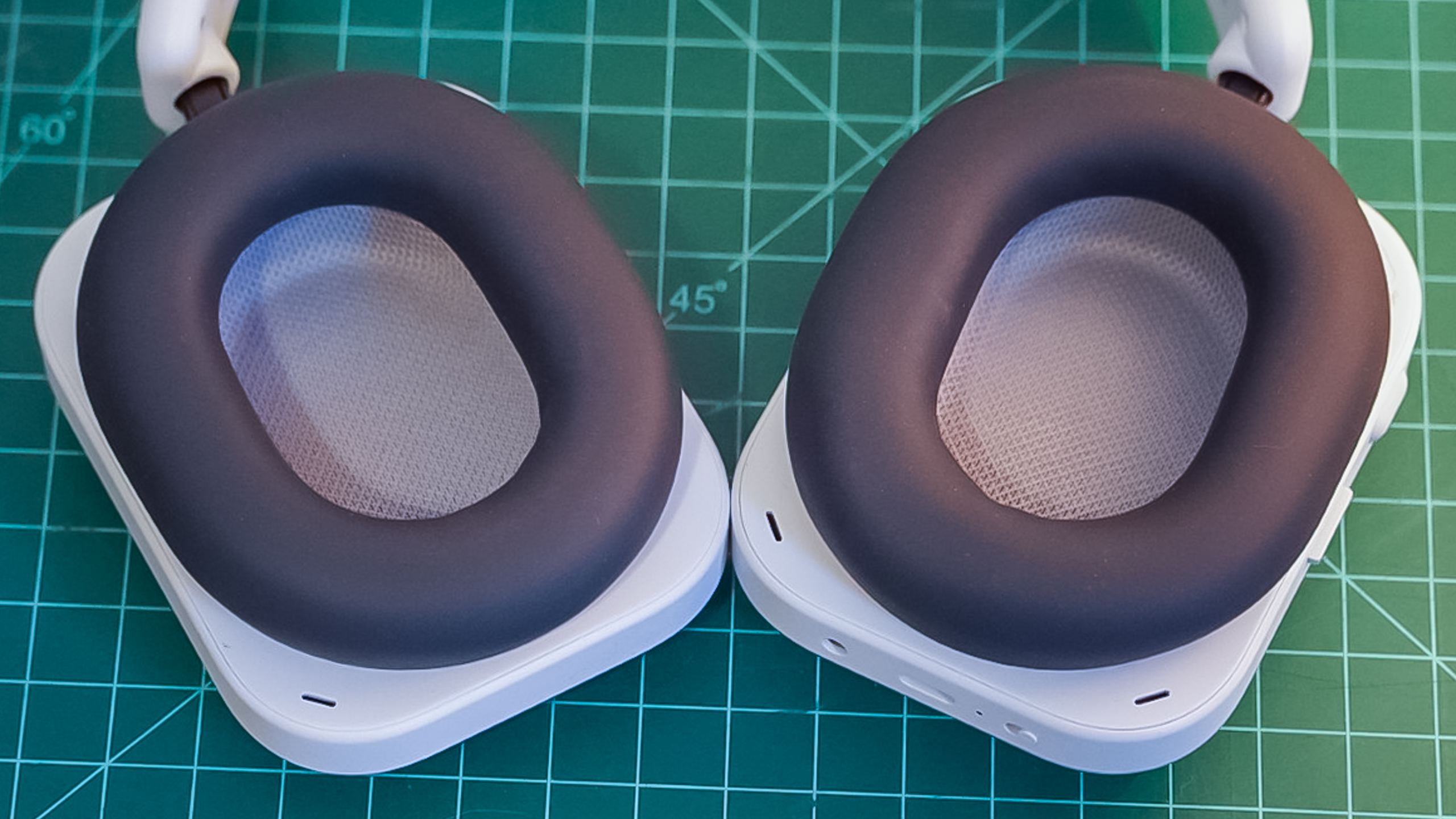
The headphones feel good to hold and use, but are a plain step down from the pricier model. The plastic earcup perimeters don’t feel so luxurious. The headband and ear cushions, while comfortable and soft, aren’t as supple as the Headphone (1)’s cushions. The cushions don't breath well on either model. Fortunately, none of this holds the Headphone (a) back. After all, even the top competition from Bose and Sony have their fair share of plastic.
The headphones are robust and flexible. The headband doesn’t clamp too hard, and the top cushion supports the headphones’ 10.9-ounce weight well enough for lengthy listening sessions. It meets an IP52 protection rating, so getting caught in a light sprinkle should be OK, but you should avoid heavy rain.
Similar Products


Bose QuietComfort Ultra Earbuds (2nd Gen)


Bose QuietComfort Ultra Headphones (2nd Gen)

Finding an ideal fit can be a bit of a trial. When the headband is flexed around my head, for example, there’s too much friction for the sliders to adjust their position. So I have to remove the headphones, adjust the sliders, and then try them on to see if I’ve found a comfortable position.
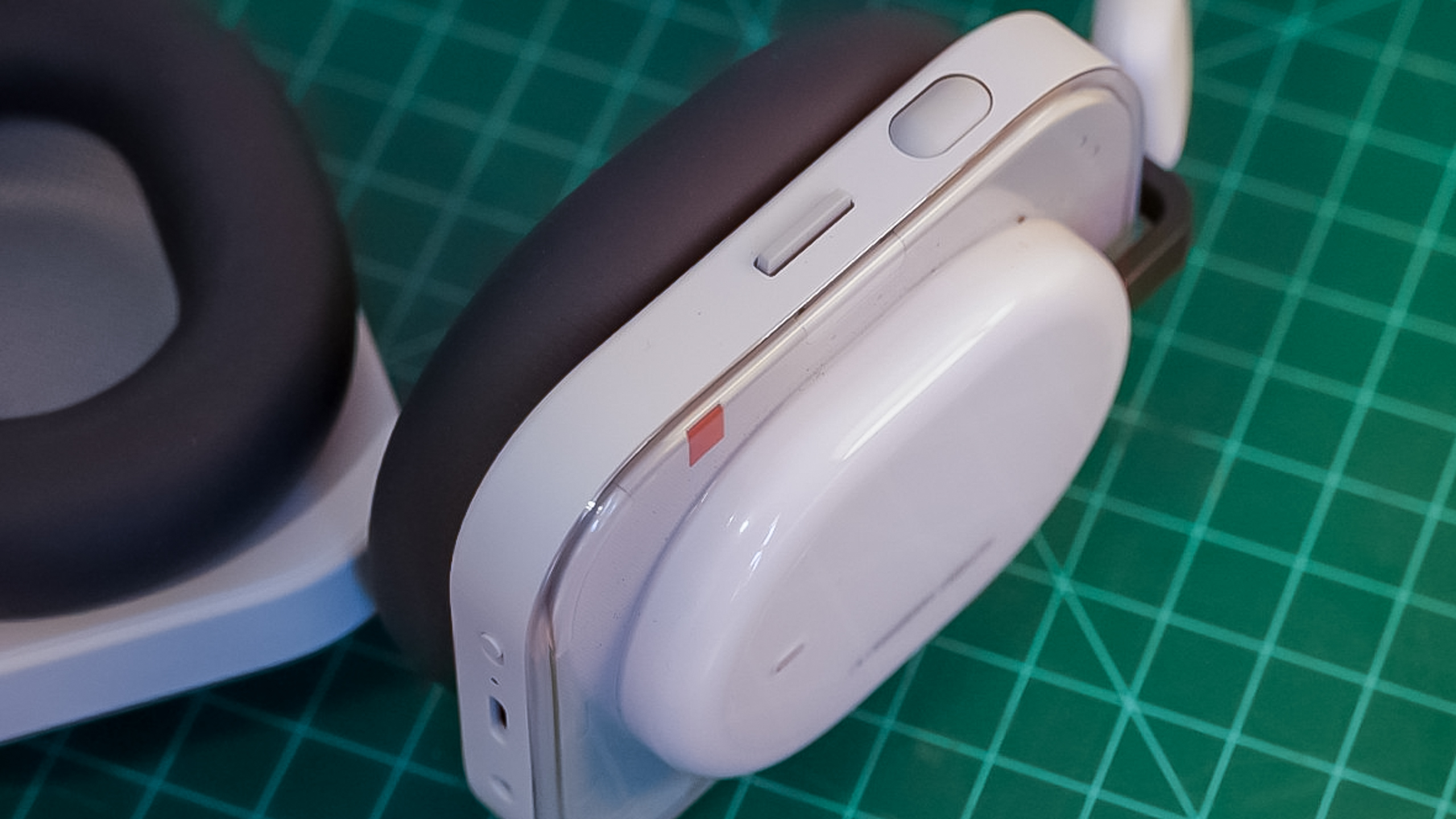
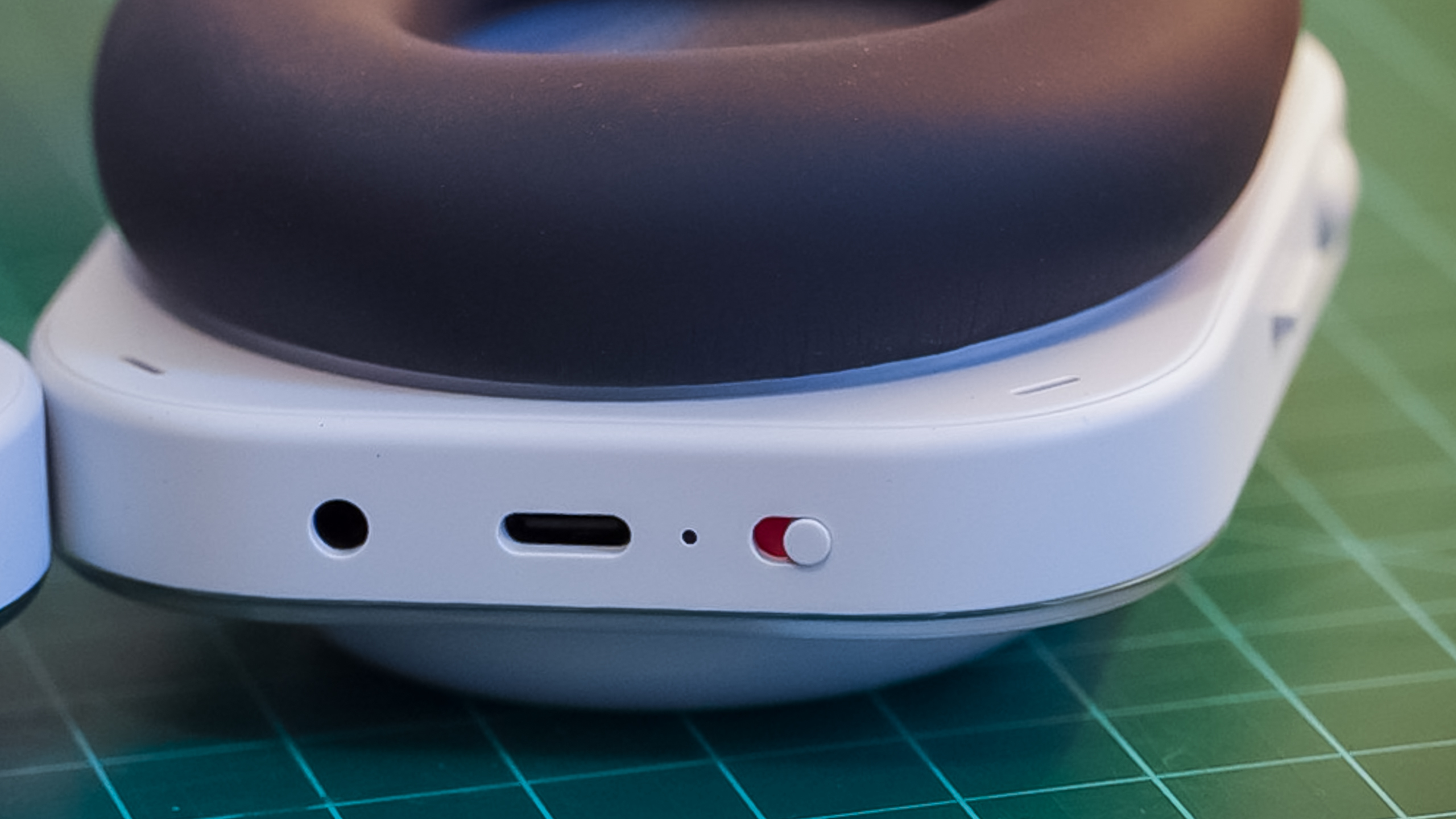
The headphones carry over the same interesting controls from the Headphone(1). This includes a small, clickable scroll wheel that’s convenient for dialing in volume, pausing audio, and cycling through listening modes with a long press. Below it, there’s a paddle to skip forward or backward through tracks. These work great for controlling the headphones. You can use the button in the upper front corner to call up your phone’s voice assistant. A dedicated Bluetooth pairing button is hidden on the inside of the earcup housing. Finally, a two-way power switch turns the headphones on and off easily. All of these controls are on the right earcup, along with a USB-C port and a 3.5mm audio jack.
A pair of 40mm dynamic drivers and a 20-40kHz frequency response earn the headphones a Hi-Res Audio certification. It includes four mics for calls and ANC, which is a step down from the Headphone(1)’s six mics. The headphones connect via Bluetooth 5.4 and don’t support LE Audio, but they offer AAC and LDAC as higher-fidelity codec options. The headphones support Bluetooth multipoint as well as Google Fast Pair and Microsoft Swift Pair for quick setup.

The headphones come with a lightweight carrying pouch made from a material that looks and feels like recycled, reusable shopping bags, but has a soft finish. You also get a USB-C charging cable and a 3.5mm cable with one straight end and one right-angle connector.
Nothing rates the battery for an exceptional 135 hours with the AAC codec and active noise-cancellation (ANC) off. That drops to a still-impressive 75 hours with ANC on. LDAC knocks the battery to 90 hours with ANC off and 62 hours with ANC on. A five-minute charge provides eight hours of playback, and the headphones fully recharge in two hours.

The Headphones (a) work with the Nothing X app (available for Android and iOS), which doesn't require an account to use. Like Nothing’s hardware, its software is stylish, though sometimes this leads to confusing controls.
The app clearly displays the battery level with a host of control settings below. You can set and adjust ambient sound controls and activate spatial sound virtualization. There’s a Bass Enhancement slider that you actively slide (the only such control, which can be confusing to use at first). The app provides several basic EQ presets, a custom 8-band EQ with the option to adjust your selected bands and their Q Factor, as well as a section with curated EQ settings. By default, the headphones are set to the More Bass preset, and the Bass Enhancement tool is off.
The app provides additional menus for customizing the physical controls and toggling features such as low latency mode, Bluetooth multipoint, and LDAC, which are off by default. A built-in locator emits a loud digital chirp to help you find the headphones if you misplace them.
The Headphones (a) support several different listening modes. In a noisy cafe environment, the High mode lets through more high-frequency noise (above 2,500Hz) than the Mid and Low settings, making the ambient sound somewhat harsh even in a quiet space. That said, the High mode is plenty effective at reducing low-frequency noise.
The Adaptive mode can shift which frequencies it is tackling. When both low and high frequencies are present, it prioritizes the low frequencies, allowing more of the higher frequencies to pass through. But if the low frequencies go away, it will shift to better suppress the high frequencies. In testing, it wasn’t very responsive when switching back to low frequencies after encountering them again.
The Transparency mode is mostly great. It’s not perfectly transparent, but it's close enough to allow conversations without removing the headphones. The only problem is that, outdoors, the headphones are susceptible to wind noise. Small gusts past the microphones roar into the headphones, making Transparency mode hard to use in windy spaces. They’re not necessarily great for walking around outside.

The headphones default to the More Bass EQ preset, but it’s tame as far as bass-boosted settings go. In The Knife’s “Silent Shout,” the headphones readily kick off the track with firm bass triplets and tight sub-bass quarter notes. The notes are hefty, but not over-indulged by the More Bass setting. The vocal harmonies are presented with a clean, clear sound, good high-end texture, and pronounced stereo phasing. As the track ramps into its higher-energy moments, the headphones bring plenty of brilliance and bite to the synth melody. The cymbals are aided by the crisp high end, giving them a more lifelike sound.
Kendrick Lamar’s “Loyalty” enjoys a rich presentation. Kendrick and Rihanna’s vocals come through clear and full, while extra textures like the Bruno Mars sample and hi-hat still ring out in the upper registers. The headphones happily dig in for the sub-bass line of the chorus, offering full sound, but it's here that the More Bass setting hurts a little, as these notes are a tad overwhelming. Switching to the Balanced EQ pulls them back just enough to better mesh with the rest of the mix without erasing them.
Bill Callahan’s “Drover” survives the bass boosting. The song features a near-constant kick drum that, when pushed too much, becomes an utter nuisance to listen to. Through the Headphone (a)s, it’s not quite as subtle in the background as it should be, but it’s not an instant headache. Meanwhile, Callahan’s vocals are nice and full with a crisp rasp. The upper-frequency texture helps the fiddle and electric guitar as well. The climax’s drums get a little boomy, but again, the headphones keep it within reason.
In orchestral music, such as John Adams’ The Gospel According to the Other Mary, the bass-first tuning is more problematic, as reverb results in a muddy, unclear sound. Otherwise, the presentation is quite good. The lead vocal is clear, the brass and strings feel lifelike with a strong presence, and the lower-register instruments lay a strong foundation.
The microphones work well, capturing my voice clearly. I noticed some room echo, so I don’t sound as close as I should. They do a decent job of suppressing ambient noise, successfully canceling out a nearby fan, without imparting a bunch of compression artifacts to my voice.
Final Thoughts
 (Credit: Mark Knapp)
Nothing Headphone (a)
- 5.0 - Exemplary: Near perfection, ground-breaking
- 4.5 - Outstanding: Best in class, acts as a benchmark for measuring competitors
- 4.0 - Excellent: A performance, feature, or value leader in its class, with few shortfalls
- 3.5 - Good: Does what the product should do, and does so better than many competitors
- 3.0 - Average: Does what the product should do, and sits in the middle of the pack
- 2.5 - Fair: We have some reservations, buy with caution
- 2.0 - Subpar: We do not recommend, buy with extreme caution
- 1.5 - Poor: Do not buy this product
- 1.0 - Dismal: Don't even think about buying this product
Read Our Editorial Mission Statement and Testing Methodologies.
The Nothing Headphone (a) may look a little odd and doesn't benefit from the premium build of the Headphone (1), but it has a winning formula otherwise. The design is comfortable, slim, and portable; the on-device controls are intuitive and responsive; and, at over 100 hours, the battery life is class-leading. More importantly, Nothing's latest headphones provide great sound quality, even if the bass can be a bit too heavy in the default setting, and the noise cancellation is effective for the money. You can't do much better for $200, which earns the Nothing Headphone (a) our Editors' Choice for midrange noise-cancelling headphones.
STILL ON THE FENCE?
About Our Expert
I've covered the technology field for a decade, beginning a freelance career in 2017 and working with numerous publications, including PCMag since 2021. I have reviewed hundreds of products with a particular emphasis on computers and the broad field of peripherals, especially audio gear. At PCMag, I contribute audio device reviews of products like headphones and speakers, in addition to reviews of Windows laptops.
- Marshall Milton ANC Review: A Sonic Winner Held Back by Middling Noise Cancellation
- Nothing Ear (3a) Review: A Subtle Sonic Upgrade Worth Hearing
- EarFun Clip 2 Review: Reliable, Fuss-Free Sound for Outdoor Listening
- Tribit StormBox Micro 3 Review: A Small-But-Mighty Speaker You Can Bring Anywhere
- JBL Live 780NC Review: Bass-First Headphones With Long Battery Life
- More from Mark Knapp


