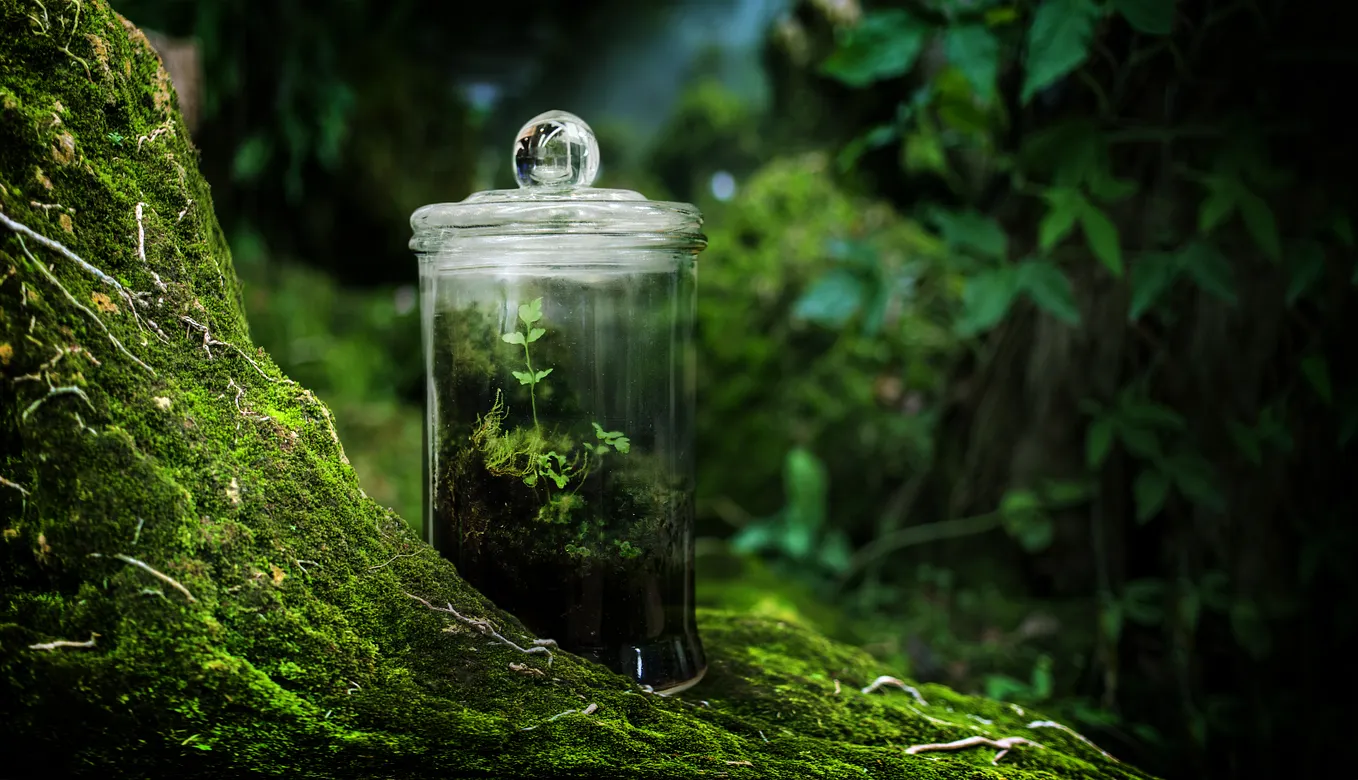
From Burnout to Bloom: Healing in a Jar

“The garden is a special spiritual place in which the mind dwells… a place to come face-to-face with yourself.”, Zen priest and master gardener Shunmyō Masuno
When life feels heavy, sometimes the smallest acts of creation can help us breathe again. Building a terrarium in a jar is one of those quiet, grounding rituals — a contained world of green that reminds us life still grows, even after loss. Perfect for those of us trying to foster a little peace between classes.
As an SDSU student juggling midterms and trying to stay grounded, I know firsthand the importance of practices to combat burnout. Though it may not be crafting a terrarium for you, we all have hobbies and pastimes which offer refuge from our otherwise hectic and busy school and work schedules. But a simple and gratifying project is the bottle terrarium.
As we discussed last time, all you need to start is a vessel and a foundation. In my bottle terrarium, I opted for Leca (a clay pebble that is very porous), which offers drainage for your mini ecosystem. Other options include shale and lava rock. Much like how a terrarium is a means of facilitating space for the overflow of stress and worry, this drainage layer allows water to drain down and protect the roots of our plants.


Atop this foundation, I am layered in a mixture of coco fibers and potting soil as my substrate. Here is where tiny microbes will thrive in the humid environment. These bacteria and insects will assist in the health of our plants’ roots.


At Walter Anderson Nursery in Point Loma, you’ll find an array of soils tailored to succulents, ferns, or tropicals. Choosing the right one is a mindful act; it’s about asking, “What do I want to nurture?”. After a rough week of mid-terms, just strolling the rows of tropicals and aeroids was absolutely renewing. Even if you don’t pick up anything, the nursery attendants will be happy to chat and provide a wealth of knowledge.
Get Amélie Yasuko’s stories in your inbox
Join Medium for free to get updates from this writer.
Lately, it feels like everyone I know on campus is running on fumes. Between midterms, part-time jobs, internships, and the pressure to “stay ahead,” it’s easy to forget that rest is productive, too. At SDSU, conversations about burnout and anxiety come up almost as often as homework deadlines, and I’ve seen how many of us try to power through instead of pausing to breathe. Maybe that’s why I’m drawn to building this small, living world in a jar — it’s a quiet rebellion against the constant push to do more. The terrarium doesn’t rush. It grows at its own pace, teaching patience and reminding me that healing and growth don’t happen on a schedule.
Choosing your plants is like choosing what to pour your time into. Pick varieties that speak to your state of mind. Ferns and fittonia thrive in humidity and love companionship — reminders that healing isn’t solitary. As you browse the rows at Walter Anderson, let instinct guide you. This is less about design and more about connection.
Just over two years ago, I lost my older brother. He was an SDSU alumnus and being in the same places he was reminds me of all the hard work he put in. One of my favorite pictures of Jon is of him smiling proudly in front of his hanging pot of ferns. He never had luck keeping plants alive but this fern was thriving. Eventually, when life got busy for him the fern died but today at Walter Anderson, I bought a small fern cutting in his memory, along with some Fittonias. Just like my motivation for choosing SDSU, I hope to make him proud with my terrarium and honor his memory.

Add a piece of place. Moss is a beautiful way to tie your terrarium to home. After a rain, you can spot soft, green cushions growing near the shaded corners of the SDSU Engineering building. Harvest sparingly, you only need a minimal sample to start new growth in your own terrarium. That living carpet will drink in moisture and remind you of your own resilience — the way even in concrete cracks, something green finds light.

Finally, arrange and water lightly. Watch how each plant leans toward the glass, seeking space. Close the lid to keep the environment humid and create a self-sustaining ecosystem. Or leave it open and tend it often, depending on what you need. Both choices are valid, just as healing can mean quiet containment or steady tending.


Each layer, each leaf, is a step in processing emotion. In grief, we often feel like broken soil — turned over, uncertain. But in that loosened earth, new roots form. When you care for your tiny garden, you are also caring for yourself: patiently, gently, one drop of water at a time.