Terrariums Made Simple: Calm in a Jar

In the last couple of years, I have lost people very close to me. Finding peace and navigating grief are challenging to reckon with. The path through the pain of loss is not linear. I have found that grief ebbs and flows like the tides. And I have found that my perspective in one moment can be fleeting and also ebbs and flows. In one moment I felt piteous and sorry for myself. But in the next, I think about how selfish I am to wish things differently; to wish that my dear departed were not at peace in this moment but instead, selfishly, here with me to share my pain.
As I enter this new chapter, I am turning to nature more and more. Burnout due to stress and anxiety is apropos in our fast-paced world where rest and reflection are nary prioritized. I for one can testify to grappling with emotional burnout and anxiety– despite this I feel I am arriving at a balance, with the help of healthy coping mechanisms and self-care. One such act of self-care is investing time into a terrarium for its sake.
Get Amélie Yasuko’s stories in your inbox
Join Medium for free to get updates from this writer.
Like a terrarium, life holds beauty in its uneven growth — some plants leaning, some hidden, all part of a living whole. Grief and stress unfold the same way, never in perfect balance, but still carrying meaning. Just as a terrarium thrives when left to grow naturally, healing also comes best without forcing it, through habits that feel authentic and sustainable. Beneath the soil, roots spread quietly; in hardship, trust the unseen growth happening within yourself. A terrarium offers stillness in its miniature world, reminding us to carve out moments of calm when anxiety feels overwhelming. And though imperfect, a terrarium feels complete — a reminder to seek harmony, not perfection, as you navigate grief, stress, and the ongoing balance of living.
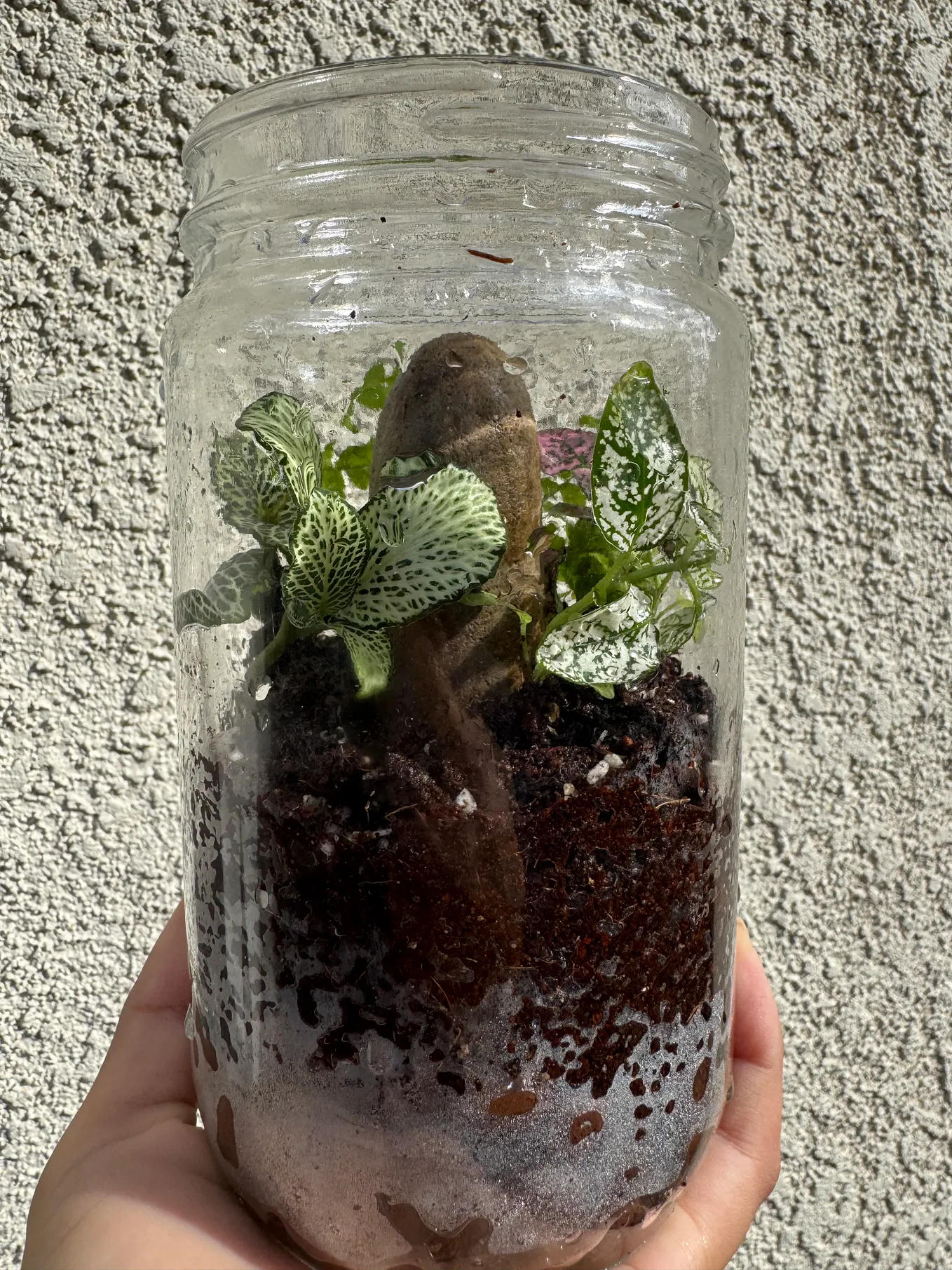
It begins with a foundation. To start our very own terrarium, in any closed or opened container at your disposal, we must lay the bottom layer. Leca is a type of clay– a layer of Leca balls allows for water to drain down and keep the roots from sitting in old water. In the same way, when navigating grief, stress, or anxiety, we need a foundation that lets heavy emotions flow through us rather than stagnate. Just as stagnant water can rot a plant’s roots, unexpressed feelings can weigh us down. Healthy practices — whether journaling, movement, conversation, or moments of stillness with your terrarium — become our drainage layer, creating space for what overwhelms us to move out, so new growth can take root without being suffocated.

In the next chapter of our terrarium journey, we’ll move beyond the foundation and begin shaping a true miniature landscape. Drawing from Zen garden principles of stone placement, we’ll explore how subtle choices in arrangement can bring harmony and flow to your design. We’ll also look at plant selection — what thrives best in the self-sustaining world of a closed terrarium, and what flourishes in the open air of a drier setup. To keep things simple and accessible, I’ll share tips on sourcing mosses and companion plants locally, right from your environment, and walk you through a step-by-step guide to creating a tiny bottle terrarium — perfect for a desk, windowsill, or even a gift. Think of it as laying the first stones on a path toward your own living, breathing work of art.
Amid the rush of classes, deadlines, and everyday demands, a terrarium offers more than just a pretty accent on a desk or windowsill — it becomes a quiet reminder to slow down. Watching a miniature ecosystem thrive in its glass world can bring calm to hectic days, offering a small ritual of care that grounds you in the present. The balance of stones, moss, and plants mirrors the balance we seek in our own lives: structure that supports growth, stillness that allows reflection, and small, steady acts that sustain well-being. For students, professionals, or anyone juggling a busy schedule, tending to a terrarium is a gentle way to step out of the noise, reconnect with nature, and remember that growth, even in tiny enclosed worlds, happens with patience and care.