Week 6: Stories Behind the Stones

As I entered my sixth week as a Borlaug-Ruan Intern here at ICRISAT in Hyderabad, India, I thought I had already found my footing here. Yet this was the week I realized just how much of that footing actually comes from the people around me, not just the place itself. This week alone gave me all of it: my next door neighbor teaching me to make chai completely from scratch; a stone wheel at the front gates that I had walked past for a month without ever understanding; a monsoon downpour that turned the whole campus a shade of green I hadn’t seen before. I also hit a mark I wasn’t quite expecting to feel this much: one full month here, four whole weeks, longer than I’ve ever been away from home at once.
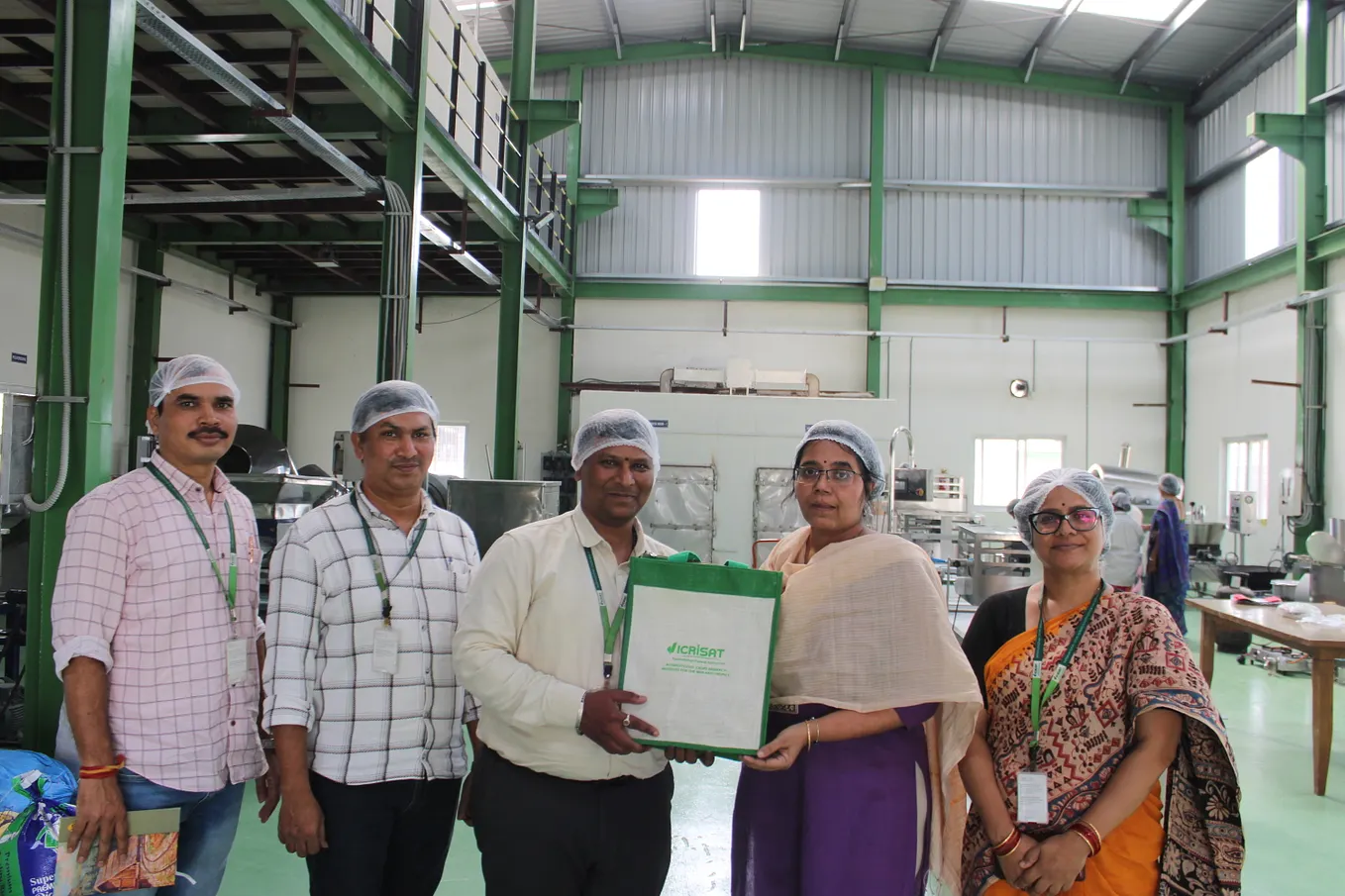
That sense of footing starts with the people I work with every day. Over the past few weeks, the coworkers I sit beside at the office have slowly turned into something closer to family, we work alongside each other at our desks, walk to the canteen together for lunch, and reconvene every afternoon for the same tea break that has become the actual backbone of my day. Several of my colleagues also live on campus, so the day doesn’t really end when the office does, and a rotating group of us will grab dinner together or head out on long walks around the grounds once the heat finally breaks in the evening.


My research also reached a real turning point this week. For the past two weeks I had been circling a much bigger question, but it finally narrowed into something specific and workable: how do you take a single entrepreneur’s raw, unstructured interview transcript and turn it into both a narrative that honors his actual voice and a policy document other people can act on? I spent most of the week completing my very first entrepreneur profile, built around the founder of the Millet Story, a small business dedicated to reviving traditional millet consumption. I read through his interview line by line, organizing the raw language into themes before I let myself write a single sentence of the profile itself, and as an experiment, I actually drafted his story twice, once in first person and once in third, just to compare how each version pulled a reader in differently.


Beyond the narrative, I also built out a full policy analysis to go alongside it: a success analysis of what is working in his business and why, the root causes behind what isn’t, and a set of recommendations broken out separately for him, for ICRISAT, and for the policymakers who might read this kind of report. I also sat down with my supervisor, Dr. Padmaja, to map out the shape of my research report for the rest of the internship, which left me with a much clearer sense of direction heading into the back half of my time here.
Get Anna Lu’s stories in your inbox
Join Medium for free to get updates from this writer.
Outside of work, one of the most meaningful parts of this week came from someone I hadn’t mentioned yet: my next door neighbor, a warm older woman whose daughter works here as a researcher. Over the past few weeks, I’ve started passing by her place after work, saying hi, and chatting for a few minutes on my way back to my flat, and this week that turned into something more. Most evenings now, I sit with her in her living room and we talk, mostly about our families; she is just as curious about where I’m from and what my life looks like back in Iowa as I am about her years spent traveling around India to visit her kids. One evening, she and her daughter taught me how they make chai completely from scratch: boiling the tea itself first, steaming fresh milk separately, adding in a careful mix of spices, and mixing it all together into exactly the right blend. While the chai steeped, I watched them knead dough and fry it into murukku, a crunchy, spiraled snack that came out of the oil perfectly golden.


I’ve also been able to spend more time with coworkers specifically outside of work, mostly through dinners out around the city. Somewhere in the middle of all of that, I discovered one of my new all time favorite desserts here: gulab jamun, small deep-fried dumplings made from milk solids and soaked in a warm sugar syrup steeped with rose water and cardamom until they turn soft all the way through. I have ordered it more times this week than I probably should admit, and I highly recommend it to anyone who ever finds themselves here!
I also got to discover a few new corners of campus this week. There is a quaint little charity store tucked near one of the main buildings that sells local handmade souvenirs, with proceeds going directly toward people in need in the surrounding community. Just outside the ICRISAT gates stands a beautiful stone wheel modeled after the one at the Konark Sun Temple, and even though I had walked past it nearly every single day for a month, I never actually stopped to understand what it meant until my coworker Rahul explained it to me on one of our walks.
Rahul told me that in Indian philosophy, the wheel represents the Kalachakra, or the Wheel of Time, the continuous cycle of time, change, and evolution, and for ICRISAT specifically, it represents their unending movement forward in agricultural science and innovation. He also told me that the wheel is a symbol of prosperity and growth, standing in for industrial and agricultural momentum and a promising future for smallholder farmers across the dryland tropics. And just like the original sundial wheels at Konark, the wheel here has twenty four spokes, which signify the twenty four hours in a day and cosmic order, aligning perfectly with ICRISAT’s mission of managing natural resources and weather resilience.
I had walked past that wheel nearly every day for a month without a second glance. It took one conversation to actually see it.
On top of all of this, monsoon season has officially started here. There is a lot more rain now, especially in the afternoons and evenings, and it cools down the entire temperature and makes living here so much more chill and enjoyable. Watching the rain fall over all of the campus greenery has honestly been one of my favorite new parts of the week.


Reflecting on this week, I keep returning to how much of it came from other people: my coworkers, my neighbor, my friend Rahul, and all of the other interns scattered around the world. Four weeks in, I am beginning to realize that the fullest parts of this internship haven’t come from the big, planned moments, but from all of the small ones that keep quietly adding up around me.