Bittersweet — Variations on a Theme


Here’s a bittersweet story by Linda Caroll:
“Oscar Wilde committed no crime, yet he did two years hard labor in prison. Locked in a small room, sleeping on a bed of wooden planks.
“For a time, he was handcuffed in public at Reading Gaol. People would recognize the fallen star. Mock him. Spit on him. For years, he would cry at that same time every day, remembering that humiliation.” from Ten Beautiful Quotes Oscar Wilde Wrote While He Was In Prison by Linda Caroll
The usual impression of Oscar Wilde, for those who might have one, was of flamboyance and disdain for the straight-laced Victorian world, like his brilliance was too bright to contain. A literary flame too close to the sun.
“I pity the fool!” as Mr. T said in a different context.
Perhaps the public humiliation and Wilde’s time in jail changed him; it certainly broke him.
The English of the era seemed to have an engaging time with the homoerotic and those who pursued it. Slap and tickle all the way down. Especially in the theatrical world where role-playing was its own art — provided Church nor Crown censored it.
The Importance of Being Earnest, A Trivial Comedy for Serious People is Oscar Wilde’s best known play, even by people who don’t recognize the playwright. The initial impact has been dampened over time to the extent that it’s been through innumerable high school productions — though don’t mention that to certain bible-loving Texans who would shudder to think a profligate such as Wilde — a sodomite no less — might influence their virgins when they ought to be practicing their weaponry skills for the coming Apocalypse.
Over a century later, Wilde’s play still makes the rounds. Three separate movies have been made of it, in 1952, 1992 and 2002. The latest adaption by Oliver Parker, director and screenwriter, included Colin Firth, Reese Witherspoon, Judi Dench and Tom Wilkinson among the cast. Judi Dench, as you might expect, plays Lady Bracknell, that iron mountain of Victorian propriety. Any movie with Judi Dench and Tom Wilkinson — and toss in Reese Witherspoon in costume…
The Importance of Being Earnest — this YouTube scene is played straight — no pun intended. Though we shouldn’t overlook Miramax, a production house of so much value lovingly developed by that exemplar of Hollywood virtue, Harvey Weinstein. As always, irony abounds.
Wilde’s most famous work touches on social manners no more deviant than the preposterous rituals of that now distant Victorian society — yet his depiction remains germane. No doubt what draws us still is the pleasure of lampooning the ridiculous and the pompous, provided they aren’t our own.
The Disciple
When Narcissus died the pool of his pleasure changed from a cup of
sweet waters into a cup of salt tears, and the Oreads [1] came weeping
through the woodland that they might sing to the pool and give it comfort.
And when they saw that the pool had changed from a cup of sweet
waters into a cup of salt tears, they loosened the green tresses of
their hair and cried to the pool and said, ‘We do not wonder that
you should mourn in this manner for Narcissus, so beautiful was he.’
‘But was Narcissus beautiful?’ said the pool.
‘Who should know that better than you?’ answered the Oreads. ‘Us
did he ever pass by, but you he sought for, and would lie on your
banks and look down at you, and in the mirror of your waters he
would mirror his own beauty.’
And the pool answered, ‘But I loved Narcissus because, as he lay on
my banks and looked down at me, in the mirror of his eyes I saw
ever my own beauty mirrored.’
The Disciple by Oscar Wilde was published in 1894 as part of a collection of six prose poems in The Fortnightly Review. Parodies ensued.

[1] From Oxford English Dictionary: “Oread — A nymph supposed to inhabit mountains; a mountain-nymph”
Get Bill Evans’s stories in your inbox
Join Medium for free to get updates from this writer.
Notice the poem does not cross the line. It is perfectly proper, disguised in the tradition of the Romantics of old. This was Wilde behaving, yet to think of the way he depicts it, his real passion isn’t so far off. Was it exhausting to play a role such as Wilde attempted and maintain creativity at the same time?
Where would the English language be without the double entendre of its most creative? What a dull world.
At one point, W.B. Yeats, living in London for a while, fell into Wilde’s literary orbit, Yeats being the younger.
I’m not such a fan of Yeats’s early poems as his later ones. Seems he grew from early dreams following Shelley, then the Pre-Raphaelites, to more muscular ideas as he matured. As for Wilde, he never got the chance, and one has to wonder where he would have taken his art had he lived.
“Creativity most often begins in imitation. We stumble across someone whose work inspires us and we imitate. Paint or write like those we admire. But at some point, imitation fades away. Our soul becomes stronger than the work we imitate. That’s when art begins. And thus, we must persist.” from Linda Caroll’s Ten Beautiful Quotes Oscar Wilde Wrote While He Was In Prison
A connection can be made between what Linda Caroll wrote about Wilde and what follows—perhaps it just spurred the memory, can’t be sure, but here goes.
As part Clemson’s architectural curriculum, we were required to take two years of art studio. Two obstacles immediately presented themselves: One, I hadn’t sketched — other than cross-sectional drawings of warships instead of homework— or painted much either as a youth. Worse, I had few points of reference for interesting subjects. I had a strong hunch the visual arts did not lie in my future — I needed a job with a real income.
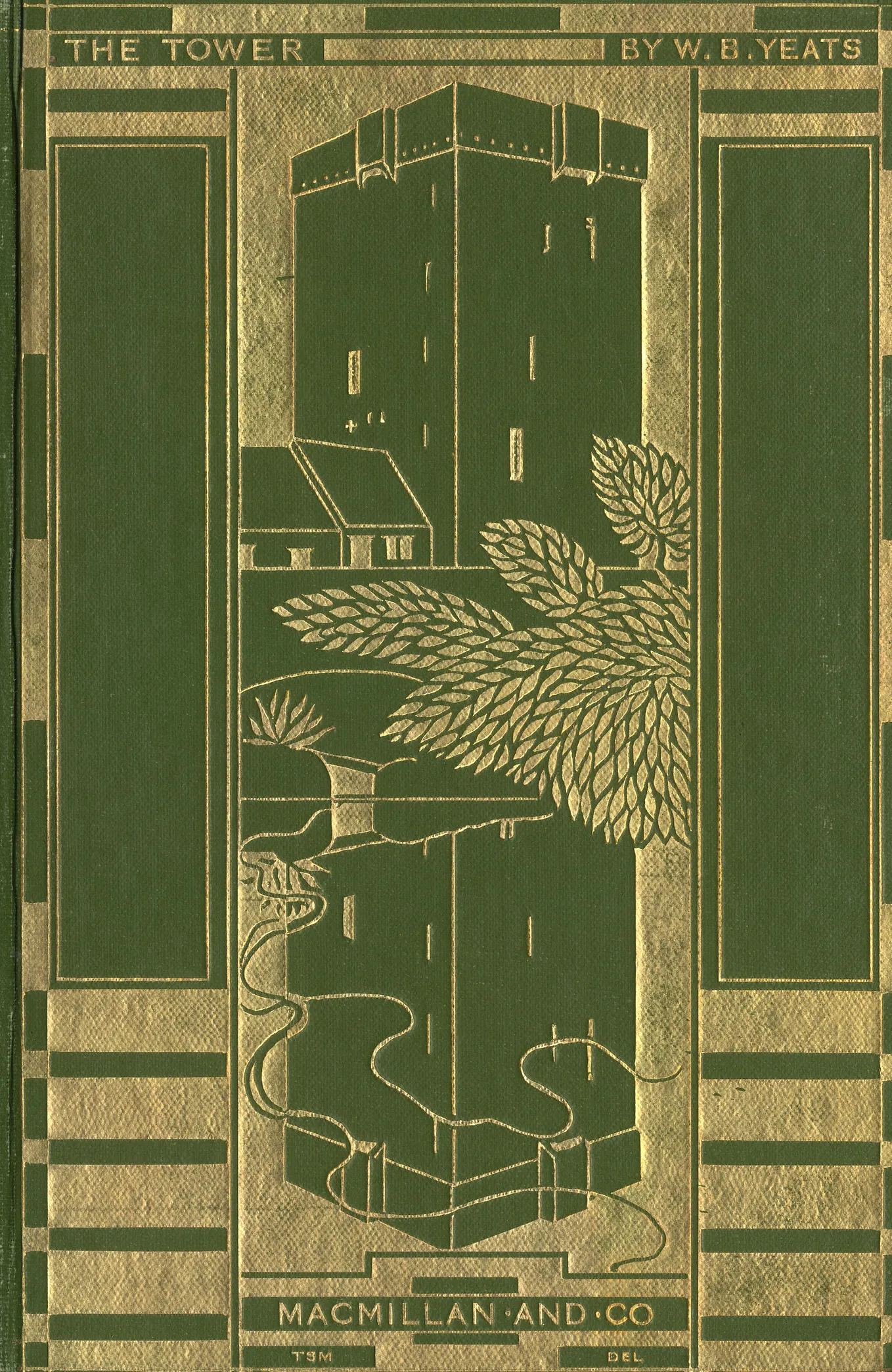
Yeats’s father was an established painter, as was Jack, his brother, and Yeats’s two sisters became known for their book printing skills, including The Tower, one of Yeats’s finest books.
How does one compete with that kind of influence? My sister, Susan, had developed a nice hand for still life, I seem to recall. My son, Ryan, was well on his way — though he’d gotten the gift from his mother.
“What shall I do with this absurdity — /O heart, O troubled heart — this caricature,/Decrepit age that has been tied to me/As to a dog’s tail?” first stanza from Y.B Yeats’s poem, The Tower
The art professors at Clemson (only three at the time) were practicing artists — being a low-paying gig in a state with a dubious track record in education funding. Why encourage your field hands— blacks and whites alike — with false hope?
In the 60s, it was was open to debate whether South Carolina’s well known romance with all things chivalrous lords and ladies played a role larger than simply having no industry and a poor tax base. In ant case when Mississippi beat South Carolina to rank lowest out of fifty in funding public schools, we cheered for the progress.
Robert Young was my printmaking professor. He was a tall, muscular man, who seemed to always ham-fist his way through things — even though his sculptures were excellent, almost like he had two brains running on separate tracks.
I didn’t pay as much attention as I might have, until the day he said of his own work, “I first draw a line, or make a stroke, then spend the rest of the time trying to correct it.” Looking back, it seems obvious — now. Back then, it was akin to a revelation.
Admissions like this are worth the groping for inspiration.
Billy Collins, the poet, said if he knew where a poem was going when he began it, why bother starting it? He also insisted the subject of poetry is death. To sum up his work with two aphorisms would rightfully depress him, though both thoughts are hard to dispute. Collins is probably the quietest subversive in today’s poetry world. He’s mild like fiery Indian curry until it hits your stomach.
Outside of class one Saturday, Professor Young spontaneously invited a handful of students down into the basement shop where he set out containers of printers’ ink, and a roll of course-woven cloth wherein he began cutting sections off the roll, folding them like origami, dampening them in a bucket of water, then dipping them one color after another to unfold them again. Eh voilà, tie-dyed art!
One student in the group whose name escapes me was a talented painter who adopted the process with wild enthusiasm, quickly converting his to interesting pattern work. All in the eye.
Though the more we did that Saturday, the better they became.
““I first draw a line.”
I came away with enough of these to hang as privacy shades when I later moved into a rented basement with no window curtains, not wanting to frighten the neighbors getting naked for bed — or doing that other stuff one likes to do in a bedroom.
I had better luck at learning lithography and silkscreen — got one published even. Though I didn’t think I’d ever become an artist, which several of my mates indeed did.
The art world of the late 60s held a place for the accidental, or ‘found art’ as it was called. Close cousin to naïve art, at least in my case.
In school, I knew a few people like Wilde — with more talent than sense to control it. Always a tragedy when puritanical folks dictate rules for the rest of us, striving to bring us down to their mediocrity. The book banning in Texas is one example. Iran’s mullahs and Afghanistan’s turban police are others. Women always need to be covered — lest the boys get their beards singed.
I feel for Oscar Wilde’s two sons and his wife, though above all, his sons. If his wife had one, they had no choice in the matter.
What does one do with a father known in their lifetimes more for his disgrace than his very existence? How did they find their ways in the world? Which seems a sad cruelty. Oscar Wilde might well have realized this — they say he loved his family.
For that matter, did the Marquess of Queensberry realize when he humiliated Wilde, he condemned his own son? Did he ever visit the gaol to apologize? Known for a lame title and writing his Queensberry Rules for beating an opponent’s brains senseless while boxing doesn’t seem a stirring legacy.
In my twenties, men in America were supposed to be upright and stoic. I envied the small band of gays at Clemson who threw out what they felt with exuberance when they felt it. Quick to quip and happy to be alive in their own intelligence. I never adopted their style, being too much my mother’s son, to be that demonstrative.
Returning to Billy Collins, there’s probably a third major subject writers pursue as feverishly as the rest of the species does, mainly sex — in all its attendant variations.
We fuss and anguish, connive, maneuver, argue and dismiss, ranting the while about all things sexual — like it’s fundamental to existence or something — and for every uplifting moment we experience, a hundred ugly ones come along, all variations on a theme.