Top 4 Worst Blackouts in History

Power grid failures can have severe and widespread impacts on modern societies that rely heavily on electricity. When blackouts strike major population centers or entire regions, the effects can be dramatic and costly. Vital infrastructure like water treatment, traffic signals, subways, and hospitals may stop functioning. Businesses are interrupted or grind to a halt, leading to lost productivity and revenue.
Grids are crucial components of modern society, providing us with the reliable electricity we need to power our homes, businesses, and industries. However, throughout history, there have been a handful of catastrophic faults that have tested the resilience of power grids and left profound impacts on their respective regions. In this blog post, we will explore four of the worst power grid faults in history and delve into their causes, consequences, and lessons learned 🔍
1. India — July 30–31, 2012
The blackout that affected 10% of the world’s population
The worst blackout in recent history occurred in northern India on two consecutive days in July 2012 [1]. The first blackout happened on 30 July in the Northern grid, affecting 300 million people in nine states including India’s capital region New Delhi for up to 14 hours.
A bigger blackout occurred the next day in the NEW grid which comprised the Northern, Western, Eastern, and North-Eastern grids after the Northern grid was restored and synchronized with it [1].

Approximately 38% of India’s power generation capacity went offline. The resulting blackout affected 20 out of 28 states in the north and east of the country. The outage hit 670 million people, more than half of India’s inhabitants [2]. For context, this figure represented roughly 9% of the entire world’s population at the time!
The power deficit was worsened by a weak monsoon that lowered hydroelectric generation and kept temperatures higher, further increasing electricity usage as people tried to cool off and an unprecedented water demand for agriculture.
The incidents caused trains to fail and traffic lights to stop working, causing multiple traffic jams. Surgical operations were canceled and construction and mining work was halted across the northern region of the country [1]. Citizens of Delhi dealt with 89% humidity and, in West Bengal, hundreds of miners were trapped underground for hours after their lifts broke down. In the most disturbing and vivid detail, The Guardian reported that electric crematoriums stopped operating, some with bodies left half burnt before wood was brought in to stoke the furnaces [2].
What happened?
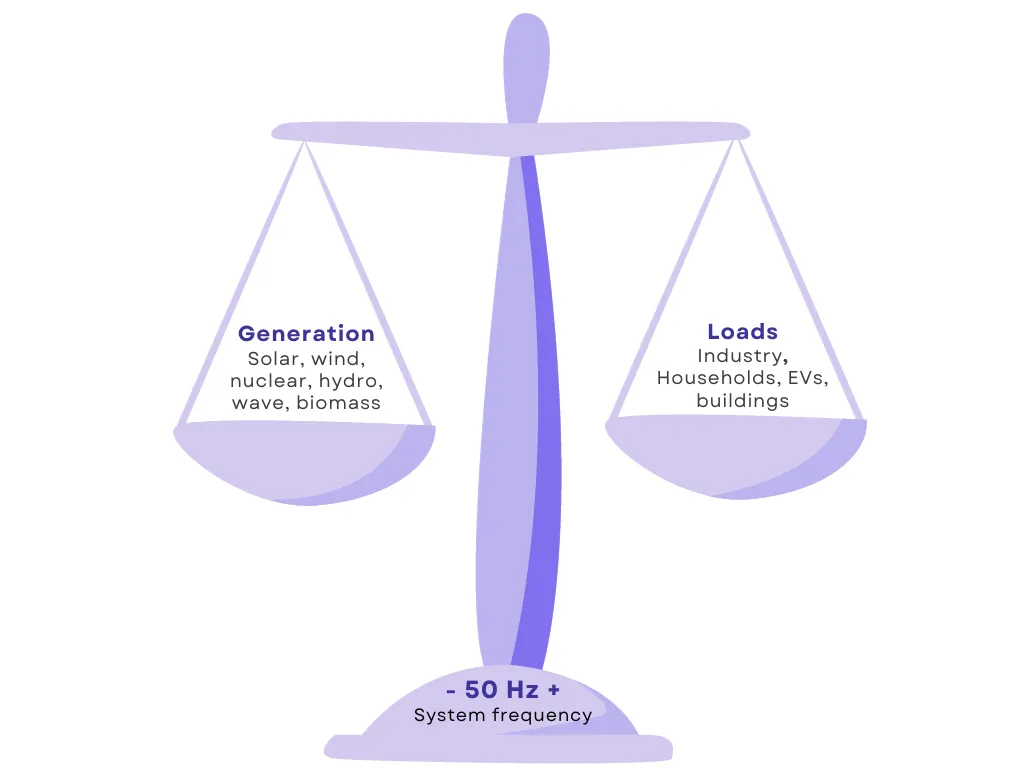
Certain states drawing too much electricity and inadequate inter-regional power lines were blamed for the blackout [1]. These states are supposed to use Under Frequency Relays (UFRs) on their power lines. UFRs are specialized devices that sense frequency changes, detect sudden drops (showing high system load), and disconnect the connected loads [3]. However, the state-owned utilities seldom maintain these relays and are often under tremendous political pressure to continue drawing power from the grid even if the system appears to be compromised.

Just 32 hours after this first outage, there was another disturbance in the NEW grid, originating again in the critical West-North regional interface.

Investigations following the failures recommended a $400 billion strategy to revamp and update the grid to prevent such incidents from happening again.
2. Southern Brazil — 11 March 1999
Dark Skies and Chaos in Southern Brazil
On March 11, 1999, Brazil experienced a massive nationwide blackout that left 97 million people in Brazil without power when a bolt of lightning struck a 400 kV electricity substation in Sao Paulo.
The Itaipu hydropower plant, which was the biggest electricity generator in the world at that time, attempted to support the load [1]. But the 750 kV AC and 600 kV DC transmission lines connecting the plant to the grid weren’t able to sustain the load and the plant tripped out too. All this at a time when Brazil’s power grid was suffering from a prolonged lack of investment [2].
Consumers to the south of São Paulo were hit by an over-frequency caused because only the Itaipu plant was connected to this part of the network. The blackout lasted for six hours and paralyzed Sao Paulo, Rio de Janeiro, Minas Gerais, Goiás, Mato Grosso, Mato Grosso do Sul, and Rio Grande do Sul.
With no electricity, public transportation like buses and subways ground to a halt in cities like Rio. Traffic lights went out causing major traffic jams and gridlock that trapped motorists during rush hour commutes. Airports had to close, leaving planes circling with nowhere to land. Approximately 60,000 people were stranded in Rio’s subway [1]. To prevent looting and assaults, 1,200 military police officers were deployed in Rio and the city tunnels in São Paulo were closed.
Restoration of electricity supplies began after four hours.
What happened?
In the aftermath of the outage, an expert investigation stated that Brazil’s energy infrastructure was extremely vulnerable. It was overly reliant on water to run the hydroelectric plants, there weren’t alternative transmission routes, and if there was a failure at one plant, there wasn’t a safety net to prevent the event from spreading.

The blackout spotlighted vulnerabilities in Brazil’s electricity infrastructure. Much of the grid relied on older technology and lacked redundancies to prevent domino effect failures. The outage demonstrated the broad impacts of even short-term power loss on interdependent systems like transportation, telecoms, water supply, and more.
3. Northeast U.S. & Canada — 14–15 August 2003
Two countries and 50 million people affected
On August 14, 2003, shortly after 2 P.M. Eastern Daylight Time, a high-voltage power line in northern Ohio brushed against some overgrown trees and shut down — a power grid fault, as it’s known in the power industry. The line had softened under the heat of the high current coursing through it. Normally, the problem would have tripped an alarm in the control room of FirstEnergy Corporation, an Ohio-based utility company, but the alarm system failed because of a simple software bug [4].
Over the next hour and a half, as system operators tried to understand what was happening, three other lines sagged into trees and switched off, forcing other power lines to shoulder an extra burden. Overtaxed, they cut out by 4:05 P.M., tripping a cascade of failures across southeastern Canada and eight northeastern states [4]. A series of large power swings ranging between 2,000 and 4,000 megawatts pulsed through New York and Ontario and into Michigan, overloading the system [5].
Get Brandon Vargas’s stories in your inbox
Join Medium for free to get updates from this writer.
As a result, roughly 61,800 megawatts of customer load was interrupted which means that 50 million people lost power for up to two days in the biggest blackout in North American history. The event contributed to at least 11 deaths and cost an estimated $6 billion [4]. The U.S.-Canada Power System Outage Task was created after the accident as a joint effort to avoid future outages and concluded in their final report that human error and equipment failures had caused the blackout.

As a consequence of the accident the North American Electric Reliability Corporation (NERC), set voluntary standards that cover the three Ts — “trees, training, and tools” to reduce the number of blackouts.
Restoration
The IESO directed the restoration of the Ontario grid as part of a cooperative effort with transmitters, generators, and local distribution companies (LDCs) [5].
- The first stage was to bring generators back into service. Many had been forced to shut down − or could not run for extended periods or restart without a power supply from the grid.
- The next stage was to restore power to the remaining high-voltage transmission lines and critical consumers.
- Stage three was the restoration of power to LDCs and other power users, who could then restore power within their respective distribution areas.
For the remainder of the initial week, restoration work continued and the IESO issued daily public appeals to reduce energy consumption as generators throughout the province returned to service. Conservation was critical during this period with homeowners and businesses reducing peak demand by 15 to 20 percent each day [5].
4. Texas 2021
Ice Storm Havoc: The Inside Story of Texas’ Grid Collapse
The Texas power crisis of 2021 was one of the worst power grid failures in recent history. It was caused by a severe winter storm named Uri that brought frigid temperatures, ice, and snow to parts of the southern and central United States that year. It was more than just the power grid failing. It nearly collapsed completely during a freeze, leaving more than 4 million customers without electricity.
Texas was especially hard hit due to its isolated power grid and lack of winterization at many power generation facilities. As temperatures plunged below freezing, energy demand skyrocketed as homes and businesses tried to stay warm. At the same time, ice and cold temperatures caused failures at natural gas, coal, nuclear, and renewable energy plants and wind turbines.

This perfect storm of increased demand and reduced supply led to controlled blackouts across Texas as the grid operator, ERCOT, tried to avoid a catastrophic statewide blackout. At the height of the crisis, over 4.5 million customers were without power, some for several days. The prolonged outages caused immense hardship and were blamed for dozens of deaths due to hypothermia, carbon monoxide poisoning, and other causes.

The Texas grid came perilously close to complete collapse. If ERCOT had not ordered rolling blackouts, the entire grid could have gone down for weeks or longer. The crisis highlighted vulnerabilities in Texas’s stand-alone electricity network and lack of connections to other grids. It provoked debate about winterization standards, resource adequacy, demand response, and other grid resilience measures. The 2021 Texas power crisis serves as a stark reminder of the catastrophic consequences of extreme weather on interconnected power systems. Economic losses from lost output and damage are estimated to be $130 billion in Texas alone.
Conclusions
Power grid faults have the potential to cause significant disruptions, and economic losses, and even endanger lives. The four worst power grid faults highlighted above serve as reminders of the importance of constant monitoring, maintenance, and modernization of power grid infrastructure. Lessons learned from these failures have driven improvements in protective devices, automation systems, and emergency response protocols. As society becomes increasingly reliant on electricity, it is crucial to remain vigilant in addressing vulnerabilities and ensuring the continuous reliability and resilience of our power grids.
The major blackouts discussed in this post reveal vulnerabilities in power grids around the world. While extreme weather and technical failures often trigger outages, there are steps utilities can take to make grids more resilient.
- Investing in grid upgrades and maintenance can help prevent failures. Aging infrastructure contributed to many of these incidents. Replacing antiquated equipment and vegetation management can reduce blackout risk.
- Improving real-time monitoring and control systems allows operators to identify and resolve problems quickly. Advanced smart grid technologies help prevent cascading failures.
- Increasing interconnections between regional grids provide backup. Isolated grids are more susceptible to collapse. Tied networks can share power and isolate failures.
- Diversifying power sources creates redundancy. Over-reliance on any one type of generation leads to vulnerability. A mix of renewables, fossil fuels, nuclear, and storage makes the overall system more robust.
- Planning for emergencies enables an effective crisis response. Utilities should have contingency plans for black start procedures, staging crews, communicating with the public, and managing load restoration.
No grid is immune from potential disasters. However, learning from past blackouts and making investments to strengthen critical infrastructure can help minimize the likelihood and impact of future large-scale outages. With lives and livelihoods depending on electricity, building resilient smart grids must remain a priority.
If you found these insights valuable, follow me on Medium for more deep dives into the dynamic landscape of power markets, grid resilience, and the ever-evolving world of energy. Let’s stay connected on this enlightening journey towards a more secure and sustainable energy future! 👏🏻👏🏻
References
- Power Technology, The 10 worst blackouts of the last 50 years — https://www.power-technology.com/features/featurethe-10-worst-blackouts-in-the-last-50-years-4486990/?cf-view&cf-closed
- The 11 Biggest Blackouts Of All Time,The Blackout Report, December 2020, available online at: https://www.theblackoutreport.co.uk/2020/12/07/11-biggest-blackouts/
- Anubhav Rath, Indian Blackouts of July 2012: What Happened and Why? Clean Energy For Billions, available online on Medium at: https://medium.com/clean-energy-for-billions/indian-blackouts-of-july-2012-what-happened-and-why-639e31fb52ad
- Scientific American, The 2003 Northeast Blackout — Five Years Later, 2008, available online at: https://www.scientificamerican.com/article/2003-blackout-five-years-later/
- IESO, Looking Back at Blackout 2003, 2003, available online at: https://www.ieso.ca/en/Corporate-IESO/Media/Also-of-Interest/Blackout-2003
- Joshua W. Busby, Kyri Baker, Morgan D. Bazilian, Alex Q. Gilbert, Emily Grubert, Varun Rai, Joshua D. Rhodes, Sarang Shidore, Caitlin A. Smith, Michael E. Webber, Cascading risks: Understanding the 2021 winter blackout in Texas, Energy Research & Social Science, Volume 77, 2021, 102106, ISSN 2214–6296, https://doi.org/10.1016/j.erss.2021.102106.