We Knew the Stop Before We Knew It Was Home

For months, we rode the buses like visitors. Then a feeder route, a quiet driver, and a small red button taught us how to arrive.
We missed our stop three times before anyone told us.
The bus had slowed near the block we needed, and we stood, ready. The doors stayed shut. The bus rolled on past our block and the coffeeshop at its foot, past the bicycle racks and the old man stretching under the void deck. We watched our stop shrink in the rear window and said nothing. We didn’t know what we had done wrong.
On the third evening, an auntie in the seat across the aisle watched us half-rise again. She reached up without a word and pressed the red button on the pole beside her.
A soft chime. The small sign at the front glowed: Bus stopping.
She looked at us and nodded toward the door. That was the whole lesson.
Nobody here stops for you unless you ask. We had been waiting for the city to guess where we wanted to go.
The Two Colors We Stopped Noticing
At first, we read the buses like a puzzle.
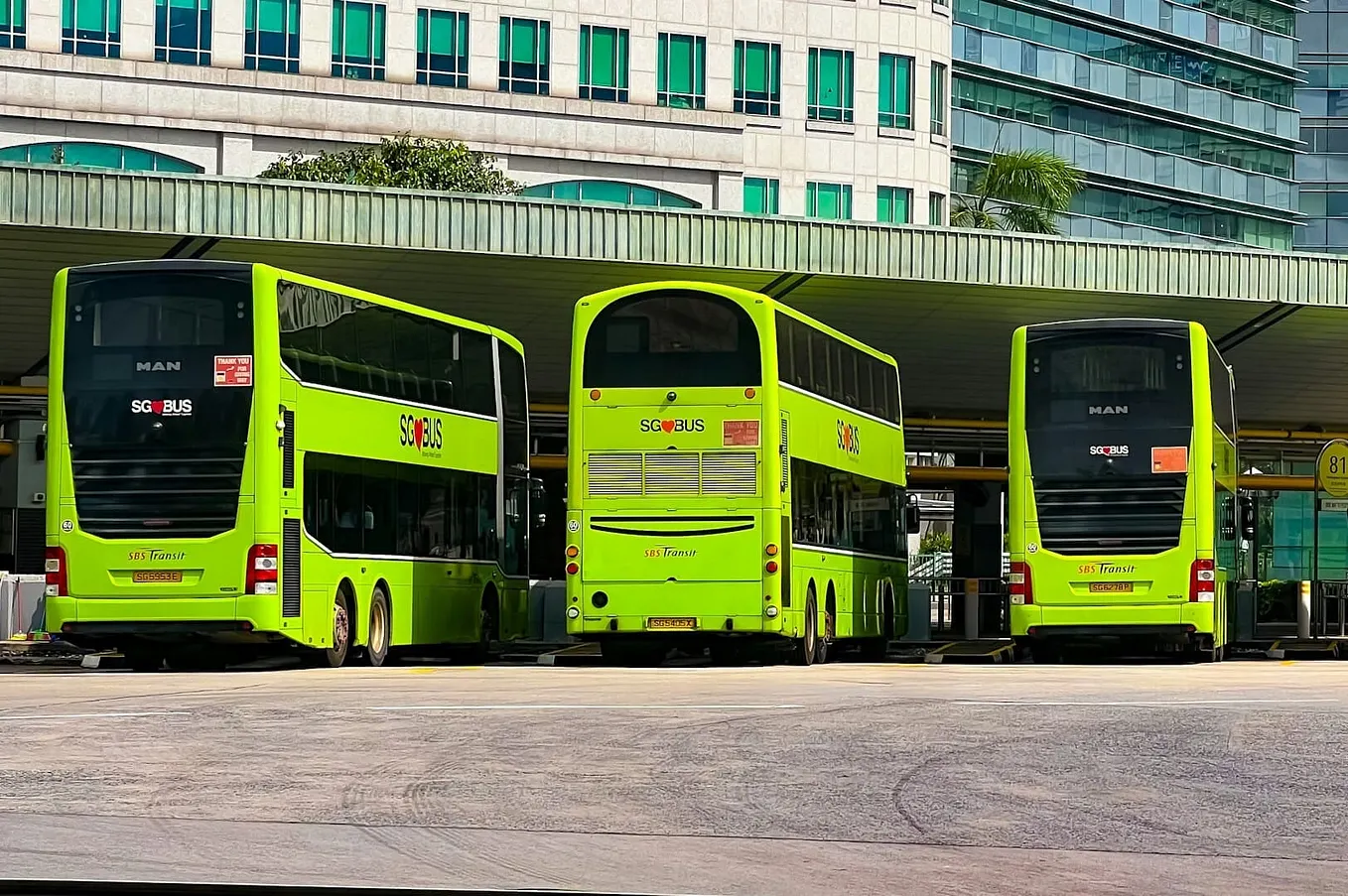
Some were red and white. Some were green. We assumed the colors meant something, different rules, different fares, different cards. We stood at the shelter studying them, unsure which one would take us.
It was SBS Transit and SMRT, a colleague explained. Two operators, one system. The routes were all planned by the Land Transport Authority. The same card worked on every one of them.
We were almost disappointed. We had wanted the difference to matter.
But over time, the colors faded from our attention. The bus was simply the bus. Red or green, it came when the little screen at the shelter said it would. Four minutes. Two. Arriving. It sighed to the curb and opened its doors, and we stepped in without thinking.
That is how a place becomes ordinary. Not all at once. One detail at a time, until you stop seeing it at all.
Tap In, Tap Out
The beep was the first sound of every journey.
EZ-Link card against the reader by the driver. A short tone, a number flashing on the small screen, the fare already counting. Then the walk down the aisle, holding the rails as the bus pulled away before we’d quite found our balance.
We forgot to tap out the first few times. Stepped off the back door straight into the heat, the card still in a pocket. Later we learned the system had charged us for the whole route, all the way to the end of the line, as if we had ridden to places we’d never seen.
We laughed about it. It felt like a small fine for not paying attention.
After that, we noticed how everyone else did it. The office worker tapping out with her phone, not looking up from her messages. The schoolboy flicking his card at the reader as he jumped down. The uncle who held his against the sensor a moment longer than needed, waiting for the beep, then stepping off slow and careful.
Tap in at the front. Tap out at the back. A beginning and an end, every single ride.
There was something steadying in it. Every journey closed properly. Nothing left open.
The Feeder Bus That Became Ours
Our bus had a three-digit number beginning with a 2.
We didn’t know what that meant at first. Later we learned it was a feeder service, one of the small loops that carry people from the housing estates to the nearest interchange or MRT station. The numbers starting with 2, 3, 8, or 9 all did the same quiet work. Short routes. No scenery to speak of. Just block after block after block.
We rode it twice a day, every day.
And slowly, it stopped being a bus and became a neighborhood.
We started to recognize the regulars. The young mother with a stroller, who always boarded at the stop near the kindergarten. The two students who shared one pair of earphones. The man in a pressed shirt who read the newspaper folded into quarters, the same way every morning. The elderly couple who sat in the priority seats, holding hands, and got off at the polyclinic on Tuesdays.
The driver changed by the day, but one of them we came to know. Older, gray at the temples, a towel folded over the back of his seat. He waited a moment longer for anyone running from the void deck. He never looked annoyed. When a grandmother took her time on the steps, he simply sat, hands on the wheel, until she was seated.
We never learned his name. He never learned ours. But on the mornings he drove, the route felt gentler.
We had looked for community in clubs and groups and expat meetups. It had been riding the feeder bus beside us all along.
The Interchange at Dusk
Every feeder route ended in the same place. The bus interchange.
Get Expat life SG’s stories in your inbox
Join Medium for free to get updates from this writer.
The first time we walked through one, it felt like a station built for a small country. Rows of berths, each marked with its numbers. Buses idling in long lines, engines rumbling. Announcements we half-understood. People moving in every direction with the calm of those who knew exactly which berth they needed.
Above it, or beside it, there was always a mall. Air-conditioning. Bubble tea. A supermarket. A food court that smelled of fried shallots and kopi.
We began to linger there.
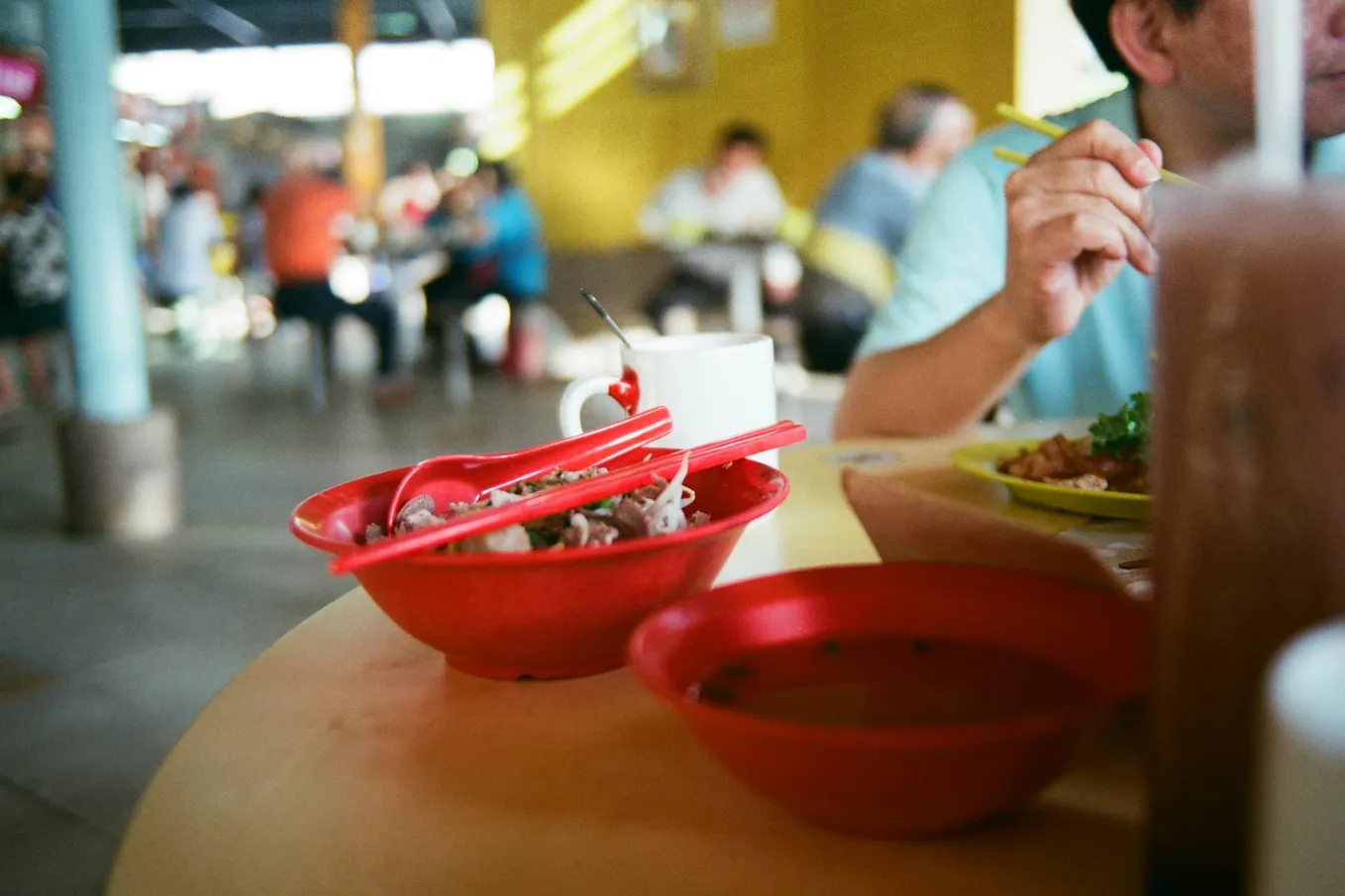
On the way home from work, we’d stop at the food court above the interchange before catching the last leg. A bowl of fishball noodles. A cup of teh, too sweet, in a plastic cup with a straw. Through the glass, we could see the buses below, pulling in and out, their headlights coming on as the sky dimmed.
It became a kind of threshold. The place where the workday ended and home began. Where the city’s rush slowed down to the pace of a feeder bus.
We once watched a schoolgirl fall asleep on a bench at the berth, her bag on her lap, her little brother keeping watch beside her. When their bus came, he shook her gently. She woke, picked up her bag, and climbed on without a word.
Nobody else noticed. We did. We still think about it.
The Long Way Out
On weekends, we started choosing routes for no reason at all.
For another glimpse of Singapore beyond the familiar rail routes, read The City We Never Saw from the Train.
Not the trunk services that carried people efficiently between towns. Not the express buses with an E after their numbers, slipping onto the expressway to skip the stops. We wanted the slow ones. The ones that went somewhere we hadn’t been.
Bus 117 took us north, past the hangars and quiet runways of Seletar Aerospace Park, then along Punggol, where the reservoir opened up wide and still beside the road. We sat upstairs and watched cyclists move along the water like small, unhurried thoughts.
Bus 975 took us further still.
We rode it on a gray Sunday, all the way out to the far west. The towers fell away. The roads narrowed. We passed army camps behind long fences, then farmland at Lim Chu Kang, rows of greens under netting, a goat tied to a post. Then the cemeteries, vast and quiet, headstones running up the gentle slopes as far as we could see.
The bus was nearly empty. A farmworker in rubber boots. An old woman holding a bundle of joss sticks and a plastic bag of oranges, going to visit someone who was no longer there.
She got off near the cemetery gates. She pressed the bell herself, steady and sure.
We didn’t speak for a long while after that.
We had thought Singapore was all city. That Sunday, it showed us the places where it keeps its quiet, and its dead, and its fields.
What the Bus Asked of Us
The bus was never the fastest way. We knew that.
At peak hours it was crowded and warm, bodies pressed together, umbrellas dripping on the floor. We stood more often than we sat. We gave up seats to people who needed them more, and learned to do it without being asked. We learned, too, not to eat or drink on board, to save the kopi for the shelter and the snack for home.
These were small disciplines. But they added up to something.
The train had asked nothing of us except patience. The bus asked us to pay attention. To watch the stops. To press the bell. To make room. To tap out. To notice the person beside us, and the person who might need our seat.
It asked us to take part.
The bus did not carry us through the city. It made us part of the way the city carries itself.
What We Carry Now
We still miss our stop sometimes, lost in a window or a thought. It doesn’t trouble us anymore. We get off at the next one and walk back. There is usually something worth seeing on the way.
The card in our pocket has gone soft at the edges. The beep at the front door is so familiar we no longer hear it. We know which side of the bus to sit on for shade in the afternoon. We know the interchange food court that stays open late. We know the driver with the folded towel, though we may never see him again.
Someday, this route will belong to someone else. A new family on the feeder bus, standing too early, waiting for doors that won’t open on their own.
We hope someone reaches over for them, the way the auntie did for us.
For now, the evenings are still ours. We wait at the shelter as the light goes amber. We watch the little screen count down. The bus pulls in, red or green, it doesn’t matter.
We tap in. We find a seat. We watch the blocks go by.
And when our stop comes near, we reach up without thinking and press the bell.
Quietly. Surely. The way people do when they know where home is.