The One Who Tends the Crosses
How a librarian from the Mykolaiv region preserves the memory of fallen soldiers.

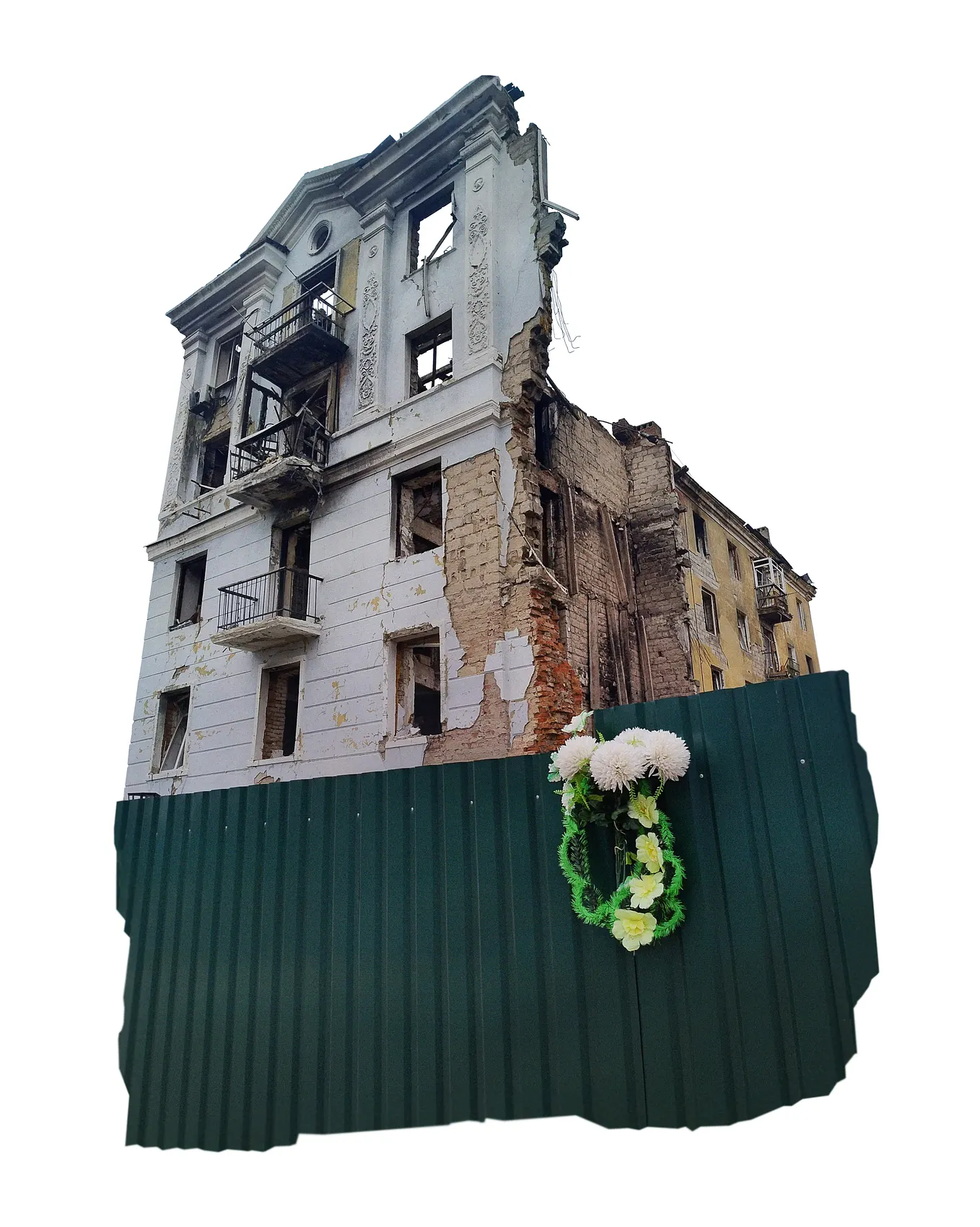
We are driving toward Partyzanske — or rather, what remains of it. Ruined walls are scattered across fields of poppies, rapeseed, and flax. Although media reports a few years ago claimed that residents were returning, we have not encountered a single person.
Following the damaged roads, we reach two metal crosses fitted with crucifixes, Ukrainian flags and memorial plaques. One cross displays photographs of brothers-in-arms Osyp Vasylchyshyn and Serhii Medianyk. The other commemorates Ivan Savinkov and Viktor Chmara. They were killed by Russian artillery fire.


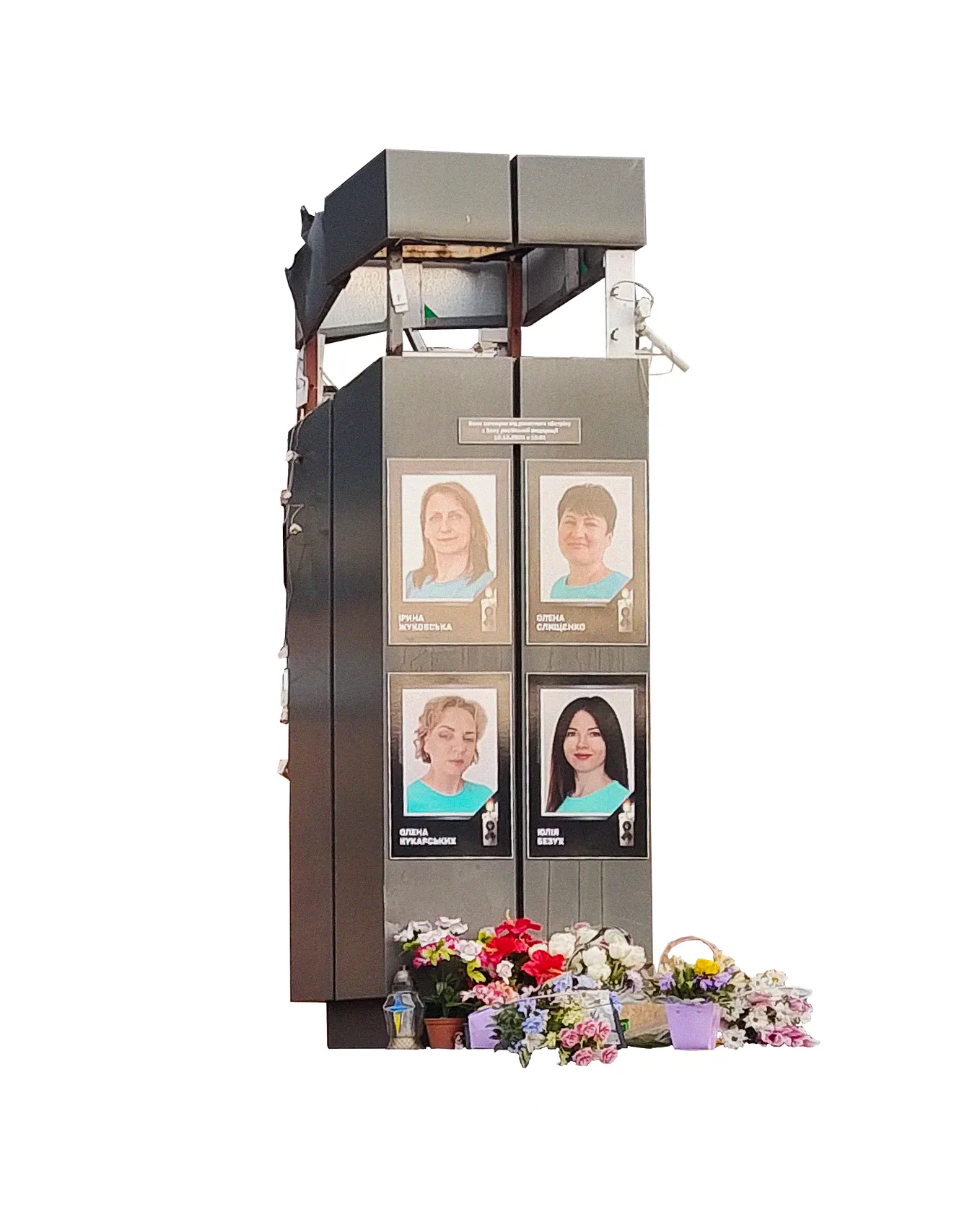
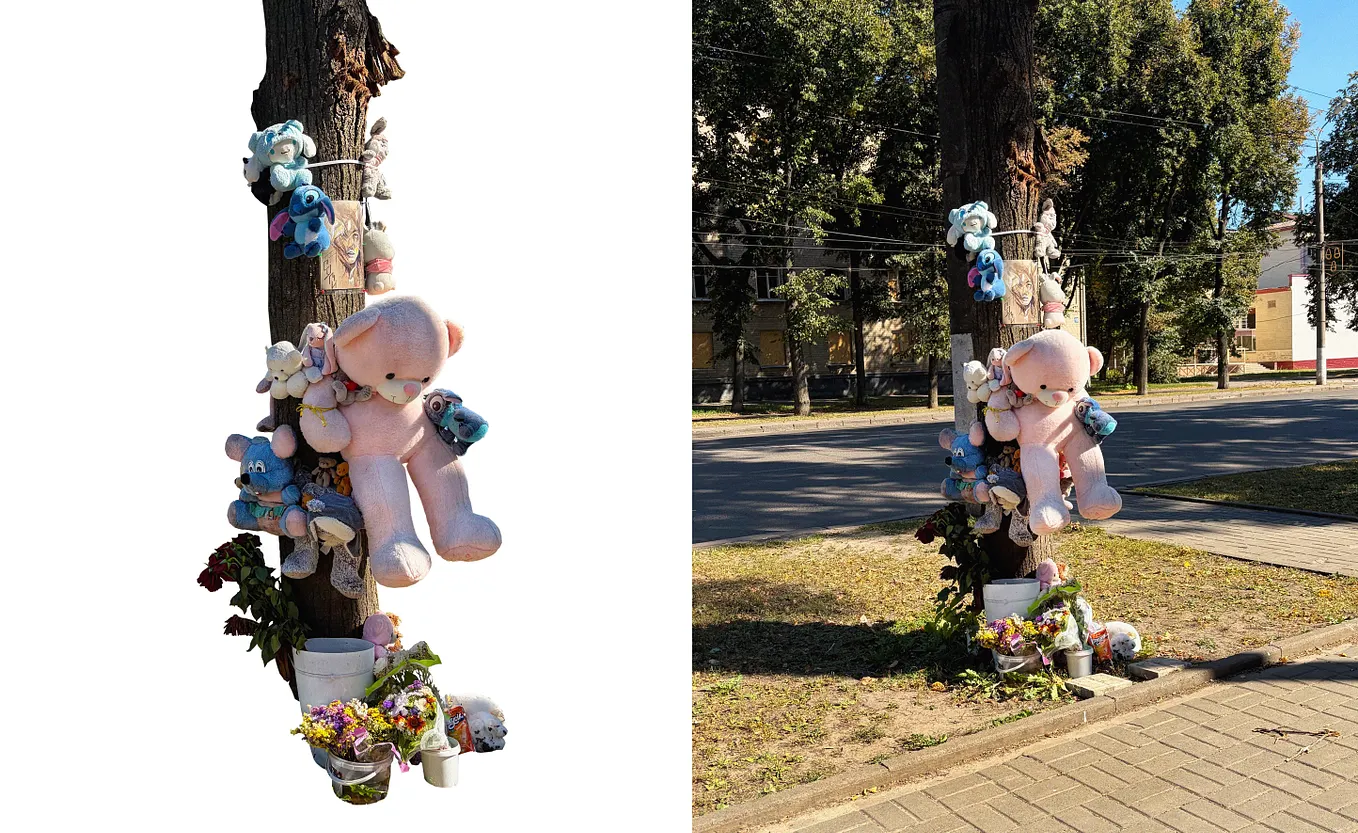
Such memorial crosses have become somber landmarks along the entire former frontline in the Mykolaiv and other regions. Soldiers use them to mark the spots where their comrades fell, either erecting the markers themselves or handing their care over to locals.
In Partyzanske and neighboring villages, this responsibility was assumed by Iryna Lobanova, the head of the library in neighboring Bilozirka. On Iryna’s initiative, another memorial cross was installed at the entrance to Bilozirka to honor Viacheslav Kutsyk, who died defending the village. An angel with hands folded in prayer is forged into the metal.


Inside the local House of Culture, Iryna established a Hall of Memory, collecting 318 portraits of fallen defenders from the Mykolaiv region. She paired each portrait with a story obtained from families or uncovered through her own research. The project began with a plea from a family who begged for a cross to be placed at the site of their son’s death, as he had not been commemorated anywhere else.
Get Grassroots Memory Project’s stories in your inbox
Join Medium for free to get updates from this writer.
During the height of the heavy fighting in 2022, Iryna volunteered without pause: distributing humanitarian aid, cooking endless pots of borscht, and helping soldiers with their daily needs.


‘Once, someone asked me: ‘Aren’t you afraid of a Russian strike? Your whole yard is draped in military uniforms, soldiers are washing up almost by the company, and the entire village gathers here for humanitarian aid.’ Back then, I simply didn’t think about it — everything was driven by sheer adrenaline. No one felt fear in those days, but it was after those events that I came to acutely feel the true value of life’.
At that time, the village’s water supply had completely failed. The well in Iryna’s yard became the sole lifeline for people who needed to wash or do laundry. One day, she noticed that a set of military clothes on the lines had been bone-dry for a long time, yet no one was coming back for it.
‘As some of the guys told me later, those soldiers were no longer alive — they had been killed by a landmine. And their clothes just remained there, hanging in the wind’.
If you’d like to support this ongoing fieldwork and documentation of wartime memory sites, you can donate via Ko-fi.
Originally published at https://grassrootsmemoryproject.substack.com on August 12, 2026.