Member-only story
A Brief History of AI with Deep Learning
From Artificial Neuron (1943) to DeepSeek-R1 (2025)

Updated on Dec. 23, 2025.

If you’re not a Medium subscriber, click here to read the full article.
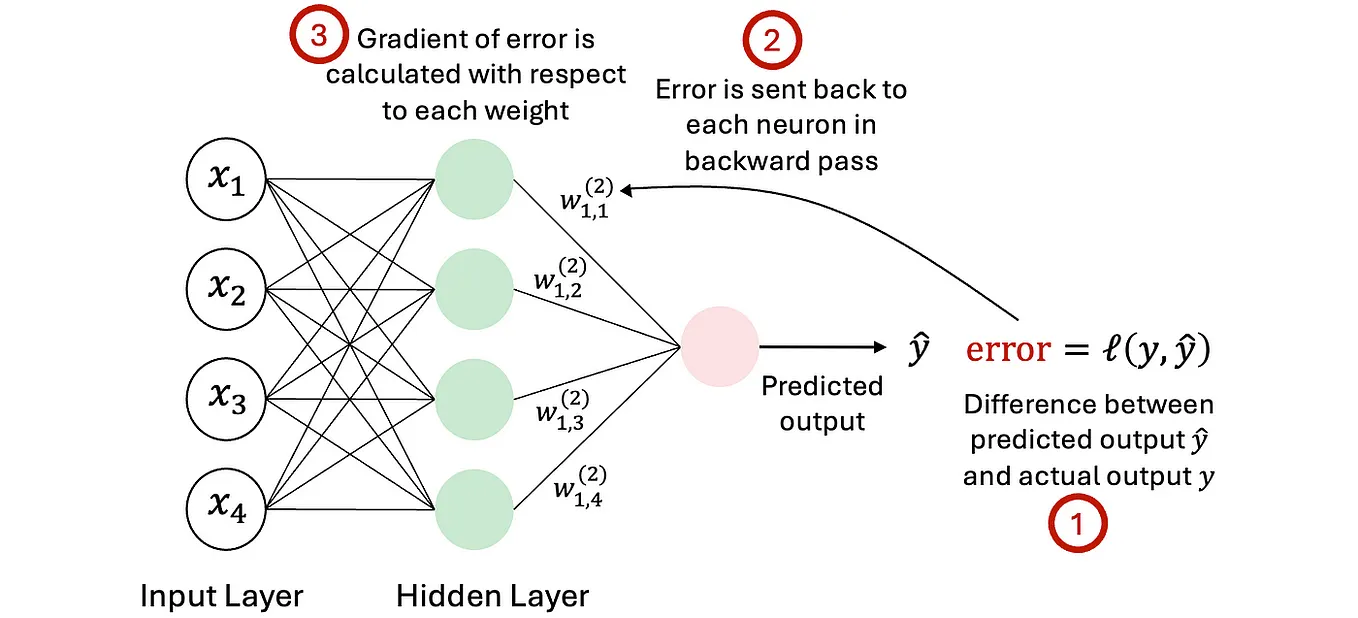
This article traces the evolution of artificial intelligence (AI) from its formal inception at the 1956 Dartmouth Conference to the transformative advancements in deep learning and agentic AI systems by 2025. Beginning with the McCulloch-Pitts neuron (1943) and Rosenblatt’s Perceptron (1957), early neural networks laid the groundwork for AI. The introduction of backpropagation in 1986 and the Universal Approximation Theorem in 1989 enabled multilayer neural networks, sparking the second golden age of AI. The rise of convolutional neural networks (CNNs) with AlexNet in 2012 revolutionized computer vision, while recurrent neural networks (RNNs) advanced sequential data processing. The Transformer architecture (2017) and large language models (LLMs) like BERT, GPT, and ChatGPT redefined natural language processing, leading to multimodal models integrating text, images, and video by 2023. The reasoning revolution, marked by models like OpenAI’s o1 and DeepSeek-R1 in 2024–2025, introduced advanced analytical capabilities. Finally, LLM-based agentic AI systems have emerged, enabling autonomous task execution and multi-agent collaboration, heralding…