Why Is Branding Important for Small Businesses?

Ask a small business owner about branding and you’ll usually get a shrug. “That’s for big companies. I just need customers.”
Fair enough. When you’re juggling stock, salaries and GST filings, a conversation about logos and brand colours feels like a luxury. But the customers you’re chasing are exactly the people branding speaks to. And the importance of branding is, if anything, bigger for a small business than a large one, because you don’t have a giant ad budget or a name everyone already knows. Your brand has to do that work for you.
So this is a plain look at why it matters, what it really involves, and how to begin without burning cash.
What branding actually is
It isn’t a logo. A logo is a sticker. Branding is what people think and feel when your name comes up.
And most of that comes from small, everyday things. How quickly you reply on WhatsApp. How the parcel looks when it lands at the door. Whether your Instagram sounds like a real person or a brochure. Whether the guy at the counter greets people the same way every day.
You’re building a reputation either way. Branding just means you’re doing it on purpose.
Why the importance of branding gets underestimated
The first thing to know about the importance of branding is simple: people forget. Someone who loved your product in March may not remember your name by June, especially when five similar sellers show up in their feed every week.
This is where brand recognition earns its keep. When your name, colours and tone look the same everywhere, people start to remember you without trying. They don’t need to search. They just think of you.
Then there’s customer trust, which matters more than most owners realise. Nobody hands over money to a business that looks half-finished or sounds unsure of itself. A tidy website, a clear promise and honest replies tell a stranger it’s safe to buy, and that’s customer trust at work. Skip those and even a great product gets treated with suspicion, however good your brand recognition is.
The importance of branding shows up in pricing too. Buyers will pay more for a brand they understand. If you look and sound like every other seller, the only thing left to compete on is the discount, and that’s a race you can’t win for long.
Loyalty is the quiet one, and it grows out of brand recognition. Repeat buyers cost far less than new ones, and they come back to brands that feel familiar. That familiarity doesn’t happen by accident. It’s the importance of branding showing up in your sales figures a year later.
Brand awareness without a big budget
The importance of branding starts with being seen. You can’t be picked if nobody knows you exist. That’s all brand awareness means: enough of the right people know you’re out there.

For a small business it doesn’t take billboards. Small business branding doesn’t need billboards, either. A local bakery in Hyderabad can build brand awareness with a consistent Instagram page, good photos of its cakes, a few happy customer stories and boxes that look nice enough to photograph. A B2B software firm might do it with a useful blog and a clear LinkedIn presence.
The trick is repetition. People need to see the same name and look more than once or twice. Three or four sightings and a stranger starts to feel like an acquaintance. That’s brand awareness doing its slow work.
What goes into a business brand identity
Your business brand identity is just the visible set of choices that show who you are. The usual pieces:
- A name that’s easy to say and spell
- A logo that works small, on a phone screen as well as a signboard
- Two or three colours and one or two fonts
- A voice, meaning how you write and talk
- Packaging, bills, social profiles and email signatures that all match

That’s it. You don’t need twenty things, whatever anyone selling you a branding package says about the importance of branding. A modest business brand identity used consistently beats an elaborate one that changes every few months.
Get M’s stories in your inbox
Join Medium for free to get updates from this writer.
Voice is the piece of business brand identity people skip. Decide whether you sound friendly or formal, cheeky or calm, and stick with it. A shop that’s playful on Instagram and stiff in its emails confuses people more than it realises.
Small business branding: where to start
You don’t need an agency to begin small business branding. Here’s a sensible order.
- Be clear on why you exist. Besides making money. What problem do you fix, and what do you refuse to compromise on?
- Talk to a few customers. Ask why they picked you and what they’d say to a friend. Steal their words for your messaging.
- Look at competitors. Not to copy them. You’re hunting for what nobody else is saying.
- Pick one promise. Fastest delivery, most honest ingredients, friendliest service. One. Trying to claim all three usually means claiming none.
- Build the basics. Name, logo, colours, fonts, voice. Keep it simple.
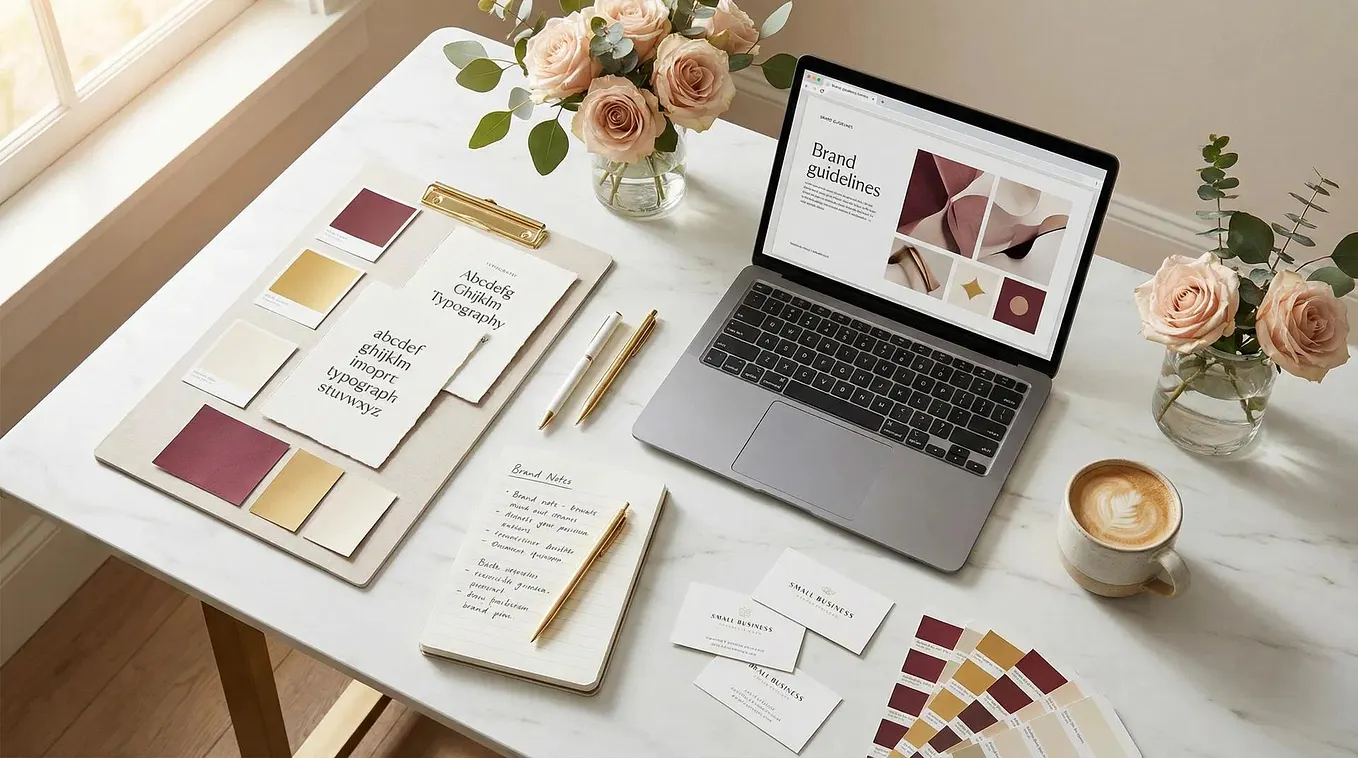
- Write short guidelines. Even a few pages on how to use the logo, colours and tone helps when new people join and start speaking for you.
Most small business branding falls apart at step 6. The first five get done with enthusiasm, then nobody writes anything down and six months later the look has drifted.
Small things that build brand recognition
Brand recognition is mostly boring consistency. Same logo on every platform. Same profile picture and bio. Packaging that matches the website. Your business name spelled the same way on Google Maps, marketplaces and directories, which sounds trivial and isn’t.
Tell your story, too. People remember founders and reasons far longer than slogans, and a story is free brand awareness. If you started selling pickles because your grandmother’s recipe kept disappearing from family gatherings, say so.
And be patient. Recognition builds slowly, then all at once.
How a brand earns customer trust
Trust is built in small, repeated moments, and it’s lost in single ones.

Do what you said you’d do. Be upfront about prices, delivery times and returns. Honest small business branding always starts with being clear. Answer complaints quickly and politely, even the unfair ones. Use real photos instead of stock images, and real reviews instead of vague claims.
When something goes wrong, own it. A business that says “we got this wrong, here’s how we’re fixing it” often wins more customer trust than one that never slips up, because everyone knows slip-ups happen.
A quick example
Take a small D2C candle brand with a clear business brand identity. Its promise is calm, quiet evenings. The colours are soft and warm, the packaging is recycled, the captions talk about slowing down rather than “50% off”, and every order ships with a handwritten note.

None of it is expensive. But put together, it creates brand recognition and a feeling of care. People remember the note. They mention it in reviews. They come back at Diwali and order for their relatives. That’s small business branding working in the real world.
Mistakes worth avoiding
Treating branding as a logo job and ignoring the importance of branding everywhere else. Copying a bigger competitor and then wondering why nobody can tell you apart. Changing colours and taglines every few months. Looking different on every platform, which quietly weakens your business brand identity. Promising things you can’t deliver, which kills customer trust faster than anything. Ignoring feedback. And quitting too early, because brand awareness takes longer than most people expect.
Frequently asked questions?…
Why is branding important for small businesses? It builds brand recognition, trust and preference over similar options. For a small team it also makes marketing simpler, since everything you put out follows the same idea.
Is branding only for big companies? No. The importance of branding applies to every size. Small businesses often gain the most, because they can’t buy attention the way large ones do.
How is branding different from marketing? Branding is who you are and what you promise. Marketing is how you tell people. A clear brand makes marketing work harder.
How long does brand awareness take to build? Usually months, sometimes years. Consistency matters more than speed.
How much should I spend on small business branding? Start with the basics of your business brand identity: name, logo, colours, voice and a short guideline. Add more as the business grows.
Can I change my branding later? Yes, many businesses refresh their small business branding as they grow. Change gradually so loyal customers still recognise you.
Does good branding increase sales? Usually, indirectly. It builds recognition, customer trust and repeat purchases. It works best alongside a good product and decent service.
The Conclusion…
The importance of branding for a small business boils down to this: people buy from businesses they recognise and trust. You don’t need a big budget to build that. You need a clear purpose, a simple identity and the patience to show up the same way, again and again.
Start small. Stay consistent. Listen to your customers. The brands people love weren’t built in a week.
If you’d like experienced support along the way, contact Arivi. The team can help you shape a brand that earns recognition, builds customer trust and supports your growth.