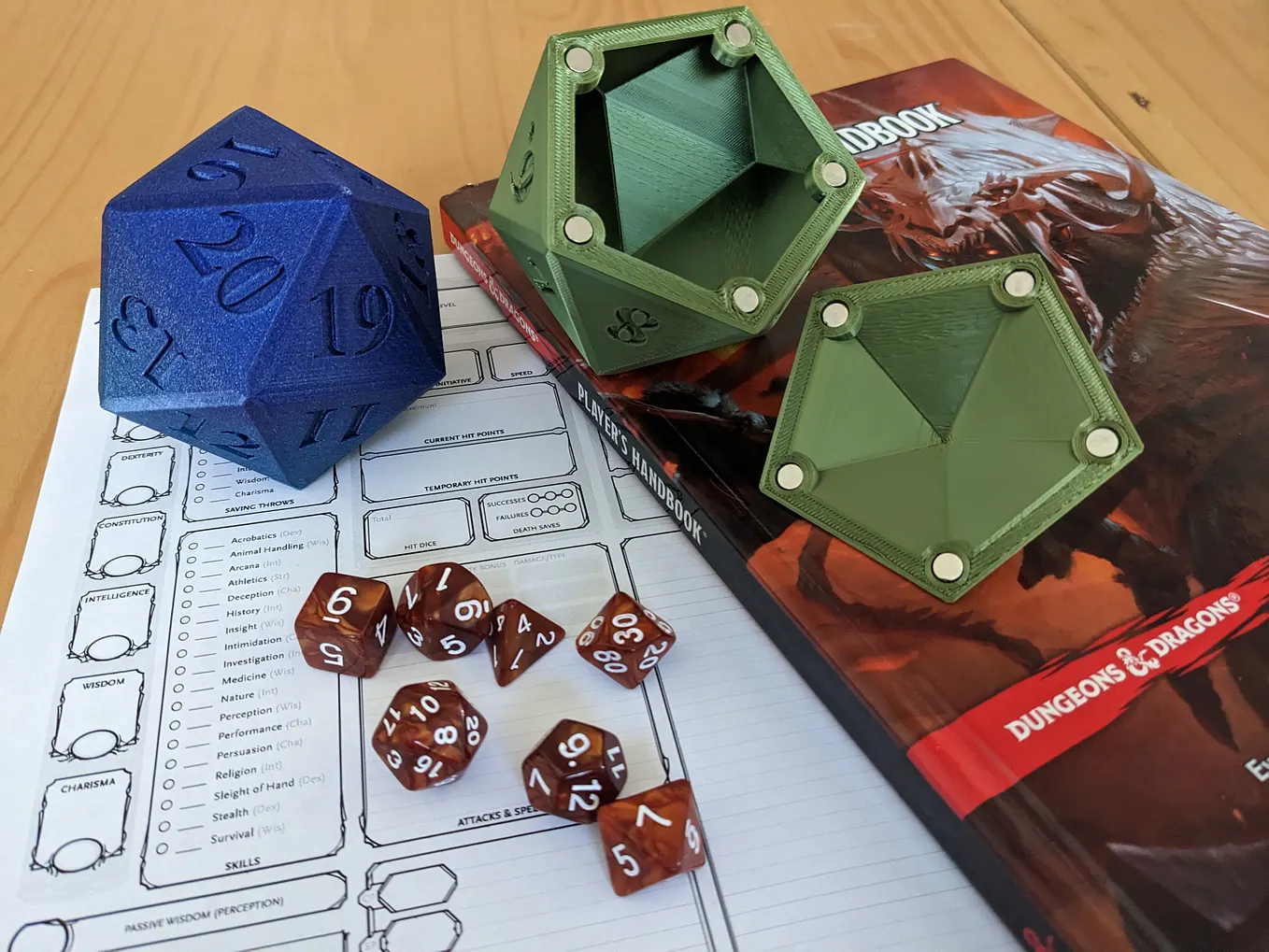
How to rebuild an empire by stealing a single door

The 2017 Tomb of Annihilation campaign is loosely based on the original 1975 Tomb of Horrors module. At half a century old, the Tomb of Horrors is legendary among D&D players. It’s widely known as the deadliest adventure in the game and famous for the amount of treasure characters can acquire if they survive. The Tomb even features heavily in books like Ready Player One and was reprinted in the Tales From the Yawning Portal anthology.
Near the end of both Tombs, there’s an adamantine door. Adamantine is a fictional metal, similar to mithril. Astute players recognize that a 10-foot tall door of solid adamantine isn’t just an impossibly difficult obstacle. It’s also an impossibly valuable piece of loot.
I’m currently the Dungeon Master for a Tomb of Annihilation campaign, and my players have just encountered this legendary door. One of my players wants to steal this door to fund the rebuilding of Omu, an abandoned city deep in the jungles of Chult.
The secrets to working adamantine are closely guarded, so stealing this door would be a monumental task in itself. Finding a buyer for that much adamantine would be nearly impossible, since few people can afford the metal let alone have a use for it. And rebuilding a fallen, abandoned empire deep in a dangerous dinosaur-filled jungle in hostile zombie territory would be an act of hubris bordering on insanity.
But in the improvisational spirit of yes, and… I decided to do the math anyway.
The exact dimensions of the door aren’t given in Tomb of Annihilation and the exact density of adamantine is unknown. I’ve seen estimates ranging from 500lbs to 2400lbs for this door. The selling price of one pound of adamantine ranges from 10 gold pieces (gp) up to 1000gp. I decided that this door weighs one ton (2000 pounds) and a pound of pure adamantine could fetch 100gp. That gives my players a budget of 200,000 gold pieces to rebuild a city. For reference, a single gold piece can buy a very fine bottle of wine or a scrawny goat. I typically say one gold is equal to US$100.
Starting budget: 200,000gp (US$20,000,000)
Chult, the location of the ruins of Omu, is dangerous. Zombies, dinosaurs, and giant wasps are the least of your worries in the Chultan jungle. Hirelings will be especially expensive, due to hazard pay. Skilled labor in major cities typically costs anywhere from 2gp to 5gp per day. But these hirelings will need to travel for weeks through dangerous territory, bringing pounds of heavy and expensive gear, just to get to the remote location. A salary of 4gp to 10gp per day is reasonable, depending on the work.
Get Onna Nelson’s stories in your inbox
Join Medium for free to get updates from this writer.
There are several hundred evil cultists currently occupying Omu’s ruins. The first order of business for my players will be to hire 100 skilled militia to flush them out. That task might only take a few days, but they also need to pay for their travel. Travel time is going to be at least two weeks, if they move fast and everything goes to plan. Hiring 100 mercenaries at 10gp a day for 20 days will set them back 20,000gp. These mercenaries will need pack animals to carry their supplies, too. Luckily, the going rate for a pack triceratops in Chult is only 100gp. One pack triceratops for every 10 mercenaries will set my players back another 1000gp.
Running total: 21,000gp of 200,000gp budget.
Next, they’ll want to build roads to and from the nearest major port cities. There’s quite a bit of labor in removing vegetation and rock and leveling dirt! The nearest cities to Omu are Shilku and Jahaka Anchorage. Shilku is about 100 miles away and crosses a mountain range. Jahaka Anchorage is about 200 miles away and crosses a river. A simple, two-lane (so carts can go each direction) dirt road costs about 100gp/mile to build. These two roads will cost 30,000gp.
Running total: 51,000gp of 200,000gp budget.
Now they need to rebuild. This type of less-dangerous skilled labor is going to be closer to 4gp per day. But they’re going to need a lot of it. Dozens of masons, carpenters, and blacksmiths to lay bricks, build roofs, and forge nails. Rome wasn’t built in a day, but luckily there are already roads and the foundations of buildings in Omu’s ruins. If they pay for 100 laborers for 200 days at 4gp per day, that’ll set them back 80,000gp. If every 10 laborers need a pack triceratops too, that can be another 1000gp again. Perhaps 100 laborers working 200 days won’t completely rebuild the city, but it’ll at least make sections of it livable.
Running total: 132,000gp of 200,000gp budget.
Of course, this is just construction labor. My players haven’t paid miners for ore or lumberjacks for wood yet. And how are they feeding all these people? They’ll need to hire hunters and farmers to procure food, as well as butchers and bakers to turn it all into something edible. Assuming they only need one baker, butcher, farmer, hunter, miner, and lumberjack to support every 10 construction workers, they’ll need 60 of these total. At 4gp per day for 200 days, there goes another 48,000gp to jumpstart the construction of Omu.
Running total: 180,000gp of 200,000gp budget.
If my players want to attract wealthy citizens and tourists, they’ll probably want to build a permanent teleportation circle. This will give Omuans quicker access to other major cities that have teleportation circles, like Port Nyanzaru or Baldur’s Gate. So my players will need to hire a wizard: highly-skilled but not dangerous labor, likely 5gp per day. This wizard will need to cast Teleportation Circle, which has a component cost of 50gp, every day for 365 consecutive days. That’s 20,075 gp for a new teleportation circle installation.
Running total: 200,075gp of 200,000gp budget.
Okay, so they’re over budget by 75gp at this point, and they haven’t even built a working sewer system or installed streetlights. But, I’d expect the economy to start taking off and the city to become self-sufficient by now. There are livable houses, passable roads, and even a working teleportation circle. All for the low, low cost of a single door.