Getting Fitted, Getting Faster: My First Bike Fit Experience
Discover why getting a bike fit isn’t just about comfort — it’s about setting the stage for your ambitions.


I’m a budding middle-aged duathlete. I started my athletics journey on my own wit, but a year ago I joined Coach Parry’s “Faster Beyond Fifty” program.
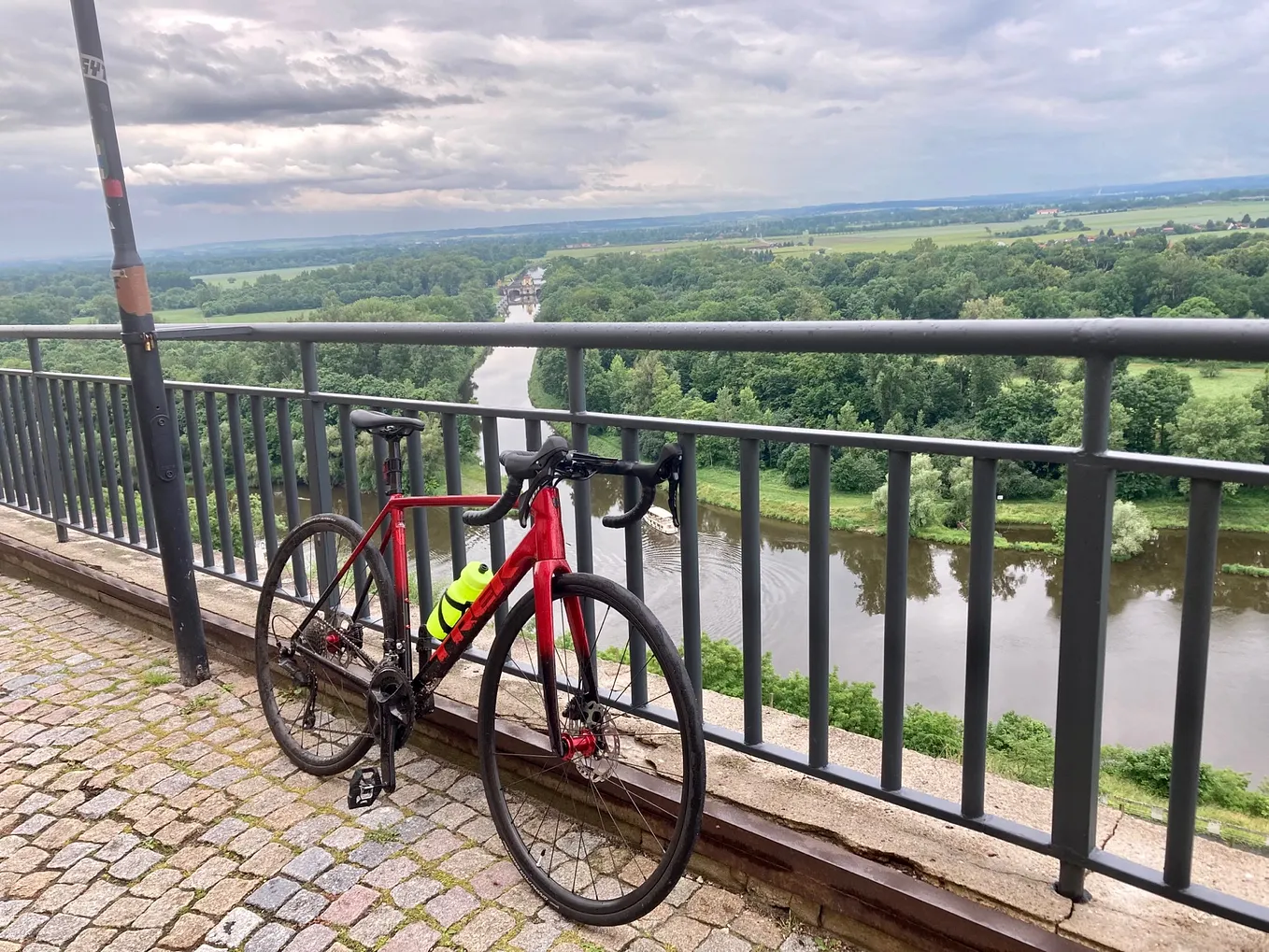
There was a moment during my training where I found myself constantly fiddling with my bike setup, trying to make my indoor trainer rides more comfortable. My bike — a Trek Emonda ALR5 — was entirely stock, with a massive 42cm handlebar and a reach that felt just a bit excessive.
I shared some of my DIY adjustments with one of the coaches, who simply replied: “You should really get a proper bike fit.” That seed planted itself firmly in my head. At my age, I’m a lot more sensitive to injuries, and balancing the pursuit of performance with the reality of aging joints and muscles has become key.
Now, with my first ever L’Étape Czech event on the horizon (okay, I’m doing the 60 km short distance, but hey — still legit!), I decided it was time. No more putting up with numb hands or second-guessing my setup.
I booked a session with Jan Falge, a seasoned bike fitter with a serious endurance pedigree. He’s the owner of Koa Endurance Studio in Prague, where he runs triathlon training camps and coaching. In his racing days, he finished both the XTERRA World Championships in Maui and the Ironman World Championships in Hawaii.
From Running Shoes to Clipless Pedals
Before I found cycling, I was only running. I started small — just a kilometer a day — and gradually built up to running half marathons. That all came to a halt after my second half marathon, when I developed injuries in my left leg, including posterior tibial tendinitis and recurring calf issues that just wouldn’t go away. My orthopedic doctor recommended that I stop running — or if I continued, to combine it with cycling. And so, I shifted gears — literally and figuratively — to longer rides until my calf was fully healed.
With that advice in mind, I set out to buy a road racing bike that would allow me to train in a similar way to how I ran: intervals, sprints, and Zone 2 rides of up to 1 — 2 hours. After a long search, I landed on the decision to buy an aluminum Trek Emonda. I found a shop that had a demo model ready to test out. I rushed over immediately, took it for a spin, and was happily surprised by how snappy and comfortable it felt for an aluminum road racer.
According to Trek’s website, I should go for a size 54 based on my height — or a size 56 based on my inseam (I’ve got long legs and a short torso). Of course, I asked for the size 54. But the demo model was a 56. The shop gave me two options: take the demo model for a significant €1000 discount, or wait six weeks and pay full price for a 54.
The impatient, budget-conscious athlete in me chose the 56. After all, this was my first race bike, and I wasn’t even sure where cycling would take me yet — other than occasional cross-training. Plus, the reach difference was just about 1 cm, with a 2 cm difference in stack height — adjustments I figured I could compensate for with tweaks to the stem, stack, and handlebar.
Still, there were red flags. Trek’s stock handlebar felt awkward right from the start.
“This handlebar is so wide, it feels like a mountain bike flat bar,” I told the salesman.
So, even from day one, I knew I’d want to change a few things.
The Fit Begins
Jan and I started off with a deep dive into my goals, injury history, and riding habits. I told him about my running background, my shift to cycling for cross-training, and how that evolved into training for my first bike race — L’Étape Czech this summer. He thought that was very cool — until I mentioned I was doing the 60 km short distance. He looked a little disappointed at first, then smirked and said, “Yeah, still cool, though.”
Then we got to work.
We started by measuring my current setup: saddle height, cleat position, and fore-aft saddle placement. Jan pointed out that my knee-over-foot alignment was 16 mm off, and ideally, that number should be closer to zero. He considered moving my cleats further forward but flagged the potential risk of foot discomfort, so we instead focused on adjusting the saddle.
Jan raised the saddle almost 2 cm from my previous setting and began working on the angle. I had occasionally tweaked the saddle’s fore-aft position myself, but I never realized I was also unintentionally changing its tilt. It was pointing up by 1.2° — which, Jan explained, could be causing pressure and instability. He adjusted it down to -2.0°, and I immediately felt the difference.
“The saddle is now much more aligned with your sit bones,” Jan said.
I felt like I was sitting into the bike for the first time.
With the saddle dialed in, we moved on to the fun part: trying out different cockpit configurations. Jan replaced my handlebar with a bikefitter’s modular handlebar/stem combo that allowed for variable stem lengths, lowered the stack height, and tested stems from 60 mm to 100 mm in 10 mm increments.
The 60 mm stem was an immediate no — I was holding the very edge of the hoods. But 80 mm and 90 mm both felt solid. Right away, I knew I had found the sweet spot.
After reflecting briefly on the positional data in his bikefitting software, Jan decided to go even further. He swapped in a 36 cm wide handlebar, slammed the stem completely, and moved the saddle slightly forward. It felt like a forward-sprinting position — aggressive, but still surprisingly comfortable.
“This would completely freak me out on a downhill,” I told Jan.
He laughed and nodded. “Let’s find something that still feels fast, but gives you more stability.”
Get Zameer Razack’s stories in your inbox
Join Medium for free to get updates from this writer.
That’s when we landed on what would become my new position: saddle slightly back, 80 mm stem, 36 cm handlebars, and a slammed stack. Jan emphasized two key positional metrics:
- Hip — shoulder — wrist angle: ideally under 90° (mine hit 86° with the 80 mm stem)
- Torso angle: right around 45°
Having those numbers gave me a real sense of confidence — there was science behind the comfort.
As I’m looking to upgrade to power meter cranks, I also asked Jan about crank length. He recommended going slightly shorter — from Trek’s stock 172.5 mm to 170 mm. Especially for endurance-focused riders like me, shorter cranks often lead to better comfort and, by extension, better performance.

Philosophy in Motion
Curious, I asked Jan whether most of his clients came in due to injury and discomfort, or for performance gains. His answer was simple — and kind of profound:
“They’re always related. Eliminate discomfort, and you’ll perform better.”
He explained that the position he aims for is rooted in the hip hinge movement you’d see in weightlifting — think deadlifts, squats, kettlebell swings. Compared to that, I had been craning over the bike in a way that compromised both power and comfort. This wasn’t just about angles and millimeters — it was about biomechanics, posture, and long-term sustainability.
Jan also encouraged me to feel what an aggressive race setup was like, compared to the more stable position we ultimately settled on. It was about building awareness: here’s where you are now, and here’s the performance position you might grow into when your bike handling skills catch up. That mindset shift made the whole session feel like more than just a tune-up.
It felt like a beginning.
Back on the Road
I didn’t waste any time testing the new setup. The day after the fit, I jumped into an overgear interval session on the turbo trainer, followed by a Zone 2 ride outdoors.
The difference? Huge.
On the trainer, I found it easier to put down power — especially during sustained efforts. My upper body felt more relaxed, no longer needing to reach out for the hoods. Previously, I’d often default to the tops during hill climbs just to stay comfortable. Now, the hoods felt like a perfect neutral position.
Outside, the transformation was even more striking. My Trek Emonda felt more responsive, almost like it had woken up from a dormant sleep. The shortened reach and narrower bars made the bike more twitchy when out of the saddle, but never unstable — just more direct. It’s a feel I’ll need to adjust to, but one I already like.
What stood out most, though, was control. I felt more connected to the bike, more balanced in corners, and more planted in the saddle. It’s not magic — but it kind of felt like it.
A Quick Word on My Bike Purchase
Going purely by the numbers, the changes Jan made would have been slightly smaller had I gone for the size 54. I’d probably be running a 90mm stem instead of 80mm, and maybe 2cm of spacers on the headset. But honestly, with the right tweaks and expert guidance, the size 56 feels just right now. I don’t regret the decision.
What this experience taught me is simple: a bike is only as good as its fit. Jan’s bike fitting skills helped me unlock comfort and performance I didn’t even know were there.
Final Thoughts
I didn’t grow up with any particular interest in sports. I didn’t picture myself doing races in my forties. But here I am — training, learning, and showing up in ways I never expected.
This bike fit wasn’t just about comfort or performance — it was about finally feeling at home on the machine I’ve spent so many hours with. It’s about listening to my body, adapting as I go, and realizing that getting older doesn’t mean giving up on progress. It just means training smarter.
I walked into that fit with questions about saddle height and numb hands. I walked out with a setup that makes me feel more in control, more connected, and more confident on the bike. That’s a pretty good deal.
And if you’re wondering whether a bike fit is worth it? I’d say this: if you plan to spend hours on your bike, make sure it’s truly yours.
Now, with L’Étape Czech coming up, I can’t wait to put all of this into action on the road.