Seats at the Table: Finding Home Among Strangers in Singapore’s Hawker Centres

Moving to Singapore requires us to change many things, but true adaptation begins the moment we learn to sit beside a stranger.
We leave the air conditioned hush of the office as the evening heat settles over the pavement. The walk to the local food centre is short, but the atmosphere immediately shifts. The air thickens, smelling of roasted garlic, dark soy sauce, and the sharp bite of sambal. We step under the humming industrial fans, moving away from the quiet of our corporate routines and straight into the bright, rhythmic energy of the hawkers. On days like this, caught between the isolation of settling into a new country and the desire to feel anchored, we find ourselves searching for a specific kind of relief.
This is usually when we find our way to a plastic chair and a steaming plate of food.
The Market Arrives as Chaos
Our first few months here were defined by a strange hesitation. We viewed the sprawling, open air food courts as beautiful but impenetrable mazes. We stood awkwardly at the edges of Maxwell or Tiong Bahru, overwhelmed by the sheer volume of choices, the clashing of metal spatulas against woks, and the rapid fire orders shouted in languages we did not yet speak.
But soon, we noticed how the space actually breathes. We stopped fighting the sensory overload and started moving with the current. We cannot force our old habits onto a new equator; we have to let the city set the rhythm. We realized that navigating the hawker centre is not about conquering the chaos, but learning to fold ourselves into it.
The Choreography of the Chope
The most profound lessons in local culture often arrive disguised as mundane rituals. At noon on a Tuesday, the lunch rush is a masterclass in unspoken trust. We learned quickly that a single packet of tissue paper left on a table is an ironclad reservation.
Get Expat life SG’s stories in your inbox
Join Medium for free to get updates from this writer.
At first, we hesitated to claim space in this way. It felt deeply unnatural to walk away from our belongings. But engaging in this small act of chope culture was our first real step toward integration. Community rarely announces itself with a grand gesture; sometimes it is simply a borrowed plastic chair and a packet of tissues. By participating in the ritual, we signaled to the city that we were finally ready to play by its rules.
Connection Without Formality
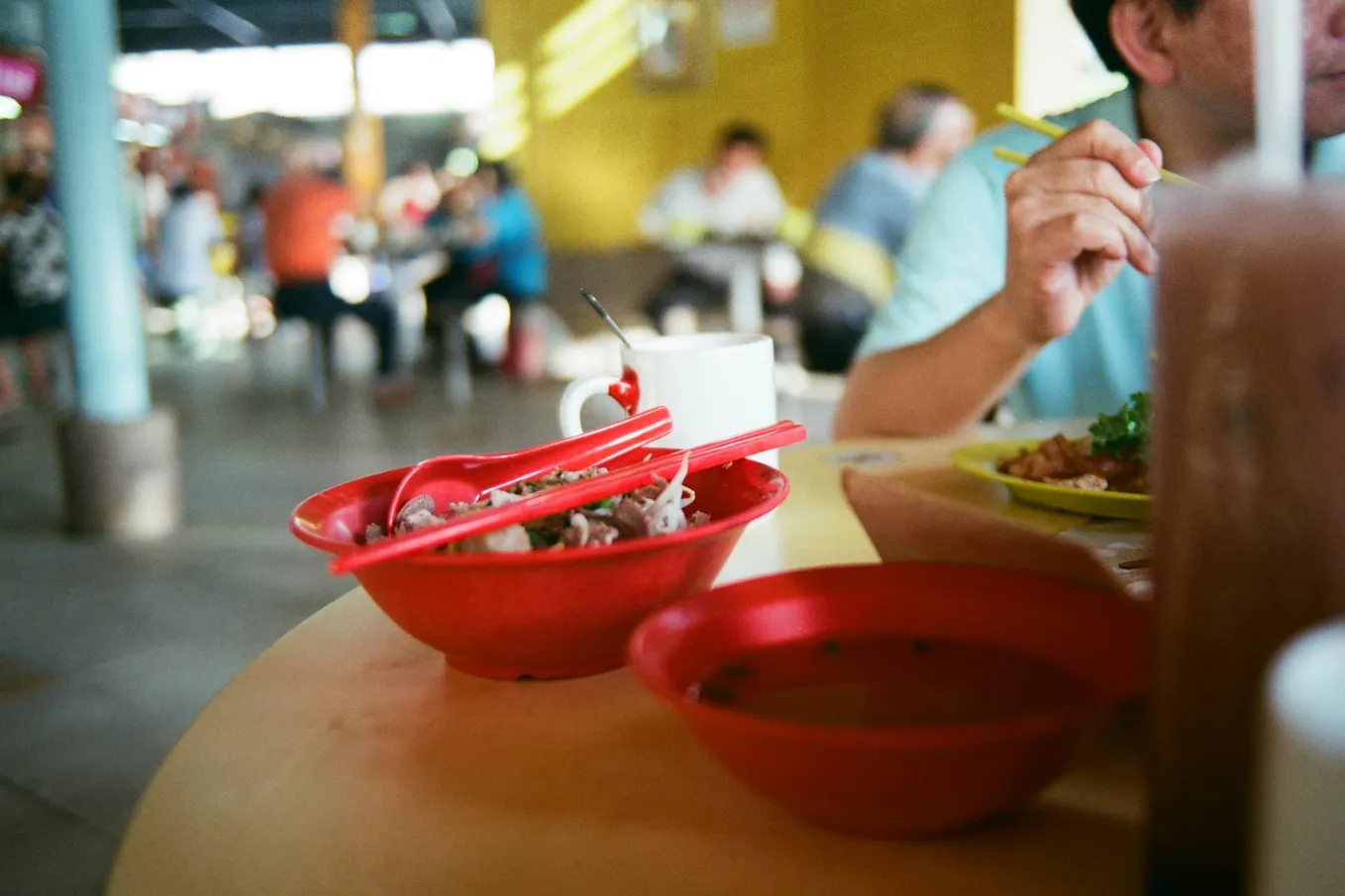
To dine in a hawker centre is to surrender the illusion of private space. The tables are round, the seating is tight, and the dining experience relies on proximity rather than exclusivity. We sit shoulder to shoulder with tired office workers, students in uniform, and elderly men reading the evening paper.
In these moments, the food serves as an anchor. Whether it is a plate of Hainanese chicken rice that tastes like pure comfort or the smoky, complex depth of Char Kway Teow, the meal grounds us. We share condiments, pass napkins, and nod politely to the strangers beside us. A shared meal can be its own form of belonging. We do not need to speak the same language to understand the mutual comfort of a warm dinner after a long day.
The Uncles and Aunties Holding the Line
In a city defined by rapid development and glittering skylines, the hawker stalls remain stubbornly permanent. Between quick grocery runs to stock the fridge and the endless small errands of settling in, we kept returning to these stalls for something steadier than convenience. The uncles and aunties behind the glass do not just serve food; they offer continuity. They remember our faces before they remember our names. They know when we want our noodles extra spicy and when we need a cold barley drink to cut the humidity.
To be an expat is to live perpetually in transit, surrounded by packing boxes and expiring visas. We build roots in the soil of temporary things, knowing the people we meet will eventually leave. Yet, the hawkers remain. They become the steady pulse in our transient lives, offering a daily reassurance that we are known, even in a small way.
A Shared Table After Hours
Eventually, the novelty fades into routine. We no longer need to check our phones to find the best stall. We know exactly which queue moves the fastest and which corner catches the best evening breeze. We order with confidence, dropping a casual “uncle” or “auntie” without a second thought.
We look around and realize that this loud, humid, beautiful space has quietly become ordinary to us. Belonging is found in the empty spaces we learn to fill, simply by showing up and taking a seat week after week.
We do not know how long our stay in this city will last. But as we walk home through the sticky night air, carrying the lingering scent of wok hei on our clothes, we know that this place has already left its mark on us. We carry the warmth of these shared tables in our memories now, and that is something the distance can never take away.