“Why don’t you just move?”
THE MILLENNIAL UNDERGROUND: PART 6


Answering the ghosts of pundits past
When we first moved to Vancouver, we rented a lovely if crumbly old apartment on Cambie Street. I was delighted to finally live the urban fantasy of my rural-suburban childhood. The name of a city in my address block. Not a suburb near a city. The city itself. Chicago. New York. Vancouver.
Then I got pregnant, and more practical considerations came into view. A second bedroom. In-suite laundry. I’d never thought of these things before. All I wanted was to live with Joel, in the city.
Finding our apartment had been a pleasant weekend of house hunting, daydreaming, and trying to decide between two good options. Just four years later, it was as if all hell had broken loose (see post #2).
At the same time, the housing crisis and the #donthaveamillion campaign was (finally) in the news. And everyone had an opinion about millennials and our housing woes. Move to the suburbs. Eat less avocado toast. Stop belly-achin’.
We found ourselves in the bulls-eye of a national conversation. But we just needed somewhere to live.
In my final post, I answer the ghosts of real estate pundits past, whose words have haunted me for five years of basement living.
“Why did you choose to live in the most expensive city in the whole world?”
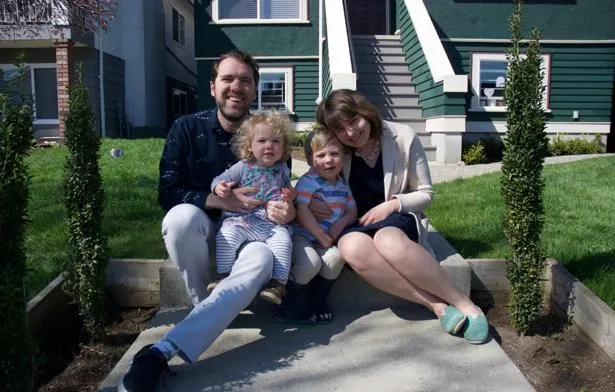
Ah, little Lauren and Joel. Just married. 24 and 28. Where should they live? Lauren was in a suburb of Seattle. Joel was in Vancouver. They like both cities, but they have to choose one.
They don’t know about the housing crisis. They aren’t thinking about what they would do when they have kids. They don’t realize Vancouver was a hot spot for the global elite. They are just two young people in love who want to live in the city. They move to Vancouver.
“Millennials just need to face the fact that they aren’t going to live in a single-family home.”
But they aren’t trying to live in a single family home. They just want a place big enough for both their bikes, their modest two children. They begin to feel like they’re asking too much. (Is room for a dining table too much?) No — they never said it had to be detached. They just wanted it to be above ground.
There aren’t many good options for millennial families in Vancouver. Condos max out at two bedrooms. Co-ops have years-long waitlists. Very little of the thousands of new units being built are dedicated rentals, and most are marketed as luxury units for the wealthy or aging downsizers. Renting a full house or a level of a house is an (expensive) option — but one that comes with its own risks, like renoviction or the owners selling your home with two month’s notice.
They learn why everyone they know has only one or two kids. There are very few places in the city to squeeze in any more.
“Not everyone can live in Vancouver. If you need to move to the suburbs, you need to move to the suburbs.”
They look up the prices for townhouses in the suburbs. If they go this route, they will be sinking most of their money into a barely sustainable mortgage to live in a soul-less maze of new construction and commute over an hour to work. Once again they wonder, do they want too much?
No one told them the plan, to buy a one-bedroom condo, then a townhouse, then a house. Now it’s too late. They’ve outgrown step one and can’t afford step two. They just didn’t know.
Of course, many they have to go this route in the end. They accept the commute, the toll on quality of life. The schools in the suburbs they look at are over-capacity before they even open. She has a co-worker who leaves at 6 a.m. to beat the traffic to work. They consider the costs, which feel very, very high.
“Maybe if you stopped by avocado toast and lattes every day, you could afford a house.”
Or, in variation, “Just stop whining and save up.”
As she obsessively monitors her budgeting app on her second-hand cell, tracking every dollar they spend, the absurdity of the claim hits her. The second they paid off her student loans, they started saving. At many points, prices ratchet up at rates faster than the interest on their mutual funds, faster than they can put money in savings. They recalibrate their expectations for what a 20% down payment will get them. Then they recalibrate again. And again.
They are part of the squeeze: the generation that works more to buy less. But if they happen to mention it, they are cast as whiners, as lazy. They drown their feelings in lattes and avocado toast (they’re only human).
“Housing prices always go up and down — stop worrying about it.”
She loves this advice from Americans, from people in other housing markets. As though housing prices going down even 10 percent would put them within reach.
Get Lauren M. Bentley’s stories in your inbox
Join Medium for free to get updates from this writer.
And of course, if housing prices did go down, they hear over and over, what would happen to the home owners? Ah, yes, the home owners. We mustn’t forget about their needs.
At least I don’t have to do yard work, she thinks.
“Just have your parents give you the money for a down payment.”
Hilariously, they have inherited money. When Joel’s grandma moved into a nursing home, his parents sold her house. All the kids got a chunk of money. It’s sitting in their down payment fund. But it’s not enough. So they wait.
In any case, is this really the solution for millennials? What about the vast majority of young people whose parents haven’t or couldn’t accumulate wealth to pass on while they’re still living? We tried the landed gentry: it wasn’t great for equality. The inability for under-privileged groups to accumulate and pass on wealth is one of the most persistent drivers of inequality in our society. How can we set that up as a solution when it by default leaves behind those who had less from the start?
“People in Europe live their whole lives renting in apartments, and they don’t mind.”
They went to Europe, just once, for their honeymoon. Spain. It was delightful. If the city was interested in building affordable three-bedroom rental apartments, they might consider it.
In any case, the argument that one should live how people do in a different place — a place where the entire culture is built around a different way of living — does not convince them. The culture of the place they actually live (Vancouver, BC, Canada) builds nice, family-sized condos only for rich people. Every time the city proposes affordable or social housing, it gets squashed by a NIMBY backlash. When the city talked about rezoning some neighborhoods to convert single-family homes into quadplexes or low-rise apartment buildings, the homeowners were not pleased.
As much as she complains, things are starting to change. One friend with three kids finds staff housing at the university with enough bedrooms for all of them. A neighbour just got into an income-adjusted apartment in Kerrisdale. The solutions might be coming, slowly.
“Why don’t you just move?”
This is the question at the heart of them all. Why not just move? A simple question that never, for anyone who must answer it, has a simple answer.
Moving isn’t just changing homes; it’s changing lives. Vancouver is home to the friends who babysat their toddler when their second baby was born, who come over and picnic on their front lawn, who give them blueberries from their gardens. It’s home to the church who’s been their family for a decade. It’s the centre of careers and professional networks that have taken years to build. They know where to get the best donuts, when to drive down Knight Street to avoid traffic, and how often to check the little free library. They’ve experienced Trout Lake at magic hour.
Still: the answer is inevitable. They will move. They can’t make it in Vancouver; it’s gotten the better of them too. And when it happens, they’ll start all over. Maybe they’ll finally call it and go to the suburbs. Maybe they’ll get their visa and move to Bellingham. Maybe they’ll find a miracle above ground unit in the city they love.
Maybe that will happen next month. Maybe next summer. Maybe after five more years.
In the meantime, they live. They make plans. They quarrel, they kiss, they make up. They work from makeshift desks. They sweep and cook and drive kids to and fro. They walk to the park and watch movies from the library and try to keep up with the clutter.
Today, they live.
Underground.
***
This is the final instalment of a six-part series about living underground in Vancouver, BC.
- Part 1: Life in a basement suite: an introduction
- Part 2: What you might find when rental hunting in Vancouver, 2016
- Part 3: Are basement suites good enough for Canadian families?
- Part 4: Seven tips for living well in a small space
- Part 5: The beauty of the basement
- Part 6: “Why don’t you just move?”
- Bonus Update: Emerging from the Underground
If you like this story, give it a clap or two below! For more stories like this, subscribe to medium.com/since-you-asked.