Featured
The Hidden Complexity We Create


Complex organizations are not necessarily complicated because the work is complicated.
Sometimes they are complicated because people cannot collectively see what is happening.
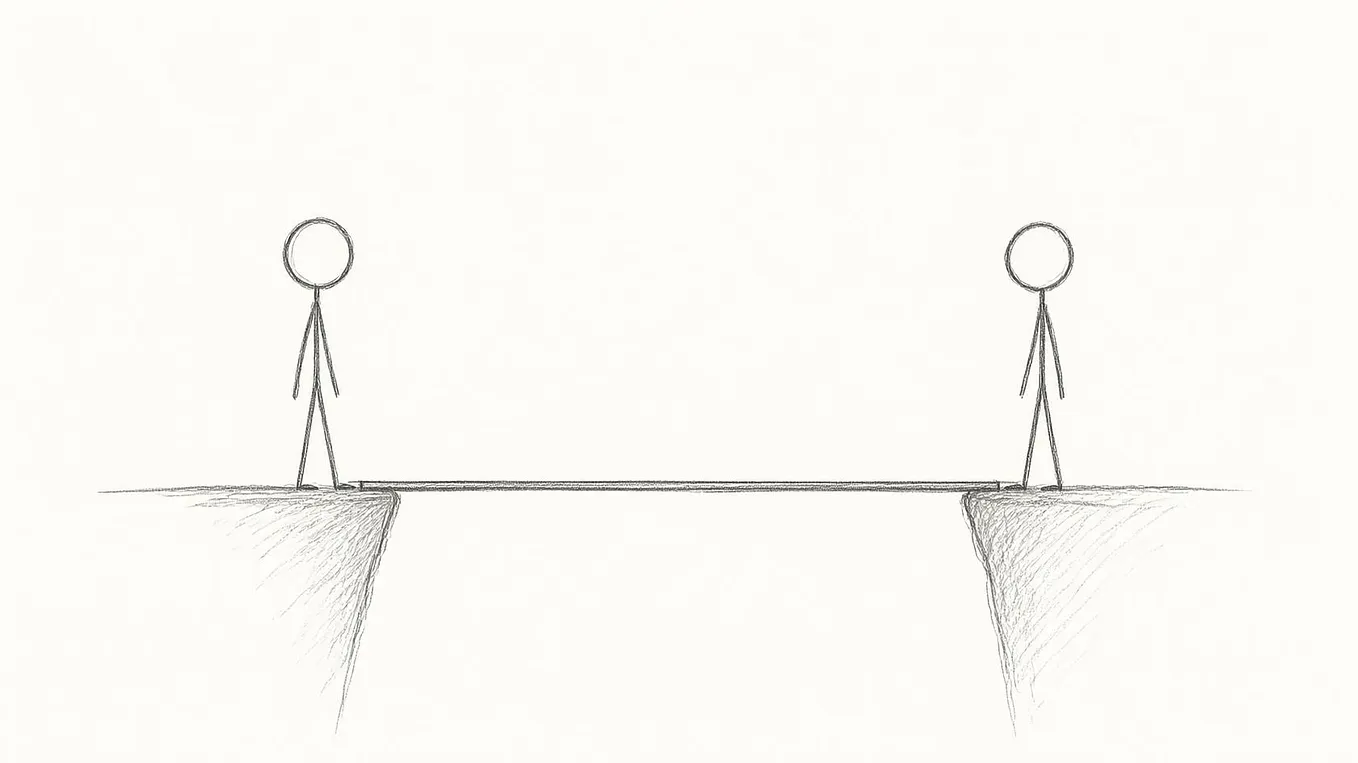
When information is fragmented, and perspectives don't have a way to encounter one another, someone has to translate.
They explain what one person meant to another. They connect information that lives in different places. They reconcile competing interpretations. They reconstruct the bigger picture.
The work still gets done. But now people are carrying the work and the complexity that result from the inability to see it together.
Translation becomes load.
And the more the organization relies on individual translators, the more dependent it becomes on the people who can make sense of what others cannot see.
Compensation often begins before anyone realizes it.
And it doesn't start when someone steps in to carry the load.
Compensation begins when someone steps in to make sense of fragmented information.
Get Audrey Wyatt’s stories in your inbox
Join Medium for free to get updates from this writer.
This is why structure matters.
Not to simplify what is genuinely complex. Not to resolve what genuinely requires human judgment.
But to give people a way to see information, friction, and competing realities together — before individuals have to translate them for everyone else.
The chain that produces unnecessary complexity runs in one direction:
Fragmented reality → individual translation → competing interpretations → more coordination → more compensation.
At each step, human intelligence is being spent on a problem the architecture created — not on the work itself.
The goal isn't to eliminate complexity.
It's to stop creating more of it than the work requires.
And this is solvable.
When people can collectively see what is happening, less human intelligence has to be spent translating, reconstructing, and routing around what the structure cannot carry.
That capacity becomes available for something more valuable: learning together how to navigate what actually is difficult, uncertain, and genuinely unsolvable alone.
Complexity isn't the enemy.
Unnecessary complexity is.