Showing posts with label French copyright. Show all posts

Friday, 7 June 2019

The Poetic and Secret Lists of French Fashion Photographer Guy Bourdin


One of the articles in the March issue of French Vogue explained that the late French fashion photographer Guy Bourdin kept a secret list of all the titles he had imagined for a particular photograph. As he had a prolific career, he must have made quite a bit of these lists. But he wanted to keep them secret, and he never shared them with anybody, and did not publish them. 

While it may seem farfetched to give a title to a fashion photography, Guy Bourdin’s works are beautiful and intriguing, and knowing their secret titles would certainly have been interesting. You can see some of his photographs here and here. Guy Bourdin died in 1991, but he is still an influential fashion figure today.

Journalist Arthur Dreyfus wrote for Vogue Paris that he had bought a chair from the famous Studio 54 in New York at an auction. He found under the cushion a list of titles written in pencil by Guy Bourdin, all the secret titles for a particular photograph published in Vogue in April 1985, which shows a woman lying on a dance club floor, grabbing the ankle of a woman wearing glittery silver stilettos. 
 
Guy Bourdin (c) The Guy Bourdin Estate
The article reveals the 23 titles Guy Bourdin had imagined for this particular photograph. He was a French citizen, lived in France, and thus his works are still protected by the French droit d’auteur. How could the droit d’auteur view this publication? 

Le Titre

First, can titles be protected? Article L. 112-4 of the French Intellectual Property Code specifically protects the title of a work protected by copyright, if it is original enough. 

The particular photograph is original enough to be protected by copyright. Therefore, its title can be protected if original enough. In our case, we do have a list of titles (more about thatlater). Some of them, such as “Le pouvoir de l’argent” (the power of money), may not be original enough by themselves, but others certainly are, such as “La Belle en boîte dormant [trop bouffon]”, (the Beauty sleeping in a club, [too funny] with a pun on Bois, wood, and boîte, club).

La Liste

In our case, the list had 23 titles, all published in the Vogue article. This is a compilation of elements. We saw that some titles are protected by copyright, but others are not. However, the list can be entirely protected by the droit d’auteur as a “compilation” (same word in English and in French). The compilation has to be original enough, which is the case here. So the entire list is also protected.

Le Droit Moral

Guy Bourdin had not published the list in his lifetime. The article explains that he actually refused to make the lists of titles he invented for his photographs public, and that he kept them secret. It is only by accident that Arthur Dreyfus was able to acquire one of them, and he had the knowledge to understand the significance of the discovery. 

Since the list is protected by the droit d’auteur, its author also benefits from the protection of droit moral. One of the rights provided to authors by the French droit moral is the right of first publication. Only the author has the right to decide to publish his work, article L. 121-2 of the French Intellectual Property Code.

Droit moral is “permanent, inalienable, and imprescriptible,” article L. 121-1 of the French Intellectual Property Code. It can be bequeathed, and heirs may thus exercise this right as long as they know they have it (somebody still owns the moral right in Molière’s plays, but nobody knows who is it [could it be YOU?]).

In one somewhat recent case, Victor Hugo’s heirs had unsuccessfully tried to prevent the publication of a sequel to Les Misérables, but the Cour de cassation, the French Civil Supreme Court, held that freedom of expression, as protected by Article 10 of the European Convention on Human Rights, must prevail over moral rights. 

In our case, the Estate of Guy Bourdin may have authorized the publication of the list. It is certainly a decision which benefits the public, as the list reads like a poem, and makes us wonder if the other lists, lost forever, were as beautiful.

Saturday, 2 March 2019

Basquiat, Sakura, Verda


French television channel France 24 is reporting that Sakura art gallery in Paris has cancelled a Guillaume Verda exhibit after he was accused on social media of copying Jean-Michel Basquiat. The gallery did not cancel because of the alleged copying, but cited public safety concerns, stating that the artist had received threats on social media and by email.

Guillaume Verda has since made his Instagram account private, and the Sakura gallery has taken off any references to the exhibition from its site and closed the exhibition.

Is it copyright infringement?

Article L.122-4 of the French Intellectual Property Code states that “Any complete or partial performance or reproduction made without the consent of the author or of his successors in title or assigns shall be unlawful. The same shall apply to translation, adaptation or transformation, arrangement or reproduction by any technique or process whatsoever.” Several tweets presented Verda’s works next to Basquiat’s. Copying or inspiration?

When assessing whether a particular work is infringing, courts first check if the work which was allegedly copied is composed of new and original elements and then determine if these original elements have been reproduced by the second work.

Verda’s works seems to have been painted in a way which certainly brings the Basquiat in mind. So there are similarities.

Ideas are not protected by French law: les idées sont de libre parcours, ideas are free to be used. A work must be original to be protected. It could also be argued that both Basquiat and Verda were inspired by ancient African art which is now in the public domain, and that the similarities are based on elements which are not original.

But if the similarities are on original elements of the first work, there is infringement.

If the similarities are obvious, bad faith is assumed, and then it is the Defendant who must prove he was in good faith. In this particular case, Verda did not seem to have hidden that Basquiat was a source of inspiration, as he referenced him in hashtags. So, he cannot claim that he did not know his works, and that the similarities are fortuitous, that this is a “rencontre fortuite,” which happens when two artists are creating a similar work without knowing each other. It may happen, but it is quite rare.

It is only after having assessed the similarities between the two works that the courts assess their differences. Here would lie Verda’s defense, proving the differences between the works.

It should be noted that copyright infringement and plagiarism do not have the same meaning under French law. While the first is a crime, the second, le plagiat, is a tort. The author of a work can decide not to sue for copyright infringement, but for plagiat, in a civil court, which will then assess whether the alleged plagiarism constitutes unfair competition and parasitism.  

Tuesday, 18 December 2018

A Painting Given to Eric Clapton Cannot be Used on Album Cover Rules French Supreme Court


The French civil Supreme Court held on October 10, 2018 that the right to first publish a work belongs only to the author or his heirs, and that, therefore, a painting given in 1970 to famous musician Eric Clapton, and subsequently used on the cover of one of his most famous albums had not been published by the author.

During the Summer of 1970, Eric Clapton and his then music group 'Derek and the Dominos' stayed in Valbonne, in the South of France, at the home of Emile de La Tour Saint Ygest, who was living alone at the time in the house of his illegitimate father, French-Danish painter Émile Théodore Frandsen.

During this stay. Emile de La Tour Saint Ygest gave La Jeune Fille au Bouquet to Eric Clapton, who used it on the cover of his Layla and Other Assorted Love Songs album, published by Polydor. 
The painting was thus featured for more than 40 years without any issues. In November 2009 Polydor published a collector’s box featuring the original cover of Layla to celebrate the 40th anniversary of the album.

The box featured a ‘Pop-up 3D Artwork,' a 3-D representation of La Jeune Fille au Bouquet as a folding cardboard. The box also featured an 'art guitar scratch-plate sticker,' a sticker reproducing the painting which could be put on a guitar, and also the reproduction of the cover on cardboard in the shape and format of a LP.  

Monique Frandsen de Schomberg, a legitimate daughter of the painter, filed a copyright infringement suit in 2013 in Paris, claiming that the use of the painting on the cover of the album and on the box infringed her father’s patrimonial and moral rights.

This original complaint did not prosper as the court ruled it to be invalid because the authorization of all of Mr. Frandsen’s heirs had not been secured. Monique Frandsen de Schomberg then filed another complaint, claiming only violation of moral rights.

The court of first instance, the Tribunal de Grande Instance de Paris, ruled in her favor in January 2016. Defendants Eric Clapton and Polydor appealed. The Paris Court of Appeals confirmed the judgment in March 2017.

Two moral rights: the right of integrity and the right to first publish

Article L 121-1 of the French Intellectual Property Code provides a perpetual and inalienable moral right to the author of the work:

“An author shall enjoy the right to respect for his name, his authorship and his work. This right shall attach to his person. It shall be perpetual, inalienable and imprescriptible. It may be transmitted mortis causa to the heirs of the author. Exercise may be conferred on another person under the provisions of a will.” (A complete, but not updated translation of the French Intellectual Property Code is available on this page).

Monique Frandsen de Schomberg argued on appeal and at the Cour de cassation that defendants had violated the right of the author to first publish the work (droit de divulgation) and also that they had denatured the work.

Moral Right: right of integrity

The Court of appeals had not found that the use of the painting on the original album cover was a violation of moral rights, because the painting had not been truncated or otherwise altered, and the signature of the painter was clearly featured.

The Cour de cassation confirmed this reasoning, as the work had been used to illustrate the cover of the album, but not as advertising.

The Court of appeals had found however that the use of the painting on the cover in the collector’s box violated the moral right of the author as it distorted the work (dénaturer l’oeuvre.)

It is worth noting that the Court of appeals took the view that its jurisdiction in this case did not extend beyond the French borders, as none of the Defendants were established in France. Therefore, it could only award damages as they had occurred in France. Polydor had sold, from 2009 to 2005, 7,407 Layla albums and collector boxes  The Court of Appeals approved the Court of first instance for having granted 15,000 euros to the plaintiff in damages.

Moral Right: right to publish the work

The Paris Court of Appeals had also ruled that, because the right to first publish the work is exhausted when first exercised, and it had been, in this case, when given to Eric Clapton in 1970.  

The Cour de cassation disagreed on this point, and sent the case back to the Versailles court of appeals on remand.

France’s highest Court cited article L11-3 of the French Intellectual Property Code, stating that owning a protected work does not grant the intellectual property rights assigned to its author, and article L121-2 of the same Code, which gives to the author the exclusive right to publish her work.

For the Cour de cassation, giving the “material support of the work” (support matériel de l'œuvre) to a third party is not enough to establish that the author or his heir has exercised the exclusive right to publish the work. The Court concluded that therefore the Court of appeals had erred when ruling that the right to first publish the work had been exhausted in 1970.

Monique Frandsen de Schomberg had argued in front of the Cour de cassation that Emile de La Tour Saint Ygest had not been recognized by Emile Frandsen, that he was not his heir, as the estate had been devolved exclusively to her brother and herself, and that therefore handing over the painting to Eric Clapton was not publishing the work.

The Versailles Court of appeals will now have to decide whether this right has indeed been exercised by the author or his heirs. It is likely to spur a legal fight over whether plaintiff truly has the right to defend Frandsen‘s moral rights.

Sunday, 12 November 2017

Does the Commercial Exploitation of France’s National Domain Violate the Constitution?


Article L. 621-42  of the French Code du patrimoine (heritage Code) authorizes using the image of a building belonging to France’s national domain for commercial purposes, in any medium, if such use has been authorized by the manager of the building, by unilateral act or contract, free of charge or with financial compensation. No authorization is, however, required, if “the image is used in the exercise of public service missions or for cultural, artistic, educational, teaching, research and information purposes and illustration of the news.”


This is a recent law, as this article was introduced by the July 7, 2016 law, no. 2016-925 about freedom to create, architecture and heritage) in order to provide buildings belonging to the national domain, such as the Louvre, Chambord, or Fontainebleau, an opportunity to financially gain from the commercial use of their image.


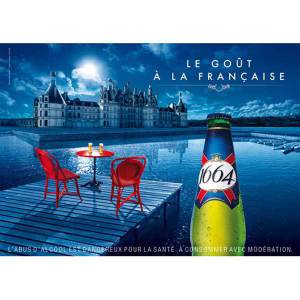
This law was enacted after the castle of Chambord unsuccessfully tried to prevent the commercial use of its image for advertising a beer. The image of the castle had also been used on a special edition of beer bottles.

Visiting castles can make you thirsty 


NGOs La Quadrature du Net and Wikimedia recently joined forces to challenge the constitutionality of the decree implementing article L. 621-42, which created article R.621-99 of the Code du patrimoine. This article gives power to the authority in charge of the national domain to negotiate the financial conditions for the commercial use of its image. From plaintiffs’ point of view, the buildings in France’s national domain are in the public domain, and thus free to be used, even for commercial purpose.


They argued that the access to culture is a human right, protected by article 14 of the European Convention on Human Rights, article 10 and 11 of the French Declaration of Human Rights,  and by the Preamble to the French Constitution, which guarantee equal access to culture for all, and that therefore article R.621-99 violated the Constitution.


They also argued that the public domain is protected by article 1 of Directive 2006/116/EC on the term of protection of copyright and certain related rights, which states that a literary or artistic work revert to the public domain 70 years after the death of the author, irrespective of the date when the work is lawfully made available to the public. As article 2 of the Berne Convention includes architecture in its definition of literary and artistic works, they concluded that works of architecture in France’s national domain are in the public domain, and that the lawmakers cannot “artificially revive exploitation rights.”


The Ministry of Culture argued in defense, rather surprisingly, that “[i]t has never been the intention of the lawmaker to establish a regime guaranteeing free exploitation of a work after the extinction of the economic rights of its owner.” Unless this refers to moral rights, which are perpetual and may sometimes impinge the commercial exploitation of a work, this argument denies a basic concept of French copyright.


On October 25, the French Council of State, France’s highest administrative court, agreed to their request to ask the Constitutional Council whether article R.621-99 violated the Constitution. The Constitutional Council will now decide within 3 months whether the commercial exploitation of buildings in the public domain, but belonging to France’s national domain, violates French Constitution. We’ll keep you informed.


Tuesday, 24 October 2017

Does a French copyright smell anything?


The FIAC, the international fair of contemporary art, just ended in Paris. Its visitors were able to visit a glass cube, the OSNI, placed on top of the Pavilion of the Palais de Tokyo. OSNI stands for Objet Sentant Non Identifié, ‘Unidentified Scented Object’ and was created by Mathilde Laurent, a perfumer for Cartier, along with Munich climate engineers Transsolar.


Visitors entering the cube were able to go up a staircase through a cloud of the Cartier L’Envol (The Flight) perfume. The cloud is clearly seen to viewers outside OSNI. The fact that the perfume can be seen is as important as it can be smelled.


This installation led French magazine Télérama to ask the question: can perfume be a work of art? Modernist called it “[a] true olfactory and immersive artistic work that presents a completely new way of using smell as a medium of creation.”


Wallpaper quotes Mathilde Laurent as saying “I’m not an artist…but…I feel that to create a piece like this is our duty as a house because it’s important that we sustain olfactory art like all others.”


Could OSNI be a work of art? Is there such thing as olfactory art?


Perfume is not protected by French copyright.


Even though article L.112-1 of the Intellectual Property Code clearly provides that its provisions “ protect the rights of authors on all works of the mind, regardless of genre, form of expression, merit or destination,” perfumes are not protected by French copyright, the droit d’auteur. The Cour de Cassation, France’s highest civil court, ruled in 2008 that “the fragrance of a perfume, which proceeds from the simple implementation of a know-how, does not constitute the creation of a form of expression that can benefit from the protection of copyright”. Therefore, L’Envol is not protected by copyright.


However, OSNI is way more than a perfume. It is an art installation, with which visitors are interacting.


Does France protect performance art?


OSNI’s visitors were able to go up and down the staircase inside the cube, and were seen from outside. Were they part of the performance? Were their reactions to the scented air part of the performance?


France recognizes that an artistic performance may be protected, not by copyright law, however, but by the right in one’s image. Reproductions of an artistic performance, such as photographs taken of it, are, however, protected by the droit d’auteur. In that case the performance artist and the photographer are co-authors, Paris Court of Appeals, 4th Chamber B, December 3, 2004.


Is the perfume an element of the protected work, the cube?


If perfume can not be protected as a scent, could it be protected as a work of art? The perfume is clearly seen here, and can be smelled only if one is inside OSNI. Viewers from outside cannot smell it, but they can see the way the cloud of perfume moves inside the cube.


The cube can be considered a sculpture, and, as such, protected by the droit d’auteur. The scent is part of it and thus protected as an element of the sculpture, but still does not gain individual protection. However, one could imagine that if Cartier were to sell OSNI to an art collector, who would then replace the scent with the one of his favorite aftershave, this would be copyright and droit moral infringement, and would conjure the issue of whether perfume is protected by the droit d’auteur out of the (crystal) bottle.    


Monday, 21 August 2017

Directing a Spotlight on the Feud over Ownership of Château Miraval’s Lights


French daily newspaper Libération recently reported about the legal feud between actor Brad Pitt and French artist Odile Soudant. It appears that Pitt hired Soudant to create the lightning system for the château Miraval, in the South of France, which Pitt and Angelina Jolie bought in 2008. See here for an AFP article about this story in English.

Soudant worked for many years for famous French architect Jean Nouvel, one of Pitt’s favorites, and the source of inspiration for the first name of one of his children. Soudant now has her own company, but she recently filed bankruptcy. She explained to Libération that the origin of her financial troubles lies in her long business association with Pitt.
The actor asked Soudant in 2010 to design the lightning system for the castle, and she worked on the project for three years and a half. She had been given carte blanche, but the two parties did not sign a contract [collective gasp of attorneys reading this]. She signed, however, a confidentiality contract, which has prevented her so far to discuss her work.

At one point during the completion of the work, according to Libération, Soudant’s company had to advance the cost to complete the work and pay the contractors and the vendors, causing cash flow problems. Soudant contacted Pitt several times, asking him to provide the funds necessary to pay the project-related bills so that the project could be completed. The cash flow issues jeopardized the financial equilibrium of her company, which eventually went bankrupt.

Last April, the Paris Court of appeals ordered one of Pitt and Jolie’s companies, the société Château Miraval, to pay  565 000 euros to Odile Soudant, 60 000 euros of which to compensate for damages to her image and reputation.

We will not discuss this complex contractual issue, but only the copyright issue created by this situation. Indeed, according to Libération, Soudant was abruptly asked to leave in 2014, before being able to finish her work, which was completed by one of her former assistants.

Who owns the copyright in the works?

In France, the author of a work is the one who gave it the imprint of his or her personality. The fact that Soudant did not complete the work is irrelevant as article L 111-2 of the French Intellectual Property Code protects a work even if it has not been finished, and even if it has not been published.

The lightning of a building can indeed be protected by the French copyright, the droit d’auteur. The Cour de cassation held on March 3, 1992, with respect to the lighting of the Eiffel Tower, that the “games of light designed  to reveal and emphasize the lines and forms of a monument constitutes an original visual creation and are thus a work of the mind.”

Libération quotes the testimony of an architect who took part in the project, saying that “the ideas for the lightning came chiefly from Mr. Pitt himself, who is passionate about architecture and knew what he wanted to achieve.” Pitt’s lawyers told Libération that Pitt considers himself to be the author of the work.  In that case, it would not matter who completed the work, Soudant or her former assistant, because both would be mere workers working under the absolute direction of Pitt, the sole author. Soudant, instead, considers her to be the author of these original works and told Libération that she did not gave away any of her intellectual property rights.

Who has the right to reproduce the works?

Pitt’s lawyers told Libération that the château Miraval is a private space, and therefore there are no issues over the rights to the image of the work. They must be referring to the French right to image of one’s goods, including buildings that one owns. The Cour de cassation had first held, in its March 10, 1999 Café Gondrée decision, that “the owner [of a building] has the sole right to exploit his right in any form whatsoever,” including the right to authorize taking a photograph of a building. However, the Cour de cassation en banc (Assemblée Plénière) held on May 7, 2004, that “the owner of a good does not have an exclusive right over its image”. This means that, while Pitt and Jolie own the château, they cannot forbid people taking pictures of it.  

But do they own the copyright in the lighting of their humble abode? If they do not, and if Soudant owns it, she alone has the right to authorize its reproduction. Libération notes that the Guerlain advertising campaign film featuring Jolie was shot at Miraval, and that the actress is seen going down the stairs, which she owns with Pitt, in a flow of light designed by Soudant… or is it by Pitt?

Is the lightning system the sole work of Soudant, or a collective work authored by Soudant or Pitt, or is it a composite work, first created by Soudant, then incorporated in a new work? Let’s hope for copyright-related sequel to the Paris Court of appeals contract case.

Photo is courtesy of Flickr user Patrick Gaudin under a CC BY 2.0 license.

Tuesday, 4 July 2017

Shop Till You Drop… Your Claim… Stores’ Layout Protected by French Copyright


After the recent case of the Jimi Hendrix photograph (see here and here), we have another case about the importance of originality in French copyright. This time, the case is whether retail stores’ layouts are original enough to be protected by copyright.
An Italian cosmetics store (K) with stores and France had filed a copyright infringement and unfair competition suit against a French cosmetics and accessories company (F), claiming that it had copied the specific layout of its points of sale. K claimed that its stores’ layout is original and protected by the French droit d’auteur (referred from now on as copyright.) K’s store displays, display panels, cash counters, color coding, the advertising panels on the outside shop windows, were claimed as original.

The first court, the tribunal de grande instance de Lille, ruled in favor of K in May 2015, and F appealed, claiming that K’s layout was not original enough to be protected by copyright, and that in any case, the layout of its stores was similar to the layout of F’s.  On May 16, 2017, the Douai Court of appeals ruled in favor of K (CA Douai n° 15/03286).

French law protects works which are original, regardless of their artistic merit

The Douai Court of appeals cited article L 111-1 of the French Intellectual Property Code, under which the author of a work of the mind has an exclusive right of intangible property which is binding on all. This right includes patrimonial rights as well as moral rights. The court also cited article L 112-1 of the same Code, which provides that the rights of authors on all works of the mind, regardless of the genre, form of expression, merit or destination, can be protected by copyright. This is the so-called théorie de l’unité de l’art, the theory of the unity of art, which prevents judges to assess the artistic value of a work protected by copyright.

Under French law, a work is protected by copyright if it is tangible or if it is fixed, and if it is original, meaning that it bears the imprint of the personality of its author. The Court of appeals explained that “creation is defined by a production of the mind which manifests itself in an effort, no matter how small, but which is certain and demonstrates an aesthetic bias bearing the imprint of the personality of its author, and which are not simple transpositions or declinations, thus conferring on the object a character of originality and novelty.”

The layout of K’s stores

K described its stores’ layout as one which uses clean lines and which organizes the cosmetics in such a way that the customer’s gaze will have no obstacles. K argued that this, “combined with the specific shape of the furniture and the presence of linear elements, gives [the layout of K’s stores] a visual effect very much original which reveals a true creative contribution in the arbitrary choice of the arrangements.”

K uses white display units, which are “arranged on each side of the store and over its entire depth and which have drawers in their lower part.” The upper part of the display units and their lower parts, which are drawers,

“are inclined at different angles, which gives a triangular appearance to the profile of the display.” The colors used in the stores are gradual, and the alternation of products embedded in the white furniture sometimes in a vertical position, sometimes in a horizontal position, [creates] a visual aspect both linear and pictorial.” K argued that the arbitrary combination of all these elements “presents an entirely singular, modern and futuristic appearance, which is therefore original. “

F had argued that the layout did not bear the imprint of the personality of their author, and that the mere combination of these elements, which are not original, is not original either. F also claimed that it had used these elements, particularly the displays and the screens, before K, and that its color code was not the same as the one used by K, which used purple, a color not used at all by F. As for the black and white color used in both stores, F noted that “they are particularly banal colors and [that K] cannot invoke the use of a dark color on the floor to claim any right.”
The layout of K’s stores is protected by the droit d’auteur

The Court recognized that French copyright protects interior design such as

“the rhythm of color and the layout of a store chain” and explained that “[w]hen this protection is contested in defense, the originality of a work must be explained by the person who claims to be the author, that is the only person able to identify the elements expressing his personality…. [and that] the exploitation of a work by a moral entity under its name shall presume that this moral entity [owns the copyright].”

The Court further explained that:

“In the applied arts, originality often arises from a new combination of already known elements, from the creation of original forms, new materials, and decorative effects, which are distinguished from those previously known by their singularity or distinctive character which express the personality of the author by conferring a personal form on his work.”

This was the situation in the present case.

The court thus described K’s stores:

“- the shape of the triangular display case, in lacquered white, in which the drawers containing the products fit completely, is specific, since it has two Inverted slopes, creating a smooth and rounded appearance, reinforcing the aerial and futuristic character,

- the arrangement of these pieces of furniture on each side of the store and the alignment of the products reinforces the infinite unfinished visual aspect and its clean nature,

- the juxtaposition and the choice of colors (purple, white, black) and their regular rhythm (dark floor and white furniture topped with a white headband with LCD black screens and a purple background) reinforce the linear aspect,

- the juxtaposition of colors and in particular the use of black and white contribute to bring to mind the attributes of luxury and enhance the impression of modernity,

- this search for modernity and futurism is accentuated by the layout of LCD screens  on top of the furniture, their presence in showcases of 'advertising lollipops' showing movies, and the use of recessed lighting in the ceiling in the form of circles of different sizes.”

The Court of appeals ruled that the layout of K’s stores, thus described, is protected by copyright because

“K has thus declined and transposed all these elements in a reflective and singular manner with a view to producing a distinctive effect and a clear visual identification in order to satisfy the company's own concept of marketing of make-up products in an environment and a setting which are reminiscent of luxury and modernity.”

“The layout of K’s stores is therefore characterized by an original combination of shapes and shades, which is precisely defined, and which is an aesthetic bias and which reveals a creative effort indeed demonstrating the personality of its author and attests to the search for a distinctive configuration, thus distinguishing itself from layouts which may be of the same style and implementation of simple know-how.”

The Court of appeals also found that F had tried to capture K’s clientele, by taking advantage of K’s “intellectual and financial efforts to set up its distinctive concept, depriving it of its singularity and diluting the specificity of its concept,” which the Court of appeals found to be unfair completion practices. K was awarded damages and ordered F to dismantle its stores’ layout.