Ken Moriwaki·Sep 13QuTiP 5— From Atomic Clocks to Quantum Control: What QuTiP Can Teach UsConnecting optical clocks, coherent control, pulse design, and realistic quantum dynamicsA response icon1A response icon1
Ken Moriwaki·Aug 10QuTiP 4— Simulating Quantum Sensors with QuTiPConnecting phase, decoherence, and measurement in a simple two-level model
Ken Moriwaki·Jul 18QuTiP 3— Decoherence and Open Quantum Systems with QuTiPExtending ideal Rabi oscillations to realistic quantum dynamics
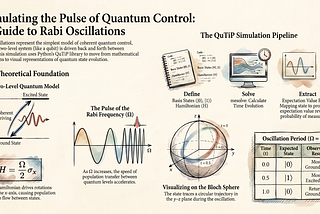
Ken Moriwaki·Jul 4QuTiP 2— Rabi Oscillations in Python with QuTiPSimulating coherent quantum control in a two-level system
Ken Moriwaki·Jun 27QuTiP 1 — QuTiP for Quantum Technology: Getting StartedA practical introduction to simulating quantum systems in Python with Google Colab
Ken Moriwaki·Jun 22When Science Was Still Philosophy: The Questions Technical Answers Leave BehindThe boundary between science and philosophy is not a wall. It is often where some of our most important questions begin.
Ken Moriwaki·Jun 14DSPy 4— Optimising DSPy Programs: Examples, Metrics, and Controlled ComparisonMeasuring a modest improvement without overclaiming it
Ken Moriwaki·Jun 12DSPy 3— Evaluating DSPy Programs: Moving Beyond Prompt GuessworkA program that runs is not yet a program we understandA response icon1A response icon1
Ken Moriwaki·Jun 8DSPy 2— First DSPy Program: Signatures, Modules, and PredictionsBuilding a typed IT operations incident classifier in PythonA response icon1A response icon1
Ken Moriwaki·Jun 6MAI-Thinking-1 and Microsoft’s Next Move in Enterprise AIHow Microsoft’s first-party reasoning model signals a shift from AI platform provider to enterprise AI infrastructure builder