Sylvain Tiset·Nov 3What Really Happens When You Scan a QR Code?Point a smartphone at a QR Code, wait a fraction of a second, and a URL magically appears. But the camera doesn’t actually “read” the QR…
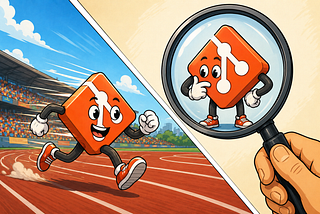
Sylvain Tiset·Oct 7Why is Git so fast? Following the life of a single fileGit feels almost magical. A commit takes milliseconds, creating a branch is nearly free, and switching between thousands of files often…
Sylvain Tiset·Sep 2The Art of Debugging Non-Deterministic BugsHave you ever encountered a bug that seems to appear at random? It works perfectly on one machine, fails in production, and mysteriously…
Sylvain Tiset·Aug 5Go Meets C++: Bridging Two Worlds with cgoCan a Go program call C++ code? The answer is yes — but not directly. Thanks to cgo and a thin C wrapper, Go can seamlessly interact with…
Sylvain Tiset·Jul 1Go Modules & Workspaces — The Complete Guide (go mod, go work, vendor, tidy & more)Go dependency management has evolved from GOPATH to modules and now workspaces, bringing powerful tools — but also confusion. Commands like…
Sylvain Tiset·Jun 3How Microservices Find Each Other: The Hidden World of Service DiscoveryYou deploy 10 microservices… and suddenly none of them know how to talk to each other. IP addresses change, instances scale up and down…A response icon1A response icon1
Sylvain Tiset·Apr 8The Great Storage Engine Debate: B-Trees vs LSM-TreesB-Trees and LSM-Trees are two fundamental data structures designed to solve the same challenge: storing and retrieving data efficiently on…
Sylvain Tiset·Mar 4Counting the Uncountable: Frequency Estimation at ScaleMassive data streams make exact counting impossible, but approximation algorithms offer elegant and efficient alternatives. In this…
Sylvain Tiset·Feb 4Two-Phase Commit: The Good, the Bad, and the BlockingTwo-Phase Commit (2PC) is a distributed algorithm that ensures all participants in a transaction either commit or abort together. It is…